



Pitch Introduction
The appearance of Bartisans Shark Tank India brought a refreshing perspective to the beverage industry, showcasing a unique mother-son duo from Mumbai. Founders Jordan and Jovita Mascarenhas entered the tank seeking ₹1 Crore for 2.5% equity, valuing their premium cocktail mixer brand at a massive ₹40 Crores. Their pitch centered on the growing trend of home-hosting and the lack of high-quality, natural mixers for both alcoholic and non-alcoholic drinks in the Indian market.
While the cocktail industry in India has traditionally relied on sugary syrups or basic carbonated drinks, Bartisans aimed to disrupt the space with 100% natural ingredients and sophisticated flavor profiles. The founders highlighted their journey from a home kitchen to a dedicated manufacturing unit, emphasizing their commitment to “bar-quality” drinks that can be prepared in under two minutes at home.
Business Overview
Bartisans operates in the premium mixer segment, providing a range of ready-to-pour solutions that cater to the evolving tastes of Indian consumers. The brand’s philosophy is rooted in storytelling, with each flavor designed to evoke a specific memory or emotion. For instance, their “Red & Run” flavor uses berries, cumin, and Himalayan pink salt to recreate the thrill of childhood memories. By focusing on fresh juices and natural extracts, they differentiate themselves from mass-market competitors that often use artificial preservatives and high sugar content.
The business model is primarily D2C (Direct-to-Consumer), with a significant 88% of sales coming directly from their website. This has allowed them to maintain a direct relationship with their customers and iterate on flavors quickly. However, the founders recognized that to achieve massive scale, they needed to transition into the retail space, which requires different logistics and pricing strategies.
Product Details
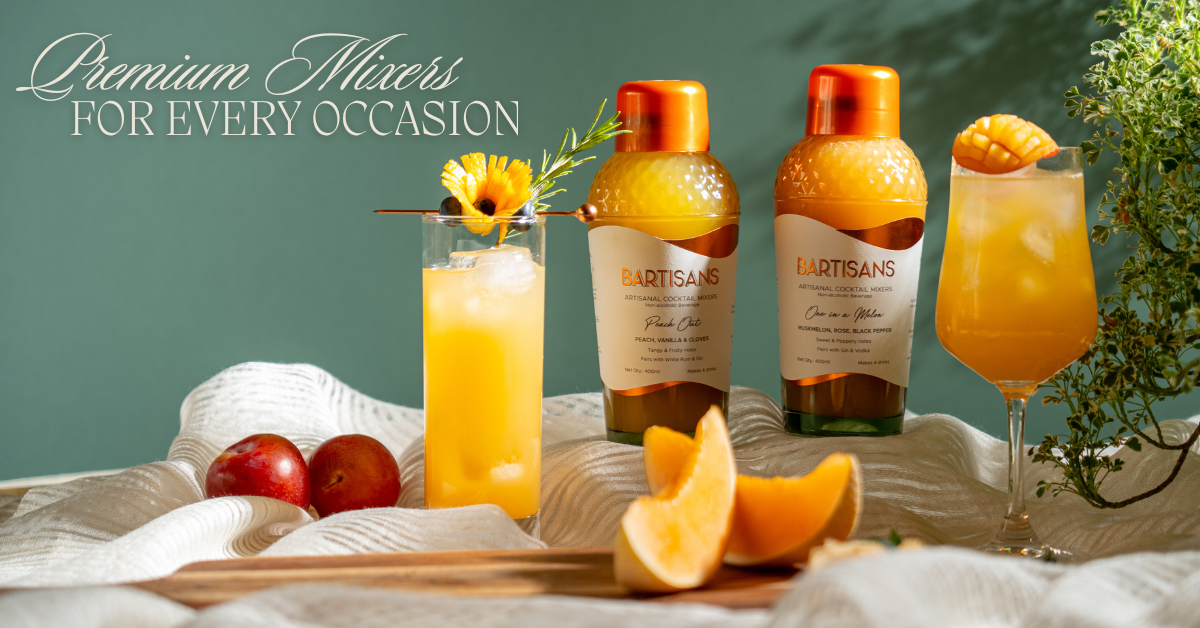
The Bartisans product line includes various mixers such as Smoked Pineapple and Basil, Jamun Jeera, and Spiced Hibiscus. Unlike many traditional mixers, these are “ready-to-pour,” meaning the consumer only needs to add ice and their choice of spirit (or soda for a mocktail). The products boast a one-year shelf life despite being natural, achieved through careful formulation and packaging. The brand uses sleek glass bottles and matte black finishes to appeal to a premium demographic, ensuring the product looks as good as it tastes on a bar cart.
Market Position
Bartisans positions itself in the aspirational upper-middle-class segment. With price points ranging from ₹450 to ₹595 per bottle, they are significantly more expensive than standard mixers but offer a value proposition tied to convenience and quality. They compete with artisanal mixer brands and premium carbonated beverages. Their unique selling proposition lies in their 70% gross margins and their ability to provide a complete cocktail experience without the need for multiple expensive ingredients like fresh bitters, syrups, or exotic fruit juices.
| Business Detail | Information |
|---|---|
| Company Name | Bartisans |
| Founder | Jordan & Jovita Mascarenhas |
| Product Type | Cocktail & Mocktail Mixers |
| Price Range | ₹450 – ₹595 |
| Primary Channel | D2C Website (88%) |
| Headquarters | Mumbai, Maharashtra |
About Founder’s
The foundation of Bartisans is built on the entrepreneurial spirit of Jovita Mascarenhas and the hospitality expertise of her son, Jordan. Jordan, a graduate of Don Bosco College of Hospitality, was pursuing an internship in Dubai when the COVID-19 pandemic forced him to return to India. Seeing a gap in the market for home-made cocktails during the lockdown, he began experimenting in his home kitchen. Jovita, a serial entrepreneur who had previously founded businesses like “Shady Ideas” (lighting) and “Super Natural” (corporate gifting), joined him to turn the passion project into a scalable brand.
- Jordan Mascarenhas has a background in hospitality and professional drink curation.
- Jovita Mascarenhas has decades of experience in manufacturing and product design.
- The brand was started in 2021 as a response to the pandemic’s impact on social gatherings.
- The founders emphasize family collaboration and shared creative vision as their core strength.
Shark’s and Founder’s QnA
What is the story behind the founders working together?
Jordan started it when he returned from Dubai during Covid. I was a serial entrepreneur and had to close my lighting shop when the pandemic hit. When Jordan came up with this idea, I asked if I could join him. It is rare to see a mother-son duo, but it works perfectly for us.
How do you make these drinks and what is the shelf life?
Making a Bartisans drink is as easy as mixing rum and Coke. We use 100% natural ingredients; for example, our ginger juice is literally squeezed fresh. Despite being natural, our products have a shelf life of one year.
Aren’t these products very expensive for the average consumer?
You can get gin for ₹360 or for ₹3,000. We are catering to a consumer who wants an aspirational experience. While we are currently focused on the upper middle class, we have plans to launch more accessible products in the future.
What are your current financial numbers?
Last month, we did ₹35 Lakhs in sales. For the current year, our revenue is ₹1.43 Crores. We are currently operating at a loss of about ₹53 Lakhs because we are pushing heavily on marketing and logistics to build the brand.
Why is your logistics cost so high?
About 20% of our cost goes into logistics and payment gateways because we were shipping everything pan-India from Bombay. We are now opening dark warehouses in Delhi, Bangalore, Hyderabad, and Pune to reduce these costs and minimize breakage.
What is your plan for the investment money?
We want to move into retail. We are currently a D2C-focused brand, but we know that to grow, we must be present where people buy their spirits. We need the funds to develop a retail-specific product and manage the distribution costs.
Key Stats & Financials
At the time of the pitch, Bartisans demonstrated strong top-line growth but faced the typical challenges of a high-burn D2C startup. Their gross margins of 70% are exceptionally healthy for the beverage industry, providing enough room for marketing and distribution expansion. However, their net loss of ₹53 Lakhs on a revenue of ₹1.43 Crores indicated a 37% burn rate, which made some sharks cautious about the scalability of the current business model.
Revenue and Profitability
- Yearly Revenue (FY23-24): ₹1.43 Crores
- Monthly Sales: ₹35 Lakhs (scaling to ₹45 Lakhs projected)
- Gross Margin: 70%
- Burn Rate: Approximately ₹6.5 Lakhs per month
- Valuation Requested: ₹40 Crores
Financial Breakdown
| Metric | Amount / Value |
|---|---|
| Current Yearly Revenue | ₹1.43 Crores |
| Projected Revenue | ₹4 Crores | 20% |
| Current Net Loss | ₹53 Lakhs |
| Full Year Projected Loss | ₹80 Lakhs |
| Average Order Value | ₹1,100 – ₹1,300 |
Business Potential and TAM
The cocktail mixer market in India is witnessing a significant transformation, driven by the “premiumization” trend among urban consumers. According to industry reports, the Indian non-alcoholic mixer market is expected to reach nearly ₹7,000 Crores by 2030. This growth is fueled by a shift away from traditional spirits mixed with water or soda toward more complex, bar-like cocktails at home. Bartisans is well-positioned to capture a slice of this burgeoning market, specifically targeting the high-income demographic that values convenience and health-conscious ingredients.
Market Size Analysis
The Total Addressable Market (TAM) for premium mixers includes not just regular alcohol consumers, but also the growing “teetotaler” population looking for sophisticated mocktails. With India’s young population and increasing disposable income, the Serviceable Obtainable Market (SOM) for brands like Bartisans is estimated at ₹500 Crores to ₹800 Crores within the top 10 metropolitan cities. The global mixer market is even larger, presenting potential export opportunities in the future.
Growth Opportunities
- HoReCa Expansion: Partnering with hotels, restaurants, and cafes to provide consistent mixer quality.
- Retail Entry: Moving into premium grocery chains like Nature’s Basket and Foodhall.
- Product Diversification: Launching smaller, single-serve packs at lower price points to attract trial users.
- Subscription Model: Offering monthly “party packs” to build recurring revenue from home-hosting enthusiasts.
Bartisans: Ideal Target Audience & Demographics
| Demographic | Details |
|---|---|
| Primary Age Group | 25 – 45 Years |
| Secondary Age Group | 45 – 60 Years (Home hosts) |
| Interests | Mixology, Gourmet Food, Hosting, Nightlife |
| Platform Preference | Instagram, Premium News Portals |
| Geography | Tier 1 Cities (Mumbai, Delhi, Bangalore) |
| Buying Behavior | Online shopping, bulk buying for events |
Marketing and Distribution Strategy
Bartisans has successfully utilized a D2C-first strategy to validate its product-market fit. By focusing on storytelling and high-quality visual content, they have built a brand that resonates with modern consumers. Their distribution strategy is currently shifting from a centralized Bombay-based model to a distributed warehouse model to lower shipping costs and delivery times.
Customer Acquisition
The brand relies heavily on Performance Marketing and Influencer Collaborations. Their CAC is managed by focusing on high Average Order Values (AOV), often encouraging customers to buy bundles rather than single bottles. Word-of-mouth during house parties acts as a natural, zero-cost acquisition channel, as guests try the drinks and often inquire about the brand.
Distribution Channels
- Direct Website: 88% of total revenue, offering exclusive flavors and bundles.
- Dark Warehouses: Strategically located in 4 major metros to ensure 24-48 hour delivery.
- Quick Commerce: Plans to list on Blinkit and Zepto for instant party needs.
- Corporate Gifting: Leveraging Jovita’s background to enter the B2B gifting space.
Social Media and Content Strategy
Their Instagram strategy focuses on “Drink Aesthetics” and DIY cocktail recipes. By showing how easy it is to create a professional-looking drink at home, they lower the barrier to entry for novice hosts. They also emphasize the natural origin of their ingredients to appeal to the clean-label trend prevalent among young adults.
Bartisans Shark Tank Deal Outcome
The negotiation for Bartisans was intense. While all Sharks praised the product quality and branding, many were concerned about the scalability and the niche nature of the “super-premium” market. Aman Gupta and Namita Thapar opted out, citing the market size as too small for their investment criteria. Ritesh Agarwal appreciated the business but wanted more clarity on the B2B vs. B2C focus.
Vineeta Singh was the only Shark to make an offer. She offered ₹48 Lakhs for 3% equity and ₹52 Lakhs in debt at 8% interest for 3 years. This valued the company at ₹16 Crores, significantly lower than the founders’ ₹40 Crores ask. After a brief discussion, the founders rejected the offer, stating they were not ready to take on debt at this stage of their business.
| Shark | Offer Detail |
|---|---|
| Vineeta Singh | ₹48L for 3% Equity + ₹52L Debt @ 8% |
| Aman Gupta | Out – Market size too small |
| Namita Thapar | Out – Prefers boutique growth over VC scale |
| Ritesh Agarwal | Out – Clarity needed on B2B potential |
| Final Decision | No Deal |
Bartisans Post-Show Update
Verified post-show updates for Bartisans are not yet available. We will update this section as reliable information is published. However, the brand continues to be active on social media and has expanded its presence on quick commerce platforms in Mumbai and Bangalore since the episode aired.
Business Analysis & Lessons
The Bartisans pitch highlighted the struggle of premium D2C brands in India. While they achieved a 70% gross margin, which is the gold standard for beverages, the high cost of acquisition and logistics in a niche market proved to be a hurdle for most investors. The founders’ decision to reject a debt-heavy deal shows their commitment to equity-led growth, but also highlights the difficulty of raising capital at high valuations when profitability is still distant.
From an entrepreneurial standpoint, Bartisans is a lesson in brand thoughtfulness. As Vineeta Singh noted, their packaging and storytelling are top-tier. However, the transition from a “boutique” brand to a mass-market player requires more than just good branding; it requires a supply chain and pricing strategy that can survive the cut-throat world of Indian retail.
Key Takeaways
- Margin is King: Maintaining a 70% gross margin allows a startup to absorb high logistics and marketing costs during the early stages.
- Founder Chemistry: The mother-son dynamic was seen as a strength, combining youthful energy with experienced entrepreneurial wisdom.
- Valuation Reality: High D2C valuations often face reality checks in the Tank when compared to the actual scale of the addressable market.
- Debt vs. Equity: Founders must decide early if they are willing to take on debt. Rejecting debt can protect cash flow but may slow down aggressive expansion.
Pitch Conclusion
Bartisans walked away from Shark Tank India without a deal, but with significant brand exposure and a clear understanding of the challenges ahead. Their journey from a home kitchen to a nationwide D2C brand is a testament to the power of quality-focused entrepreneurship in the beverage space. If you enjoyed this breakdown, check out Naara Aaba for another fascinating beverage industry pitch.
[faq_accordian]