



Pitch Introduction
The Catwalk Shark Tank India pitch introduced a specialized category of beverages known as “Equally Attractive Non-Alcoholic Beverages” (EANAB) to the panel. Founders Ishan Arora and Aamir Khan walked into the tank with a mission to redefine the party experience for health-conscious individuals who enjoy the social aspect of drinking without the negative effects of alcohol. Seeking ₹1 Crore for 4.16% equity, they presented a brand that positioned itself as a fashion statement in the FMCG space.
While the brand’s aesthetic and high-quality packaging immediately caught the attention of sharks like Aman Gupta and Vineeta Singh, the business fundamentals faced intense scrutiny. The founders aimed to tap into the growing global trend of “sober-curious” consumers, but their ₹24.04 Crore valuation based on limited monthly sales became the focal point of a heated debate.
Business Overview
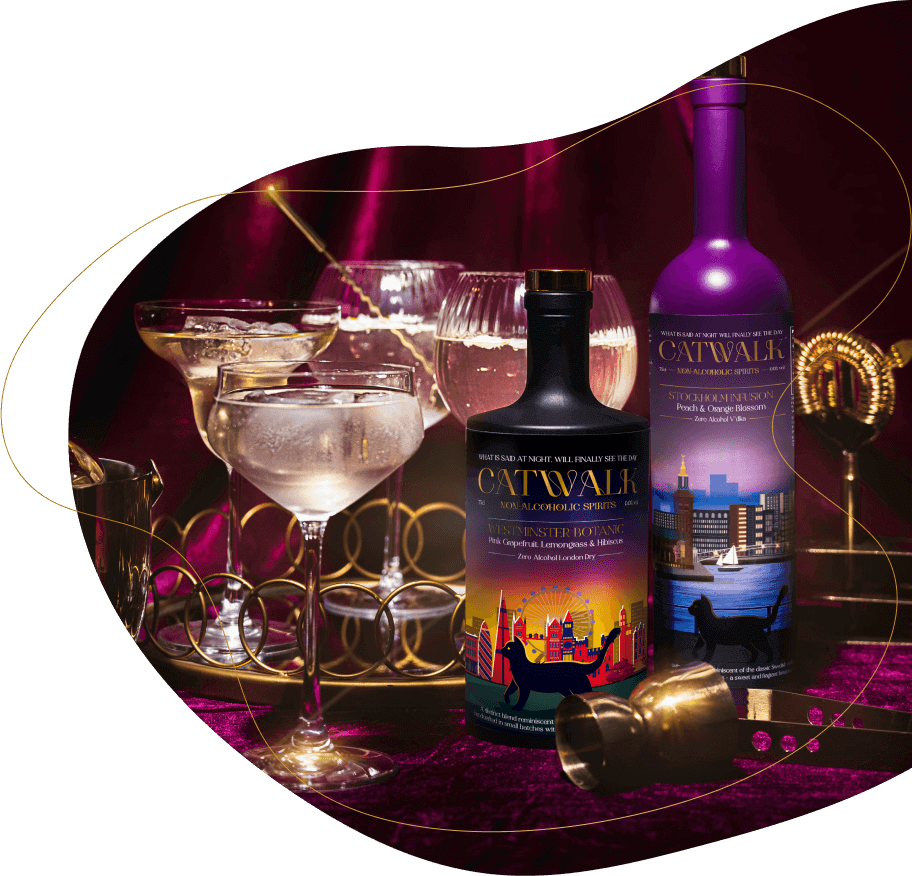
Catwalk Botanics is a Delhi-based startup that manufactures and markets premium non-alcoholic spirits, specifically focusing on gin and vodka alternatives. The brand was born from the realization that non-drinkers or those looking to reduce alcohol consumption are often limited to sugary sodas or uninspiring mocktails at social gatherings. By using high-quality botanicals, Catwalk offers a sophisticated drink that mimics the ritual of spirit consumption.
The company targets “conscious, self-aware, ethical drinkers”—individuals who lead active lifestyles but still want to enjoy the nightlife. Unlike traditional soft drinks, Catwalk is designed to be served in 30ml or 60ml portions with mixers, providing a guilt-free alternative that contains zero added sugar. The brand uses a mascot named “Batuta,” inspired by the medieval traveler Ibn Batuta, to tell a story of global botanical exploration.
Product Details
Catwalk currently offers four unique concoctions: two non-alcoholic gins and two non-alcoholic vodkas. These are crafted using carefully selected ingredients such as pink grapefruit, lemongrass, basil, hibiscus, cinnamon, and cardamom. The production process involves complex R&D to ensure that the botanical oils provide a flavor profile that stands up to being mixed with tonic water or soda, providing the “kick” of a cocktail without the ethanol.
Market Position
The brand occupies a premium niche in the beverage market, retailing its large bottles at ₹1299. According to The Indian Express, Catwalk has secured placements in over 150 retail stores and 50 hotels/restaurants across Delhi. Their USP lies in their artistic branding and the ability to offer a “socially acceptable” non-alcoholic option that looks and feels like a premium spirit.
| Business Detail | Information |
|---|---|
| Company Name | Catwalk (Catwalk Botanics) |
| Founders | Ishan Arora and Aamir Khan |
| Product Type | Non-Alcoholic Spirits |
| Price Range | ₹125 (300ml) – ₹1299 (750ml) |
| Primary Channel | Omnichannel (70% Offline, 30% Online) |
| Headquarters | Delhi, Delhi |
About Founder’s
The duo behind Catwalk brings a mix of creative and operational experience. Ishan Arora, an alumnus of IMT Law School, transitioned from a high-stakes legal career at Trilegal to the world of music and design. After studying sound engineering at Point Blank Music School in London and Berklee College of Music, he founded a successful creative agency that has worked with over 150 brands. This creative background is evident in Catwalk’s distinct visual identity.
Aamir Khan provides the distribution and sales muscle for the venture. With 12 years of experience in banking at ICICI and HDFC, he later pivoted to FMCG trading. Before launching Catwalk, Aamir managed a distribution network of 100 distributors for imported non-alcoholic beers from Dubai. His deep understanding of the Indian logistics and retail landscape is critical for the brand’s HORECA (Hotels, Restaurants, and Cafes) expansion strategy.
- Ishan Arora: Creative head with a background in corporate law and professional music production.
- Aamir Khan: Former banker with extensive experience in international FMCG distribution.
- Partnership: Met in 2017 and spent two years in R&D before launching the brand.
- Shared Vision: Both founders transitioned away from personal alcohol consumption to focus on high-performance lifestyles.
Shark’s and Founder’s QnA
Where did the term “Equally Attractive Non-Alcoholic Beverages” come from?
I first heard this term at Stanford University during my sister’s graduation. It refers to drinks that are fancy and tasty but healthy and alcohol-free. It’s a massive trend globally where people want to party without the hangover.
If there is 0% alcohol, how do you get the taste of gin?
We use actual gin botanicals like juniper. When mixed with tonic, you get the sensory experience of a real gin and tonic. We don’t try to mimic the ethanol burn, but rather the botanical complexity that makes spirits interesting.
Your sales are ₹6 Lakhs a month, but your burn is also ₹6 Lakhs. How do you justify that?
We are in the category-building phase. We have 65% gross margins overall, and on our website, it reaches 80%. The burn is largely due to our initial team and infrastructure. We are available in 150 stores without any active marketing spend so far.
How did you get a ₹24 Crore valuation with such low sales?
We raised ₹85 Lakhs from angel investors using CCDs with a floor of ₹19.2 Crores and a cap of ₹24 Crores. These investors believed in the product feedback we received from top mixologists and chefs during our soft launch phase.
Is this a gender-focused brand because of the name “Catwalk”?
Not at all. We chose Catwalk because we want it to be a fashion statement. Our mascot is a cat named Batuta who travels the world for spices. It’s about being conscious of your mind and body while still being stylish.
What is your plan if you don’t get funding today?
The train has already left the platform. We are getting repeat orders from restaurants and customers. If funding doesn’t come, we will simply reduce our burn and continue growing through our existing sales revenue. We have soft commitments outside as well.
Key Stats & Financials
At the time of the pitch, Catwalk was in its early growth stage, having officially launched only six months prior. The founders revealed that they had achieved ₹32 Lakhs in total sales since April 2024. However, the business was operating at a significant monthly burn of ₹5 to ₹6 Lakhs, effectively negating its monthly revenue of roughly the same amount.
Revenue and Profitability
- Total Sales (6 Months): ₹32 Lakhs
- Monthly Revenue: Averaging ₹5 Lakhs to ₹6 Lakhs
- Gross Margin: 65% (B2B/Offline) to 80% (D2C/Online)
- Burn Rate: ₹6 Lakhs per month
- Valuation Requested: ₹24.04 Crores
- Previous Funding: ₹85 Lakhs (at ₹24 Crore cap) and ₹25 Lakhs (at ₹5 Crore valuation)
Financial Breakdown
| Metric | Amount / Value |
|---|---|
| September 2024 Sales | ₹6 Lakhs | ₹6 Lakhs |
| August 2024 Sales | ₹5 Lakhs |
| Bank Balance | ₹3 Lakhs |
| Receivables | ₹18 Lakhs |
| MRP (Large Bottle) | ₹1299 |
Business Potential and TAM
The potential for Catwalk lies in the rapidly expanding non-alcoholic beverage sector in India. The global non-alcoholic wine and spirits market was valued at approximately $11 Billion in 2023 and is projected to grow significantly as health consciousness rises. In India, the premiumization of the beverage industry is a key driver, with consumers willing to pay higher prices for sophisticated, low-calorie alternatives to traditional alcohol.
The Total Addressable Market (TAM) includes not just teetotalers, but also “lifestyle drinkers” who are looking to reduce their alcohol intake during weekdays or specific social events. With the Indian middle class growing and urban nightlife expanding to Tier-2 cities, the market for “premium mixers” and “sober spirits” is expected to reach a CAGR of over 15% in the next five years. Catwalk’s challenge is to capture a significant share of this niche before established beverage giants launch their own competitive botanical ranges.
Market Size Analysis
The Indian non-alcoholic beer and spirit market is currently estimated at ₹500 Crores, but it remains highly underpenetrated. As the “sober-curious” movement gains traction among Gen Z and Millennials, the market is shifting from mass-market sugary colas to artisanal, botanical-heavy beverages. The HORECA segment alone represents a massive opportunity, as high-end bars seek to offer inclusive menus for all guests.
Growth Opportunities
- HORECA Expansion: Partnering with top-tier hotels to list Catwalk on standard bar menus.
- RTD (Ready-To-Drink) Cans: Launching pre-mixed botanical tonics for convenience-seeking consumers.
- Corporate Gifting: Tapping into the premium corporate gifting market during festive seasons.
- Export Market: Leveraging India’s exotic botanicals to export to high-demand markets like the UK and USA.
Catwalk: Ideal Target Audience & Demographics
| Demographic | Details |
|---|---|
| Primary Age Group | 25 – 45 Years |
| Secondary Age Group | 18 – 24 Years (Gen Z) |
| Interests | Fitness, Wellness, Nightlife, Mixology |
| Platform Preference | Instagram, Premium Retail Stores |
| Geography | Tier 1 Cities (Delhi, Mumbai, Bangalore) |
| Buying Behavior | Occasional Social Buyers, Health-Conscious |
Marketing and Distribution Strategy
Catwalk follows an omnichannel distribution model, though 70% of its current revenue is driven by offline retail and institutional sales. The founders believe that the “first moment of truth” happens when a consumer sees the bottle or tastes a professionally prepared cocktail at a bar. Their strategy revolves around visual appeal and high-quality liquid experience.
Customer Acquisition
Customer acquisition is primarily driven by physical presence in high-end retail chains and bars. On the digital front, the company spends approximately ₹1 Lakh per month on performance marketing, which yields around ₹1.5 Lakhs in direct website sales. The founders aim to shift more towards experiential marketing, such as tasting events and mixologist collaborations, to lower their digital CAC.
Distribution Channels
- Modern Retail: Presence in 150+ premium grocery and liquor boutiques in NCR.
- HORECA: Listed in 50+ hotels and bars as a premium non-alcoholic spirit.
- Direct-to-Consumer (D2C): Proprietary website contributing 30% of sales.
- Quick Commerce: Plans to onboard on platforms like Blinkit and Zepto for instant delivery.
Social Media and Content Strategy
The brand’s social media strategy focuses heavily on aesthetic lifestyle content. By leveraging Ishan’s creative background, the brand produces high-quality visuals that position the product as a luxury fashion accessory. They utilize the mascot “Batuta” to create a narrative around global flavors and travel, distinguishing themselves from clinical or purely health-focused beverage brands.
Catwalk Shark Tank Deal Outcome
Despite the founders’ professional pitch and the high-quality product, Catwalk failed to secure a deal on Shark Tank India. The sharks were unanimous in their concern regarding the ₹24 Crore valuation. Vineeta Singh pointed out that raising funds at such a high valuation with only ₹5 Lakhs in monthly sales could make the founders “impatient” and hinder long-term growth. She famously joked about wanting to meet the angel investors who gave them such a deal.
| Shark | Offer Detail |
|---|---|
| Anupam Mittal | Out. Liked the founders but felt it’s a difficult category. |
| Vineeta Singh | Out. Valuation was too high and market fit is too early. |
| Aman Gupta | Out. Believed the market size is too small currently. |
| Ritesh Agarwal | Out. Questioned the scalability of the current product fit. |
| Final Decision | No Deal |
Catwalk Post-Show Update
According to The Economic Times, the founders faced criticism regarding their market strategy and financial stability. Following the episode’s airing, Ishan Arora and Aamir Khan have continued to focus on their HORECA expansion. While they did not secure the shark’s capital, the brand received significant visibility, which they are leveraging to increase their retail footprint in Mumbai and Bangalore. Verified post-show revenue updates for Catwalk are not yet available, but the founders remain committed to their vision of category creation in the non-alcoholic space.
Business Analysis & Lessons
The Catwalk pitch highlights the classic tension between early-stage category creation and valuation reality. While the founders successfully built a high-end brand identity that rivals international players, their financial metrics did not yet support a multi-crore valuation in the eyes of the sharks. The high burn rate compared to revenue suggests that the business was heavily reliant on external capital to survive its initial education phase for consumers.
Entrepreneurs can learn the importance of timing when seeking venture capital. Entering the tank with “soft commitments” from outside investors can sometimes backfire if the valuation is perceived as inflated compared to the current “runway” or sales performance. However, Catwalk’s strength lies in its founders’ domain expertise and their ability to secure premium retail space, which are critical hurdles in the FMCG industry.
Key Takeaways
- Valuation Guardrails: High valuations in early rounds can limit future funding options if sales don’t scale exponentially.
- Category Risk: Building a brand in a non-existent category (non-alcoholic spirits in India) requires significant patience and capital.
- Branding Power: Premium packaging and a strong mascot narrative can open doors in HORECA that generic products cannot.
- Operational Focus: Reducing burn rate to match revenue is essential for survival when VC markets are “dry.”
Pitch Conclusion
Catwalk’s journey on Shark Tank India serves as a reminder that a great product and stunning branding are only half the battle; the numbers must tell a compelling story of growth and sustainability. While Ishan and Aamir left without a deal, they proved that there is a sophisticated market for non-alcoholic options in India. If you enjoyed this breakdown, check out Go DESi, NOCD, and Toffee Coffee Roasters.
[faq_accordian]