


Pitch Introduction
The Eat Better Co Shark Tank India pitch presented a compelling case of how traditional family recipes can be transformed into a high-growth modern business. Founders Mridula Kanoria, Vidushi Kanoria, and Shaurya Kanoria entered the tank seeking ₹50 Lakhs for 0.5% equity, valuing their company at a massive ₹100 Crores. This Jaipur-based startup focuses on the “Clean Label” movement, offering snacks that completely eliminate refined sugar, palm oil, and artificial preservatives. Their journey from a home kitchen to a ₹14.47 Crore revenue brand in just a few years caught the immediate attention of the investors, highlighting the massive shift in Indian consumer behavior toward health-conscious eating.
Business Overview
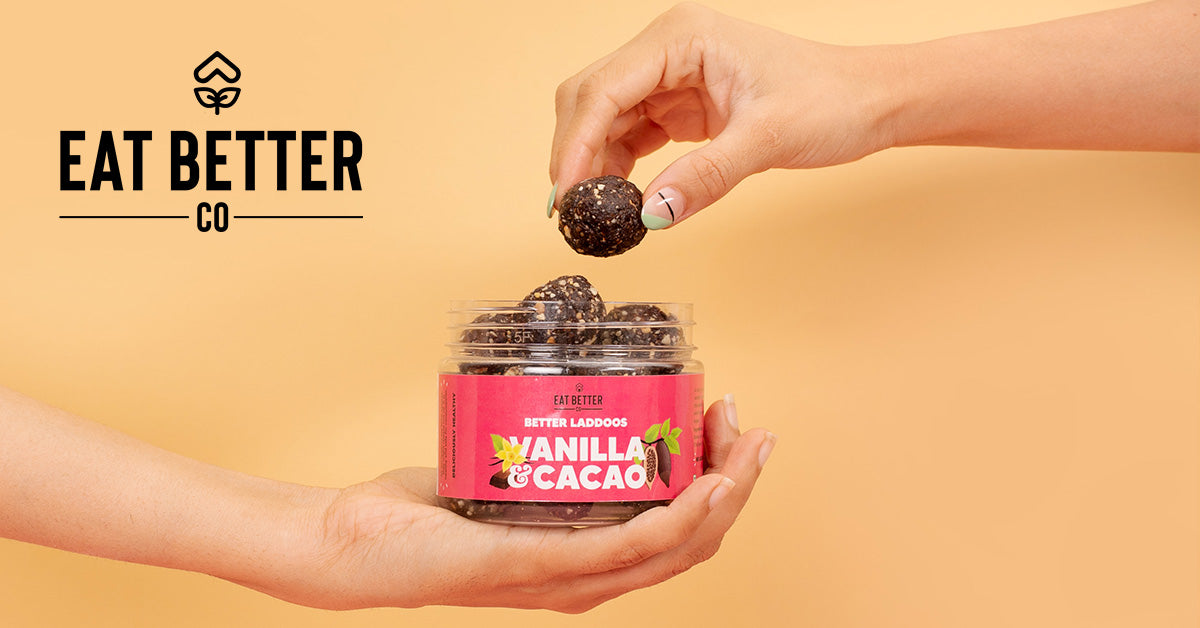
Eat Better Co operates in the rapidly expanding healthy snacking segment in India. The company identifies a significant gap in the market: the lack of snacks that balance authentic Indian taste with genuine health benefits. Most commercial snacks are either deep-fried or laden with hidden sugars and chemical preservatives. Eat Better Co solves this by using nutrient-dense ingredients like millets, seeds, and nuts, processed without the use of harmful additives. Their product line includes unique items like Hazelnut Chocolate Laddoos and Millet Desi Masala snacks, which have found a loyal customer base across India.
What sets this brand apart is its integrated business model. Unlike many D2C brands that outsource production to third-party manufacturers, Eat Better Co operates its own 20,000 square feet facility in Jaipur, Rajasthan. This allows them to maintain strict quality control and iterate on recipes quickly. The company has already served more than 3 Lakh families, proving that there is a substantial market for premium, healthy alternatives to traditional Indian namkeens and sweets.
Product Details
Eat Better Co boasts an impressive portfolio of 36 SKUs across 16 different product categories. Their best-selling items include the Hazelnut Chocolate Laddoos, which contribute 18% of their total revenue, followed by Vanilla Chocolate Laddoos and Millet Desi Masala. The products are designed to be travel-friendly and suitable for all age groups, from children’s school tiffins to office meetings. A critical aspect of their product philosophy is the “Clean Label” promise, meaning every ingredient used is something a consumer would typically find in a traditional Indian kitchen. They use high-quality natural sweeteners and avoid the “empty calories” associated with highly processed snacks.
Market Position
The brand positions itself as a premium yet accessible healthy snacking option. While many competitors focus strictly on “functional snacking” (high protein or keto-specific), Eat Better Co has pivoted toward “Everyday Snacking.” This strategic move allows them to target a much broader demographic rather than just fitness enthusiasts. Their unique selling proposition lies in the combination of clean ingredients, traditional taste profiles, and modern packaging. By maintaining a shelf life of only 6 months—deliberately short due to the lack of preservatives—they reinforce their commitment to freshness and natural quality.
| Business Detail | Information |
|---|---|
| Company Name | Eat Better Co |
| Founders | Mridula, Vidushi, and Shaurya Kanoria |
| Product Type | Healthy Snacks & Laddoos |
| Price Range | ₹150 to ₹500 per pack |
| Primary Channel | Quick Commerce & D2C Website |
| Headquarters | Jaipur, Rajasthan |
About Founder’s
The founding team of Eat Better Co represents a unique blend of traditional wisdom and modern business acumen. Mridula Kanoria, the matriarch of the family, is the heart of the product development, bringing 30 years of experience in searching for healthy family snacks. Her knowledge of traditional recipes and natural ingredients forms the foundation of the brand’s product line. Vidushi Kanoria, an MBA graduate from Symbiosis Pune, brings professional marketing expertise to the table. She previously co-founded a startup called Soxy Toes, which she scaled to a ₹6 Crore ARR before joining the family business. Shaurya Kanoria, an alumnus of Christ University, previously ran an employability training business that trained over 60,000 students, providing the operational grit needed to scale Eat Better Co.
- Mridula Kanoria leads a team of 60 women in the manufacturing facility, ensuring authentic taste.
- Vidushi Kanoria handles the branding and digital strategy, leveraging her experience with consumer brands like Godrej.
- Shaurya Kanoria oversees the business operations and distribution logistics.
- The family manages a complex cross-holding equity structure to maintain internal harmony between different family business interests.
Shark’s and Founder’s QnA
Aman Gupta: I see you have a multi-seed mix at my mother’s house. But I have a pet peeve—the packaging is very hard to open. Why is it like this?
We acknowledge that our current packaging can be improved. We are actually working on a new “tear notch” design to make it user-friendly. We are constantly iterating based on feedback, and the packaging you see today is already evolving to be more functional.
Vineeta Singh: You claim “High Protein” on the front of the pack, but the back says it only provides 2.4% of the RDA per serving. Is this claim right?
We follow the FSSAI guidelines which allow a “high protein” label if 100g of the product provides 20% of the required RDA. However, we realized that for a 40g pack, this can be confusing for consumers. We have already started moving away from functional claims like “high protein” in our new packaging to focus on being an everyday healthy snack brand.
Anupam Mittal: Your shelf life is only 6 months. Isn’t that dangerous for a packaged food brand when the industry standard is 12 to 18 months?
We have kept it at 6 months because we use zero preservatives. It is a conscious choice to ensure freshness. So far, we have received zero inventory returns because our stock moves very quickly through our distribution channels, especially on Quick Commerce.
Namita Thapar: You are doing ₹1 Crore per month on Blinkit alone. How did you manage such a massive transformation on Quick Commerce?
Quick Commerce has been a game-changer for us. Platforms like Blinkit and Zepto are seeing high demand for healthy alternatives. Swiggy is also helping us expand pan-India based on our performance. We are using these platforms not just for sales but for brand visibility.
Amit Jain: I see you raised a round at a ₹75 Crore valuation recently. Why are you asking for a ₹100 Crore valuation today?
Since our last round in December, our growth trajectory has been very strong. We closed last year at ₹14.4 Crores and are on track for ₹27-30 Crores this year. We are nearly at a breakeven point, losing only ₹10 Lakhs this year so far. The valuation reflects our growth and the near-profitability of the business.
Peyush Bansal: You are looking for ₹50 Lakhs but you already have ₹17 Crores in the bank from previous rounds. Why are you here?
Money is one part of it, but guidance is the bigger objective. For a brand like ours, the platform of Shark Tank and the mentorship of sharks who have built massive consumer brands is invaluable. We want to take this brand to every Indian household.
Key Stats & Financials
Eat Better Co has demonstrated explosive growth since its inception. In FY22, the company recorded sales of ₹67 Lakhs with a loss of ₹56 Lakhs. By FY23, they grew 8x to ₹5.33 Crores, though losses increased to ₹1.18 Crores. The breakthrough came in FY24, where they closed at ₹14.47 Crores and significantly narrowed their losses to ₹67 Lakhs. At the time of the pitch, they were clocking a monthly run rate that suggests a ₹27-30 Crore target for the current fiscal year, with current losses down to just ₹10 Lakhs, indicating they are very close to profitability.
Revenue and Profitability
- Lifetime Sales: Over ₹21 Crores since inception.
- Profit Margins: Targeting 17-18% EBITDA margin at scale (per founder’s projection).
- Valuation: Requested ₹100 Crores (post-money context of recent ₹75 Crore round).
- Investment Request: ₹50 Lakhs for 0.5% equity.
- Cash Burn: Significantly reduced to nearly zero in the current quarter.
Financial Breakdown
| Metric | Amount / Value |
|---|---|
| FY22 Revenue | ₹67 Lakhs |
| FY23 Revenue | ₹5.33 Crores |
| FY24 Revenue | ₹14.47 Crores |
| Current FY Loss | ₹10 Lakhs (Year-to-date) | ₹17 Crores total raised |
| Manufacturing Investment | ₹1.5 Crores in Capex |
Business Potential and TAM
The Total Addressable Market (TAM) for Eat Better Co is anchored in the massive Indian snacking industry, which is valued at approximately $5 Billion (₹42,000 Crores) and is expected to grow at a CAGR of 12%. Within this, the “Healthy Snacking” sub-segment is the fastest-growing niche, as urban consumers increasingly move away from high-calorie, fried traditional snacks. The rise of metabolic lifestyle diseases in India has created a structural shift where parents are looking for “tiffin-safe” snacks and young professionals are seeking guilt-free munching options for the office.
Market Size Analysis
The Indian organized snack market is dominated by giants, but the “Premium Healthy” category is currently fragmented, providing a huge runway for brands like Eat Better Co. The market for millet-based snacks alone is projected to reach $1 Billion by 2030, supported by the Indian government’s push for millet consumption. Eat Better Co is well-positioned to capture a significant share of this, particularly in Tier 1 and Tier 2 cities where Quick Commerce adoption is highest. Their current monthly revenue of ₹1 Crore from Blinkit alone suggests that their immediate addressable market is the digital-first, health-conscious urban population.
Growth Opportunities
- Expansion into Modern Trade: Currently only 9% of revenue; a push into Reliance Fresh, Nature’s Basket, and Star Bazaar could double offline sales.
- Institutional Sales: Partnering with airlines, high-end gyms, and corporate offices for snack vending and pantry supplies.
- Product Diversification: Expanding into healthy breakfast cereals or clean-label condiments to capture more of the “kitchen share.”
- International Export: High demand for Indian-origin healthy snacks in the Middle East, UK, and USA markets with large diaspora populations.
Eat Better Co: Ideal Target Audience & Demographics
| Demographic | Details |
|---|---|
| Primary Age Group | 25 – 45 years |
| Secondary Age Group | 10 – 18 years (via parents) |
| Interests | Fitness, Yoga, Clean Eating, Parenting |
| Platform Preference | Instagram, Blinkit, Amazon |
| Geography | Tier 1 Cities (Mumbai, Delhi, Bangalore) |
| Buying Behavior | Recurring monthly subscriptions/bulk buys |
Marketing and Distribution Strategy
Eat Better Co utilizes an omnichannel distribution strategy with a heavy tilt toward digital platforms. Their strategy focuses on “Availability and Visibility.” By being present on Quick Commerce, they cater to impulsive buying behavior, while their D2C website builds long-term brand loyalty through subscriptions and educational content about clean ingredients. They have managed to maintain a healthy split between different channels, reducing dependency on any single platform.
Customer Acquisition
The brand acquires customers primarily through targeted social media advertising and influencer collaborations within the health and wellness space. Their Customer Acquisition Cost (CAC) is optimized by focusing on high-repeat products like laddoos, which have a high LTV (Lifetime Value). By using “Clean Label” as their primary hook, they appeal to the trust factor of mothers and health enthusiasts who spend time reading ingredient labels before purchasing.
Distribution Channels
- Quick Commerce (35%): Significant presence on Blinkit and Zepto, contributing over ₹1 Crore monthly.
- D2C Website: Serves as the primary hub for their 3 Lakh registered family customers.
- Modern Trade (9%): Currently in early stages but expanding in premium retail outlets.
- E-commerce Marketplaces: Strong presence on Amazon and BigBasket for national reach.
Social Media and Content Strategy
Their content strategy revolves around transparency. They often showcase their manufacturing facility in Jaipur and the 60+ women who handcraft the laddoos. This “human touch” combined with scientific explanations of why they avoid certain oils and sugars helps build a community of informed consumers. They leverage Instagram Reels to show the “tasty side” of healthy eating, debunking the myth that healthy food is boring.
Eat Better Co Shark Tank Deal Outcome
The negotiation for Eat Better Co was intense, as sharks were impressed by the growth but wary of the high valuation. Namita Thapar was the first to jump in with an offer that matched their ask but included a royalty. Anupam Mittal offered a much larger cheque of ₹2.5 Crores but at a 5% equity (₹50 Crore valuation), which the founders found too dilutive. Guest shark Kunal Bahl also made an offer. Ultimately, the founders chose Namita Thapar due to her expertise in the health and wellness space and her willingness to respect their current valuation cap.
| Shark | Offer Detail |
|---|---|
| Namita Thapar | ₹50 Lakhs for 0.5% Equity + 1% Royalty until ₹50 Lakhs is recouped |
| Anupam Mittal | ₹2.5 Crores for 5% Equity (Valuation ₹50 Crores) |
| Kunal Bahl (Guest) | ₹50 Lakhs for 1.5% Equity |
| Vineeta Singh | Out (Concerns over 17-18% EBITDA margin feasibility) |
| Final Decision | Accepted Namita Thapar’s Offer |
Eat Better Co Post-Show Update
According to [The Economic Times](https://m.economictimes.com/magazines/panache/earning-rs-1-crore-per-month-from-home-kitchen-shark-tank-india-judge-namita-thapar-salutes-the-entrepreneur/articleshow/118600207.cms), the brand has successfully maintained its momentum after the show, continuing to earn over ₹1 Crore per month from its home-grown roots. The investment from Namita Thapar has helped the brand refine its distribution and marketing. Their story has been highlighted as a prime example of successful “Mother-in-law and Daughter-in-law” entrepreneurship in India. Verified post-show revenue figures for the full fiscal year are expected to align with their ₹30 Crore projection as they expand their footprint in Modern Trade.
Business Analysis & Lessons
The success of Eat Better Co lies in its ability to scale while keeping manufacturing in-house. This is a strategic moat that many D2C brands lack. By controlling the production, they can ensure the “Clean Label” promise is never compromised by co-packers looking to cut costs. Furthermore, their rapid adoption of Quick Commerce shows a keen understanding of the modern Indian consumer’s need for instant gratification. They didn’t just build a product; they built a distribution machine that meets the customer exactly where they are—on their phones, looking for a snack to arrive in 10 minutes.
For other entrepreneurs, Eat Better Co offers a lesson in valuation and capital efficiency. Despite having significant funds in the bank, they chose to pitch on Shark Tank for the strategic value of the sharks. They also showed the importance of pivoting—moving from high-protein “functional” claims to “everyday” healthy snacking broadened their market reach significantly. The negotiation also highlighted that a royalty deal can sometimes be better than high equity dilution if you are confident in your cash flow, as equity is permanent while royalties are temporary.
Key Takeaways
- Lesson 1: In-house Manufacturing is a Moat. Controlling your own factory allows for better quality control and higher margins in the long run.
- Lesson 2: Quick Commerce is the New Retail. Achieving ₹1 Crore monthly on a single platform like Blinkit validates the power of instant delivery for FMCG.
- Lesson 3: Clean Label Transparency. Modern consumers value what is NOT in the product as much as what IS in it.
- Lesson 4: Capitalize on Traditional Strengths. Using “Grandma’s recipes” as a baseline for a modern ₹14 Crore business provides an authentic narrative that resonates with Indian buyers.
Pitch Conclusion
Eat Better Co stands as a beacon for home-grown Indian brands that refuse to compromise on quality for the sake of mass production. Their journey from a small office to a 20,000 sq ft facility, and from ₹67 Lakhs to a ₹100 Crore valuation, is a testament to the power of the healthy snacking trend in India. If you enjoyed this breakdown, check out The Healthy Binge, Go DESi, and Fit & Flex for more insights into the Indian food and beverage industry.
[faq_accordian]