


Pitch Introduction
The Gud Gum Shark Tank India pitch introduced a shocking reality to the viewers: most commercial chewing gums are essentially flavored plastic. Founders Bhuvan Nagori and Mayank Nagori entered the tank with a mission to clean up the confectionery industry. They highlighted that regular gums contain polyvinyl acetate (PVA), a plastic compound used to make tires and glue, which takes over 100 years to biodegrade. Their solution, Gud Gum, is India’s first 100% natural, plastic-free, and biodegradable chewing gum brand based in Bangalore, Karnataka.
The duo presented a compelling case for why India needs a healthier alternative to sugar-laden, petroleum-based gums. With backgrounds in Chemical Engineering and Marketing, the brothers combined science and sustainability to create a product that appeals to health-conscious adults, athletes, and parents. Their pitch wasn’t just about a snack; it was about disrupting a ₹1000 Crore market dominated by global giants who have long ignored the environmental and health impacts of synthetic gum bases.
Business Overview
Gud Gum operates in the niche but rapidly growing ‘better-for-you’ confectionery space. Unlike traditional brands that use a synthetic rubber base, this startup utilizes the sap of the Chicle tree. This natural latex provides the same chewy texture without the chemical footprint. By replacing artificial sweeteners like aspartame with Xylitol and Stevia, they have created a product that is safe for diabetics and actually beneficial for oral health, as Xylitol is known to prevent cavities.
The business model focuses on premium positioning. While a standard strip of gum in India costs ₹1, Gud Gum retails at a significantly higher price point, targeting the Lakhs of consumers who are willing to pay for transparency and quality. They have expanded their reach through both D2C channels and premium retail outlets, ensuring that their environmental message reaches the right demographic.
Product Details
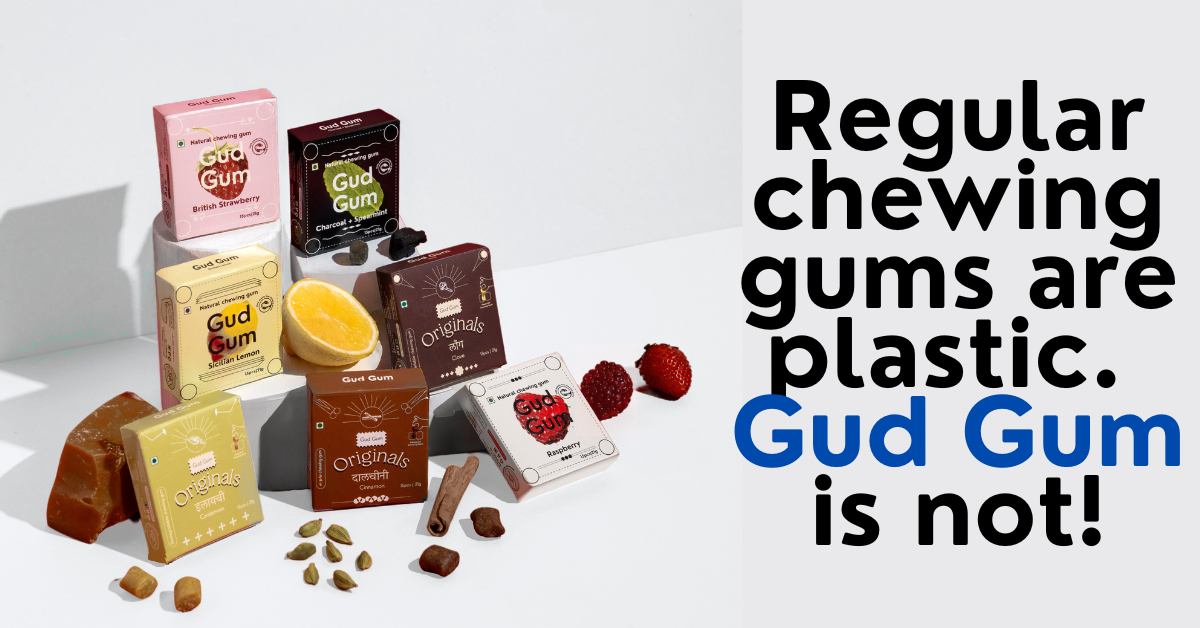
The core of the product lies in its 100% natural ingredients. The founders have eliminated all synthetic fillers, softeners, and artificial colors. Instead, they use fruit extracts and essential oils to provide flavors like Raspberry, Cinnamon, Lemon, and Charcoal Mint. The gum is non-sticky, meaning it won’t ruin carpets or sidewalks, and it naturally breaks down in the soil within weeks of disposal.
Each pack is designed for the modern, active lifestyle. The use of Xylitol is a strategic choice, as it does not spike blood sugar levels. Furthermore, the brand has experimented with functional variants, such as caffeinated gum for athletes and gums designed for jawline exercises. Currently, they offer 9 unique SKUs, catering to diverse taste palettes from traditional mint to adventurous spices.
Market Position
Gud Gum positions itself as a lifestyle essential rather than a ‘time-pass’ item. In the Indian market, chewing gum has traditionally been a low-involvement purchase. The Nagori brothers are attempting to move it into the functional food category. Their primary competition includes global leaders like Mars (Wrigley’s), Lotte, and Perfetti Van Melle. However, their USP of being plastic-free gives them a massive advantage among eco-conscious Gen Z and Millennial shoppers.
By targeting specific use-cases such as smoking cessation, diabetic-friendly snacking, and athletic focus, they have carved out a niche where price sensitivity is lower. They are not competing for the ₹1 kirana store customer but for the premium urban consumer who shops at high-end supermarkets and online marketplaces like Amazon and BigBasket.
| Business Detail | Information |
|---|---|
| Company Name | Gud Gum |
| Founders | Bhuvan Nagori and Mayank Nagori |
| Product Type | Natural Plastic-Free Chewing Gum |
| Price Range | ₹50 to ₹99 per pack |
| Primary Channel | D2C (Website) and Retail |
| Headquarters | Bangalore, Karnataka |
About Founder’s
The Nagori brothers bring a potent mix of technical expertise and marketing savvy to the table. Bhuvan Nagori, the younger brother, is the brain behind the formulation. He holds a degree in Chemical Engineering from BMS College of Engineering and a Master’s in Food Science from the University of Nottingham. His obsession with reading labels and understanding food chemistry led him to discover the presence of plastic in conventional gums.
Mayank Nagori, the elder brother, leads the branding and strategic operations. A graduate of Christ University specializing in Marketing and Entrepreneurship, Mayank has a deep-rooted interest in sustainability. Before Gud Gum, he was involved in a Hydroponics venture and served as a CMO for a freshness company. Together, they have bootstrapped the company with an initial loan of ₹6 Lakhs from their father.
- Bhuvan’s background in Food Tech allows for in-house R&D and formulation.
- Mayank’s previous experience in sustainable agriculture informs the brand’s eco-friendly ethos.
- The brothers own 80% of the company (Bhuvan 50%, Mayank 30%), with Mayank’s wife holding 20%.
- They have already saved over 850 kg of plastic from entering the environment through their sales.
Shark’s and Founder’s QnA
Is there really plastic in normal chewing gum?
Yes, most commercial gums use polyvinyl acetate (PVA). This is the same compound used to make tires and glue. It takes over 100 years to biodegrade and isn’t something people should be chewing on daily. We use the sap of the Chicle tree instead, which is completely natural and biodegradable.
Why is your gum so expensive compared to Orbit or Boomer?
Our ingredients are significantly more costly. We replaced synthetic gum base with natural Chicle, which costs us about ₹250 per kg currently. We also use natural essential oils and fruit extracts instead of artificial flavors. As we scale, we aim to bring the base cost down to ₹75 per kg, which will help us lower the retail price.
Who is actually buying this premium gum in India?
We target the 22 to 45 age group. Our primary customers are athletes who use it for focus, parents looking for candy replacements for kids, smokers who chew gum frequently, and diabetic individuals who need sugar-free options. It is an essential lifestyle product for them.
What is the total size of the chewing gum market in India?
The organized retail market is worth approximately ₹1000 Crores. However, the premium multi-pack segment, which we are targeting, is currently estimated at around ₹30 Crores. We believe we can grow this segment by repositioning gum as a health and functional supplement.
Are you making any money right now?
Yes, we are currently profitable. On a pack with an MRP of ₹99, our blended discount price is around ₹81. After accounting for COGS, shipping, marketing, and admin costs, we are left with a net profit of approximately ₹1 per pack. We have been completely bootstrapped until now.
How do you plan to compete with the giants like Wrigley’s?
We are not trying to be a mass-market ₹1 gum. We are building a ‘better-for-you’ confectionery brand. Just as gummies became a ₹500-600 Crore market by adding nutritional benefits, we are adding functional benefits like caffeine and oral care properties to chewing gum to create a new category.
Key Stats & Financials
At the time of their pitch in Season 3, Gud Gum showed steady growth and financial discipline. Having started sales in April 2022, they managed to reach a significant milestone within their first 20 months of operation without any external institutional funding.
Revenue and Profitability
- FY 2022-23 Sales: ₹29.7 Lakhs (Net)
- FY 2023-24 (Until Nov): ₹53 Lakhs
- Full Year Projection (FY24): ₹1 Crore
- Profitability: Currently profitable on a unit basis.
- Valuation Requested: ₹10 Crores (₹50 Lakhs for 5%).
- Equity Structure: 100% founder-owned prior to the deal.
Financial Breakdown
| Metric | Amount / Value |
|---|---|
| Current Yearly Revenue (Projected) | ₹1 Crore |
| Previous Year Sales | ₹29.7 Lakhs |
| Gross Margin | High (Premium Positioning) | ₹1 (After all expenses) |
| Initial Bootstrapped Investment | ₹6 Lakhs |
| Number of SKUs | 9 |
Business Potential and TAM
The global chewing gum market is a multi-billion dollar industry, but it is undergoing a massive shift toward natural and functional ingredients. In India, the market is valued at ₹1000 Crores, but it has been stagnant due to a lack of innovation. Gud Gum is tapping into the “Better-for-you” trend that has already disrupted categories like beverages, snacks, and biscuits. By 2025, the demand for organic and sugar-free confectionery in India is expected to grow at a CAGR of over 12%.
Market Size Analysis
While the mass market is dominated by ₹1-2 price points, the premium segment (packs costing ₹50+) is expanding as urban disposable income rises. The Total Addressable Market (TAM) for premium, health-oriented confectionery in India’s top 50 cities is estimated to be over ₹250 Crores. Gud Gum’s strategy to move beyond gum into lollipops, coffee drops, and functional candies significantly expands their Serviceable Obtainable Market (SOM).
Growth Opportunities
- Functional Gums: Developing caffeinated gums for the ₹3000 Crore energy supplement market.
- B2B Partnerships: Collaborating with dental clinics and gyms to position gum as an oral care and jawline tool.
- Export Potential: High demand for plastic-free gum in European and North American markets where eco-regulations are stricter.
- Portfolio Expansion: Launching sugar-free lollipops and natural lozenges to capture the ‘Healthy Candy’ segment.
Gud Gum: Ideal Target Audience & Demographics
| Demographic | Details |
|---|---|
| Primary Age Group | 22 to 35 Years |
| Secondary Age Group | 35 to 45 Years |
| Interests | Fitness, Sustainability, Bio-hacking, Oral Hygiene |
| Platform Preference | Instagram, LinkedIn, Amazon |
| Geography | Tier 1 Cities (Bangalore, Mumbai, Delhi, Hyderabad) |
| Buying Behavior | Value transparency over price, repeat D2C buyers |
Marketing and Distribution Strategy
Gud Gum employs a multi-channel distribution strategy to balance brand awareness with sales volume. Currently, 50% of their business comes from online channels (D2C website and marketplaces), while the other 50% comes from offline retail. This 50-50 split is unusual for a young startup and demonstrates strong product-market fit in physical stores.
Customer Acquisition
The brand focuses on educational marketing. Their primary hook is the “plastic in gum” revelation, which creates immediate curiosity and concern. They use targeted Meta ads and influencer collaborations with fitness coaches and dentists to build authority. Their CAC is optimized by focusing on high-intent keywords related to “sugar-free gum” and “natural candy.”
Distribution Channels
- D2C Website: High-margin channel for subscription-based sales.
- E-commerce Marketplaces: Strong presence on Amazon and BigBasket for national reach.
- Premium Retail: Availability in 120+ retail stores across 14 cities, including Nature’s Basket.
- Specialized B2B: Supplying to sports teams and dental wellness centers.
Social Media and Content Strategy
Their social media strategy revolves around Sustainability and Science. They frequently post content explaining the harvesting of Chicle sap and the harmful effects of PVA. By using “Behind-the-Scenes” factory footage, they build trust with a skeptical consumer base that is tired of hidden ingredients in FMCG products.
Gud Gum Shark Tank Deal Outcome
The negotiation for Gud Gum was one of the most interesting in Season 3. While Namita Thapar found the product too expensive and the market too small, the other Sharks saw the potential in disrupting a stagnant category. Vineeta Singh, Anupam Mittal, Aman Gupta, and Ritesh Agarwal eventually teamed up to offer a comprehensive deal.
| Shark | Offer Detail |
|---|---|
| Vineeta Singh | ₹50 Lakhs for 10% Equity + 5% Royalty until ₹50L Recouped |
| Anupam Mittal | Joined 4-Shark Deal: ₹80 Lakhs for 10% Equity |
| Aman Gupta | Joined 4-Shark Deal: ₹80 Lakhs for 10% Equity |
| Ritesh Agarwal | Joined 4-Shark Deal: ₹80 Lakhs for 10% Equity |
| Final Decision | Accepted: ₹80 Lakhs for 10% Equity + 4% Royalty until ₹80 Lakhs Recouped |
Gud Gum Post-Show Update
According to NorthEast Now, the impact of the Shark Tank appearance was immediate and overwhelming. The brand experienced a massive surge in demand, leading them to temporarily move to a pre-order-only model to manage the influx of customers. The founders reported that the show provided the validation needed to scale their manufacturing and explore wider retail distribution.
The deal was successfully closed with all four Sharks — Vineeta Singh, Anupam Mittal, Aman Gupta, and Ritesh Agarwal. This capital infusion and strategic mentorship have allowed Gud Gum to accelerate their R&D for the next generation of functional gums and expand their presence in high-traffic areas like airports and premium hotels through Ritesh Agarwal’s network.
Business Analysis & Lessons
Gud Gum’s success lies in its ability to turn a mundane commodity into a high-value, purpose-driven brand. By identifying a ‘hidden enemy’ (plastic in gum), they created an immediate ‘reason to switch’ for health-conscious consumers. The pitch was technically sound, with Bhuvan’s food science background providing the necessary credibility to back up their bold claims about ingredients.
However, the business faces significant challenges in price elasticity. Moving from a ₹1 price point to ₹50+ requires constant brand reinforcement and a clear demonstration of value. Their decision to accept a royalty deal, while diluting short-term cash flow, was a strategic move to bring in four influential mentors who can open doors in retail, hospitality, and branding.
Key Takeaways
- Ingredient Transparency: In the age of label-reading consumers, being the first to expose an industry-standard ‘bad’ ingredient can be a powerful competitive advantage.
- Category Repositioning: Don’t just compete on price; compete on usage. By making gum a ‘health supplement’ for jawline or focus, Gud Gum moved out of the low-margin candy war.
- Operational Discipline: Achieving profitability on a bootstrapped budget of just ₹6 Lakhs impressed the Sharks and gave the founders high leverage during negotiations.
- Smart Dilution: The founders were willing to give up 10% and a royalty to secure four distinct strategic advantages (Aman’s branding, Vineeta’s FMCG expertise, Ritesh’s hospitality reach, and Anupam’s strategic scaling).
Pitch Conclusion
The Gud Gum Shark Tank India story is a testament to how innovation can come from the most unexpected places — even the bottom of a chewing gum wrapper. Bhuvan and Mayank have not only built a profitable business but have also started a conversation about plastic consumption in our daily lives. With a ₹80 Lakh investment and the backing of four industry titans, Gud Gum is well on its way to becoming a legacy brand in the Indian confectionery space.
If you enjoyed this breakdown, check out Go DESi, The Cinnamon Kitchen, and The Healthy Binge for more insights into India’s innovative food and beverage startups.
[faq_accordian]