


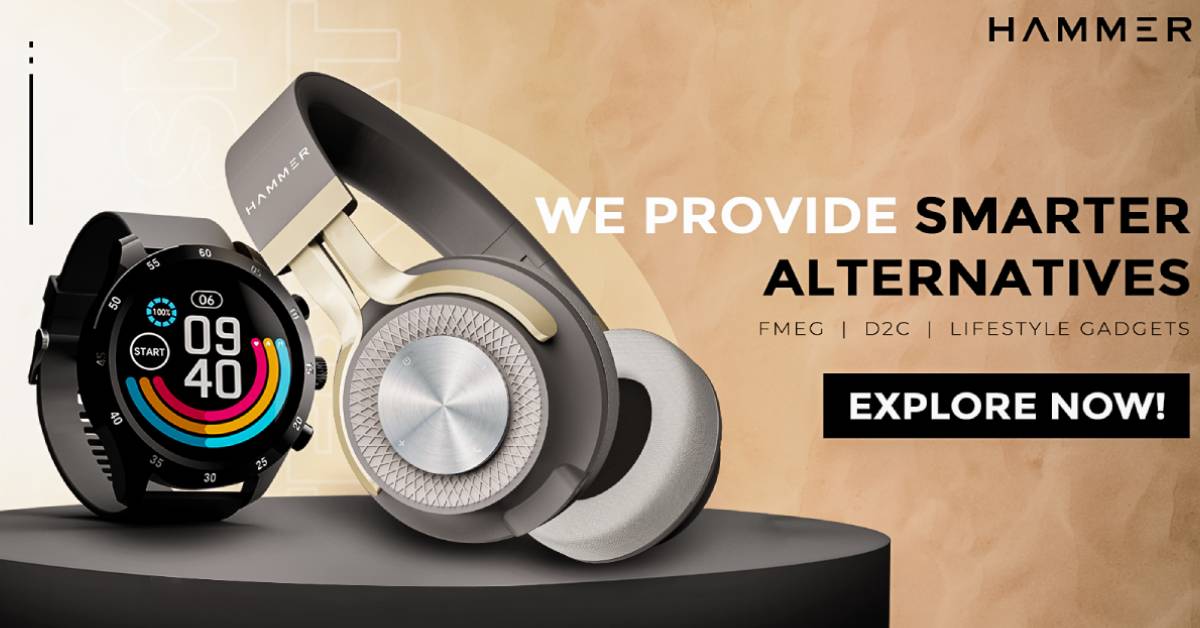

Hammer Lifestyle Shark Tank India Pitch Breakdown
Hammer Lifestyle Shark Tank India pitch remains one of the most memorable moments from Season 1, featuring an intense bidding war between Aman Gupta and Anupam Mittal. Founded by Rohit Nandwani in 2019, this Panipat-based electronics brand entered the tank seeking investment for their affordable smartwatches, wireless earbuds, and grooming products. The pitch not only highlighted the growing demand for budget-friendly smart gadgets in India but also sparked a debate about competition, brand positioning, and strategic investment decisions that left viewers captivated.
Business Overview
Hammer Lifestyle operates as a direct-to-consumer electronics brand specializing in affordable smart lifestyle products. The company addresses the significant market gap between premium international brands and low-quality local alternatives by offering feature-rich gadgets at middle-class price points. Their product portfolio includes Bluetooth earphones, smartwatches, electric toothbrushes, trimmers, and fitness bands targeting India’s tech-savvy youth.
The brand solves the critical pain point of expensive smart technology that remains inaccessible to average Indian consumers. By leveraging efficient supply chains and eliminating traditional retail markups, Hammer delivers quality comparable to brands like boAt and Noise at 30-40% lower prices. Their target market comprises millennials and Gen Z consumers aged 18-35 who seek style, functionality, and affordability in their tech accessories.
| Company Details | Information |
|---|---|
| Company Name | Hammer Lifestyle |
| Founded | 2019 |
| Founder | Rohit Nandwani |
| Headquarters | Panipat, Haryana |
| Industry | Consumer Electronics / FMEG |
| Website | hammeronline.in |
About Founders
Rohit Nandwani founded Hammer Lifestyle with a vision to democratize smart technology access for Indian consumers. Hailing from Panipat, Haryana, Rohit identified the opportunity in the wireless audio market when AirPods were gaining popularity but remained unaffordable for most Indians. With a background in business and deep understanding of consumer electronics manufacturing, he bootstrapped the company initially before seeking Shark Tank investment for scaling operations.
The founding team brought expertise in supply chain management, digital marketing, and product design. Rohit’s strategic decision to manufacture in China while maintaining strict quality control allowed Hammer to compete effectively against established players. The team’s agility in launching new SKUs rapidly helped them capture market trends before larger competitors could respond.
- Rohit Nandwani: Founder and CEO from Panipat, Haryana
- Bootstrapped initial operations with personal savings
- Background in electronics trading and supply chain
- Team of 3 co-founders handling operations, marketing, and tech
- Manufacturing partnerships in China and India
Shark’s and Founder’s QnA
Rohit Nandwani:
Hello Sharks, I am Rohit Nandwani from Panipat, Haryana. We are Hammer Lifestyle, and we are here to make smart technology affordable for every Indian. I am seeking ₹30 Lakhs for 3% equity in my company, valuing us at ₹10 Crores.
Aman Gupta:
Panipat se ho?
Rohit Nandwani:
Yes Aman, we are based in Panipat but operate pan-India through our D2C website and marketplaces like Amazon and Flipkart.
Anupam Mittal:
What products do you exactly sell and what is your monthly revenue currently?
Rohit Nandwani:
We sell wireless earbuds, smartwatches, grooming kits, and electric toothbrushes. Currently we are doing ₹70 Lakhs per month in revenue with 14 SKUs active in the market.
Ashneer Grover:
₹70 Lakhs monthly means ₹8.4 Crores annually. What are your margins like in this electronics business?
Rohit Nandwani:
Our gross margins are around 40% and we are operationally profitable. We spend heavily on digital marketing to acquire customers, but our repeat purchase rate is growing at 25% month-on-month.
Namita Thapar:
Why should anyone buy Hammer instead of established brands like boAt or Noise? What is your USP?
Rohit Nandwani:
We offer similar features at 30% lower prices. Our smartwatches start at ₹1,500 whereas competitors charge ₹2,500 for similar specifications. We also focus heavily on design aesthetics that appeal to younger demographics.
Aman Gupta:
This is interesting because I run boAt, and you are essentially my direct competitor. However, I see massive potential in your execution and pricing strategy.
Anupam Mittal:
Aman, how can you invest in a direct competitor to boAt? Is there no conflict of interest here?
Aman Gupta:
Anupam, the market is huge and Hammer is targeting a slightly different segment. Also, Rohit’s execution capability impresses me. I think I can add significant value here despite the overlap.
Vineeta Singh:
Rohit, what will you do with the ₹30 Lakhs you are asking for?
Rohit Nandwani:
We will use 60% for inventory and working capital, 30% for marketing and brand building, and 10% for team expansion. We need to stock up before the festive season.
Peyush Bansal:
What is your customer acquisition cost and lifetime value?
Rohit Nandwani:
Our CAC is ₹450 and LTV is ₹1,800, giving us a healthy 4:1 ratio. We retain customers through email marketing and new product launches.
Aman Gupta:
I want to make an offer, but I need more equity to justify the risk given competition with boAt. I offer ₹1 Crore for 40% equity.
Anupam Mittal:
I will also offer ₹1 Crore but for 35% equity, and I will help you with international expansion and strategic partnerships.
Rohit Nandwani:
This is overwhelming. Aman, your expertise in audio electronics is unmatched, but Anupam’s offer is better in terms of dilution.
Aman Gupta:
Rohit, I am ready to match Anupam at 35% but I believe my strategic value in electronics manufacturing and distribution is worth the extra 5%. Take it or leave it.
Rohit Nandwani:
Aman, I accept your offer of ₹1 Crore for 40% equity. Your experience with boAt will help Hammer scale faster than anyone else.
Key Stats & Financials
The financial performance of Hammer Lifestyle demonstrated impressive traction for a bootstrapped electronics brand operating for just two years. The company showcased strong unit economics with healthy gross margins typical of consumer electronics, though significant marketing spends impacted net profitability during the growth phase.
- Monthly Revenue: ₹70 Lakhs at time of pitch
- Annual Revenue Run Rate: ₹8.4 Crores
- Gross Margins: Approximately 40% across product categories
- Customer Acquisition Cost: ₹450 per user
- Lifetime Value: ₹1,800 with 25% month-on-month retention growth
| Financial Metric | Value |
|---|---|
| Original Ask | ₹30 Lakhs for 3% Equity |
| Valuation Asked | ₹10 Crores |
| Final Deal Amount | ₹1 Crore |
| Final Equity Given | 40% |
| Final Valuation | ₹2.5 Crores |
| Deal Investor | Aman Gupta |
Business Potential and TAM
The Indian wearable electronics market presents massive opportunities for brands like Hammer Lifestyle. With increasing smartphone penetration and digital literacy, demand for affordable smart accessories continues growing at 25% CAGR. The Total Addressable Market for wireless audio and wearables in India exceeds ₹15,000 Crores, with the affordable segment representing 60% of total volume.
Hammer’s expansion into grooming and lifestyle products diversifies revenue streams beyond electronics. The brand’s digital-first approach allows rapid scaling without heavy retail infrastructure investments. Post-Shark Tank, the company projected reaching ₹30 Crores annual revenue within 12 months through expanded marketing and inventory capacity.
- Wearables market growing at 25% CAGR in India
- Target demographic: 400 million millennials and Gen Z consumers
- Grooming electronics segment expanding at 30% annually
- Opportunity to capture Tier 2 and Tier 3 cities through D2C
- Potential for private label manufacturing partnerships
Hammer Lifestyle: Ideal Target Audience & Demographics
| Demographic | Details |
|---|---|
| Age Group | 18-35 years (Millennials & Gen Z) |
| Income Level | ₹15,000-₹50,000 monthly income |
| Location | Metro and Tier 2 cities primarily |
| Psychographics | Tech-savvy, price-conscious, style-oriented |
| Purchase Behavior | Online-first, research-driven, deal-seeking |
Marketing and Distribution Strategy
Hammer Lifestyle employs a multi-channel digital strategy focusing heavily on performance marketing and influencer collaborations. The brand leverages Instagram and YouTube influencers in the tech and lifestyle segments to drive awareness among target demographics. Their marketplace presence on Amazon, Flipkart, and Myntra captures high-intent shoppers, while the D2C website maximizes margins through direct customer relationships.
The company plans to expand offline through exclusive brand stores and multi-brand retail partnerships in Tier 2 cities. Future roadmap includes launching IoT-enabled smart home devices and expanding the grooming range to include premium trimmers and oral care systems. Manufacturing localization under the Make in India initiative remains a priority to reduce import dependencies and improve margins.
- Heavy investment in Facebook and Google Ads for customer acquisition
- Influencer marketing through tech reviewers and lifestyle creators
- Multi-marketplace strategy covering Amazon, Flipkart, and Myntra
- Festive season campaigns driving 5x sales spikes
- Email and WhatsApp marketing for repeat purchases
Hammer Lifestyle Deal Outcome
Despite intense competition between Sharks, Hammer Lifestyle secured a deal with Aman Gupta, co-founder of boAt. The negotiation saw Anupam Mittal offering competing terms, but Rohit Nandwani ultimately chose Aman despite higher equity dilution, recognizing the strategic value of Aman’s expertise in the audio and wearables sector. The deal represented a 75% discount from the original valuation asked.
| Deal Parameter | Details |
|---|---|
| Investor | Aman Gupta (boAt Co-founder) |
| Investment Amount | ₹1 Crore |
| Equity Acquired | 40% |
| Post-Money Valuation | ₹2.5 Crores |
| Deal Status | Closed on-air (terms modified post-show) |
Hammer Lifestyle Post-Show Update
Following the Shark Tank India appearance, Hammer Lifestyle experienced explosive growth in brand recognition and sales. Monthly revenues reportedly crossed ₹2 Crores within months of the episode airing, representing nearly 3x growth from the ₹70 Lakhs reported during the pitch. Website traffic increased 5x as viewers searched for the brand online immediately after watching the episode.
The company expanded its product portfolio beyond the original 14 SKUs to include advanced smartwatches with health monitoring features and premium grooming kits. While the exact final terms of the deal with Aman Gupta were modified post-show (common in Shark Tank deals due to due diligence), the association with boAt’s founder provided invaluable credibility in the competitive electronics market.
Business Analysis & Lessons
The Hammer Lifestyle pitch offers crucial lessons for entrepreneurs entering competitive markets. Rohit Nandwani demonstrated that execution speed and pricing strategy can create defensible positions even against well-funded competitors. By accepting a lower valuation than initially sought, he secured a strategic partner rather than just capital, prioritizing long-term growth over short-term ego.
The pitch also highlighted the importance of customer unit economics in investor decisions. The healthy 4:1 LTV to CAC ratio convinced Sharks that the business could scale profitably with proper funding. Additionally, the willingness to pivot from pure audio to lifestyle grooming showed adaptability essential for D2C brand survival.
- Strategic investors provide more value than financial investors in competitive sectors
- Strong unit economics (LTV/CAC ratios) trump vanity metrics for investors
- Product diversification reduces dependency on single category trends
- Geographic advantages (Panipat’s logistics) can create operational efficiencies
- Television exposure accelerates brand trust faster than traditional advertising
Pitch Conclusion
Hammer Lifestyle’s Shark Tank India journey exemplifies how bootstrapped startups can capture investor attention through solid fundamentals rather than just hype. The bidding war between Aman Gupta and Anupam Mittal validated the massive potential in India’s affordable electronics segment. For entrepreneurs watching, the pitch underscores that knowing your numbers, accepting strategic dilution, and demonstrating clear market positioning can turn competitive disadvantages into investment opportunities. Rohit Nandwani’s willingness to partner with a market leader, despite initial hesitation about equity loss, positioned Hammer for exponential growth in India’s booming smart gadgets market.