



Pitch Introduction
Hiccup Shark Tank pitch addressed a critical environmental issue in the running community. The sustainable silicone cup service aimed to revolutionize race day hydration by eliminating single-use paper cups at marathons and running events. Founder Kristina Smithe entered the tank seeking $200,000 for 10% equity to expand her innovative waste reduction solution.
Business Overview
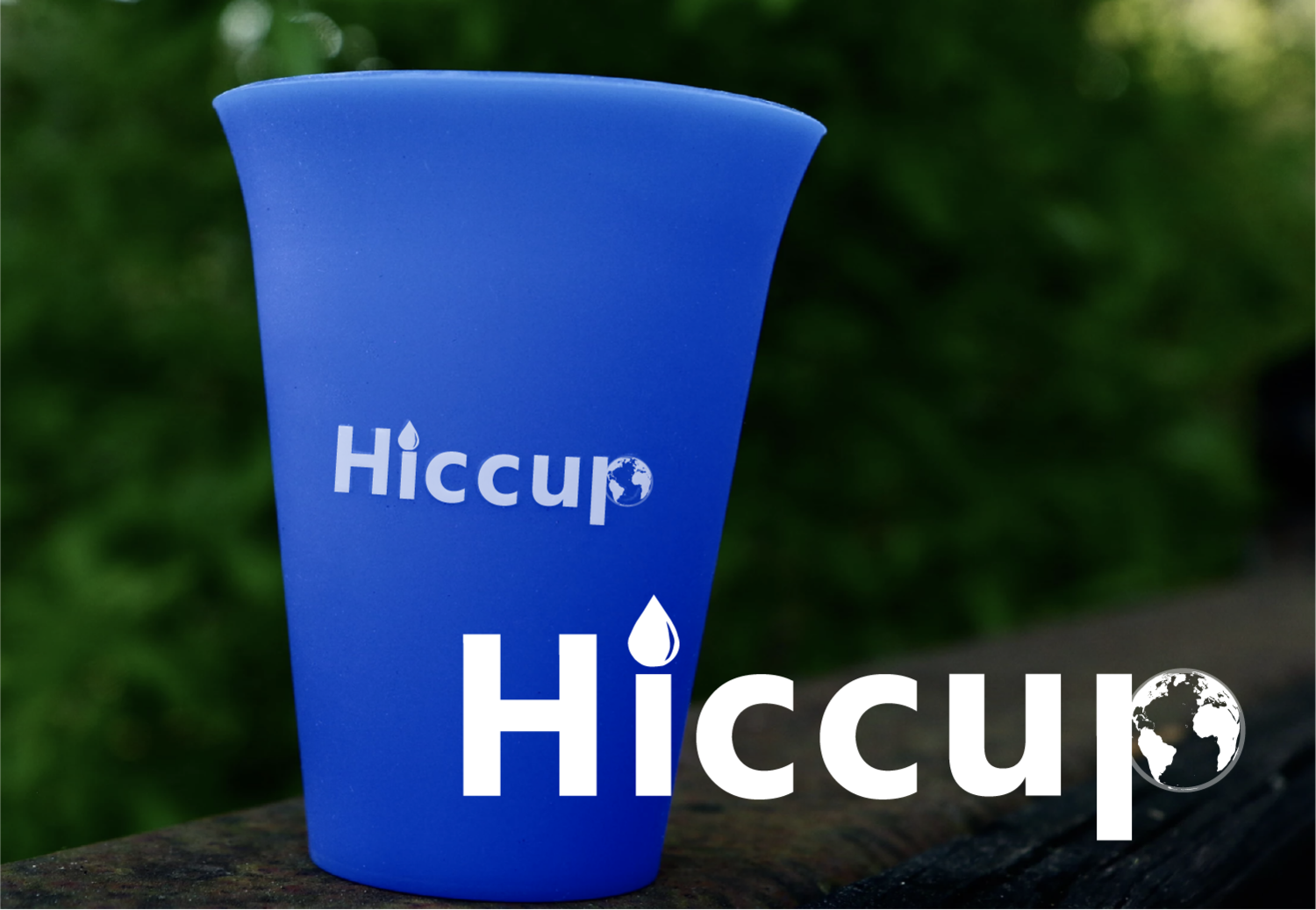
Product/Service: Hiccup offers reusable silicone cups for hydration stations at running events. The service includes delivering cups to races, collecting them post-event, and professionally cleaning them for reuse. Problem It Solves: The running industry generates massive waste through single-use paper cups at hydration stations, creating environmental damage and cleanup challenges. Target Market: Marathon organizers, race coordinators, and large-scale running events seeking sustainable solutions. Unique Selling Proposition (USP): First reusable cup rental service specifically designed for the running industry, offering event organizers an eco-friendly alternative to disposable cups.
| Company Details | Information |
|---|---|
| Company Name | Hiccup |
| Industry | Green/CleanTech |
| Product Type | Silicone Cups |
| Founder | Kristina Smithe |
| Location | St. Petersburg, FL |
| Season | Shark Tank Season 16 |
About Founder’s
Kristina Smithe, the founder of Hiccup, developed her innovative business concept after witnessing the massive waste generated at marathons. Her entrepreneurial journey began with a personal experience running a marathon in California, where she observed hundreds of thousands of paper cups being discarded. Before launching Hiccup, Smithe worked on a tugboat and was an avid Shark Tank viewer, constantly generating business ideas. Her background in maritime work provided practical experience in logistics and operations, which proved valuable in developing her cup rental service.
- Marathon runner who experienced race day cup waste firsthand
- Former tugboat worker with logistics experience
- Shark Tank enthusiast who regularly pitched business ideas
- Recent newlywed who drew inspiration from rental service concepts
Shark’s and Founder’s QnA
Kevin O’Leary:
Next up is a sustainable way to hydrate on race day. Oh my lord.
Kristina Smithe:
Hello Sharks. My name is Christina and I’m seeking $200,000 in exchange for 10% of my company.
Kevin O’Leary:
Sharks, it’s marathon day. The streets are bustling with runners, all with the united goal of crossing that finish line. But along the way, they are parched. They need to stay hydrated. At every hydration station, they grab a cup or two, take a mere sip of water, and then discard the cup to continue along the course. Look at that mess. Who’s going to clean that up?
Kristina Smithe:
Enter Hiccup. Hiccup offers a solution. We are a reusable cup service for hydration stations at running events. Oh, we deliver these silicone cups, collect them post race, and clean them for reuse at another event. With every event we serve, we are inching closer towards our ultimate goal, a world where cup waste in the running industry is a thing of the past. So, Sharks, who’s ready to save the planet with me?
Mark Cuban:
Great idea. Yeah, really. I’ve done uh a number of marathons.
Kristina Smithe:
Oh, awesome.
Mark Cuban:
I’m usually the one at the back and by the time I’m getting there, I’m running over all the cups. Yeah. It’s such a sad. But Christina, when I go to a marathon, the people giving me the water, that’s something that the marathon is absorbing the cost for. So, they’re paying for the paper cups. What is the price difference to the organizer with your cup versus a paper cup?
Kristina Smithe:
So, I charge 15 cents per cup and we rent them out by the thousands.
Mark Cuban:
How does it compare to paper?
Kristina Smithe:
Paper is probably 7 cents a cup right now. After 10,000 cups are rented, um, we lower the cost to 10 cents per cup for all of the proceedings. That’s closer, but it’s still 30%.
Lori Greiner:
Well, the proof is in the pudding. How much do you have in sales? Walk us through your
Kristina Smithe:
So, last year I did $67,000 in sales.
Lori Greiner:
And 67,000?
Kristina Smithe:
Yes. So, what’s the most cups you’ve ever sold to a race?
Lori Greiner:
50,000 cups.
Kristina Smithe:
50,000 cups is how much in revenue to you?
Lori Greiner:
So, that would be $6,500.
Lori Greiner:
How big do you think you can be?
Kristina Smithe:
I think I could be really big with the right partnership.
Lori Greiner:
How big is really big though?
Kristina Smithe:
How big is really big? How big is really big?
Kristina Smithe:
Two million cups for the world major marathons.
Robert Herjavec:
Are you a marathoner? How did you come up with this idea?
Kristina Smithe:
I came up with the idea after I ran a marathon in California. And when I flew home, I drank coffee and water every time the beverage cart came through. I drank six cups. And I did the math. The Boeing 737, I believe, had 180 passengers. And I just thought back to the race I ran the day prior and they used 150,000 cups within. And that made you say, “Oh, Eureka, I need to come up with something that stops all the waste of all the paper cups.” Um, so at the time I worked on a tugboat and I watched a lot of Shark Tank. So I was always coming worked on a tugboat and watched a lot of Shark Tank. Always coming up with million-dollar ideas. And so I had recently gotten married two months prior and I knew that you could rent out china, you could rent out chairs. And so I thought there had to already be the service for renting cups at a race and there wasn’t.
Robert Herjavec:
So I want to get back to the 2 million number you threw out there. Does that mean the Boston Marathon arguably one of the most famous on Earth? They burn through 2 million cups.
Kristina Smithe:
Yes. As Chicago and London.
Robert Herjavec:
So do you have any of those marathons in this deal?
Kristina Smithe:
So I piloted at the Chicago Marathon with the inventory I did have.
Robert Herjavec:
So why haven’t you gone to sponsors and put their logos on this cup?
Kristina Smithe:
cuz I’ve honestly been kind of busy washing the cups. That’s the answer.
Robert Herjavec:
Wait, how many people are working with you? Who’s on your team?
Kristina Smithe:
It’s just me.
Robert Herjavec:
Listen, the way that you really can really really make a lot of money, find a sponsor that goes across races, whether it’s a beverage company, whether it’s a snack company, whether it’s a a bank, that’s the opportunity.
Robert Herjavec:
Look, I love marathons. When I did my first marathon, my friend and I were arguing about the power of the mind. And he said, “I bet you without training, you couldn’t run a marathon. I’d never run a marathon.” And this was on a Thursday. So, I found a marathon on Saturday in Arizona. And I show up and there’s like 50 people at this marathon. And it starts and I’m like, “Yes.” And I get to mile 8 and I’m like, “I’m going to qualify for Boston in my first marathon.” Mile 15. I’m in the middle of the desert. There’s nobody around me. I’m walking. I don’t know what to do. I cross the street. I start hitchhiking. A guy picks me up. I’m sitting there. I’m exhausted. And he goes, “Aren’t you the guy from Shark Tank?” That’s right. The guy took him to the finish line. He popped out and I won.
Robert Herjavec:
Look, there’s definitely a demand here. I just don’t know how you’re going to scale enough to to make it a large business. I don’t see the investment possibility. I wish you all the luck. Uh but it’s not for me. I’m out.
Kristina Smithe:
Thank you, Robert.
Lori Greiner:
Thank you. Um I get the essence of the business. I think it’s admirable that you care about the environment. I think you’re an amazing gritty person who could do anything, but it’s not really the right business for me. So, I’m sorry. Sorry. I wish you good luck, but I’m out.
Kristina Smithe:
Thank you, Lori.
Mark Cuban:
Christina, the reason I love this show is I get to be here and witness amazing human beings that coming up with solutions, rolling up their sleeves, and being entrepreneurial. This is just a really beautiful thing to witness. I think you’re very early in your journey, and I and I do think you’re going to figure it out, but it it’s it’s not a very scalable business. I don’t know how I could contribute. So, for those reasons, I’m out.
Kristina Smithe:
that I’m really really grateful to be able to be here with you and to see
Kevin O’Leary:
Let me interpret that for you, Daniel. Let me interpret that for you. Hiccup sucks.
Mark Cuban:
No, it doesn’t.
Kevin O’Leary:
No, it’s a horrible business. It’s a horrible business. I I like
Kevin O’Leary:
Listen, they’re not going to give you a dime.
Mark Cuban:
I love this. Yeah. Yeah. Yeah. Yeah.
Kevin O’Leary:
Keep going. Keep going. Do not keep going. Shut this thing down.
Kevin O’Leary:
You obviously have talents you can pursue. This sucks.
Mark Cuban:
Christina, this is one of those deals when you came out and said, I’m like, that makes perfect sense, right? There’s an absolute need for it. The companies that put together these races don’t like the sustainability problems they cause, right? That’s not the issue, right? The issue is it’s not a big enough business for an investor. It is a great business for you. And I think once you lock in a big marathon, they’re not going anywhere else cuz you made their lives a lot easier. So, you’re they’re repeat customers every single year. And so your business won’t go like that straight up, but it’ll be a nice gradual grow. And by the time you look around, you’ll have 30% of the market and be making a million dollars a year. The problem is I don’t know how much bigger that you can get than 30% of the market. So for those reasons, I’m out.
Kristina Smithe:
Thank you.
Kevin O’Leary:
I don’t know. I don’t I I think at the end of the day, it’ll be just like Robert hitchhiking in the middle of the desert.
Kevin O’Leary:
I I really I really
Kevin O’Leary:
Oh my god, Kevin.
Mark Cuban:
You know, I tell you to stop being a jerk before that is the biggest compliment you can get because if Kevin hates it, you really true.
Kevin O’Leary:
Congratulations, Christina.
Key Stats & Financials
Hiccup’s financial performance showed promising early traction with substantial revenue potential in the marathon industry. The business model demonstrated clear scalability opportunities despite initial challenges in achieving investment-worthy growth metrics. Founder Kristina Smithe presented compelling financial data during her Shark Tank pitch, highlighting both current success and future expansion possibilities.
- Sales: Current revenue figures at time of pitch – $67,000 in total sales
- Margins: Profit margins and cost structure – 15 cents per cup rental, reduced to 10 cents after 10,000 cups
- Valuation: What the entrepreneur valued their company at – $2,000,000 requested valuation
- Investment Request: Amount sought and equity offered – $200,000 for 10% equity
- Use of Funds: How the entrepreneur planned to use the investment – expand reusable cup service and establish partnerships with major races
| Financial Metric | Amount |
|---|---|
| Requested Investment | $200,000 |
| Equity Offered | 10% |
| Requested Valuation | $2,000,000 |
| Total Sales (Previous Year) | $67,000 |
| Max Revenue Single Event | $6,500 |
| Cups Used Max Event | 50,000 |
Business Potential and TAM
Hiccup’s business potential lies in addressing a significant environmental issue within the rapidly growing marathon industry. With major marathons like Boston, Chicago, and London consuming up to 2 million cups each, the total addressable market represents substantial opportunity. The company’s scalable model positions it well for expansion into larger events and geographic markets, though initial investment challenges highlighted concerns about growth velocity needed to attract Shark Tank investors.
- Major marathons consume 2 million cups each annually
- Target market includes thousands of running events nationwide
- Environmental consciousness trend supports sustainable solutions
- Repeat customer model with race organizers creates stability
Hiccup: Ideal Target Audience & Demographics
| Demographic | Details |
|---|---|
| Primary Customers | Marathon and race event organizers |
| Secondary Market | Corporate wellness programs and fitness centers |
| Geographic Focus | Major metropolitan areas with large running communities |
| Event Size | Events with 1000+ participants |
Marketing and Distribution Strategy
Hiccup’s marketing and distribution strategy focused on direct outreach to race organizers and sustainability-focused events. The company’s organic growth model emphasized demonstrating environmental benefits and cost savings compared to traditional paper cups. Future business roadmap included expanding partnerships with major marathons, developing sponsorship opportunities, and scaling operations to handle larger events. The service-based model required careful logistics planning for cup delivery, collection, and cleaning across multiple locations.
- Direct sales approach targeting race event coordinators
- Environmental messaging emphasizing waste reduction benefits
- Pilot programs with major city marathons for validation
- Expansion into corporate wellness and fitness center markets
Hiccup Deal Outcome
Hiccup’s Shark Tank pitch resulted in all sharks declining to invest in the sustainable cup rental service. Despite founder Kristina Smithe’s compelling environmental mission and proven business traction, the sharks expressed concerns about scalability and investment potential. The business was praised for solving a real problem and demonstrating early success, but investors felt the growth trajectory wasn’t sufficient for their portfolio requirements. This outcome exemplifies how even impactful businesses with strong fundamentals may struggle to attract investment without explosive growth potential.
| Shark | Decision |
|---|---|
| Robert Herjavec | No Deal – Scalability Concerns |
| Lori Greiner | No Deal – Not Right Fit |
| Mark Cuban | No Deal – Limited Scalability |
| Kevin O’Leary | No Deal – Business Model Criticized |
Hiccup Post-Show Update
Despite not securing a Shark Tank investment, Hiccup has continued to grow and expand its environmental impact. The company has successfully kept over 700,400 cups out of landfills and recycling facilities through its reusable cup service. Hiccup has expanded operations across multiple states and partnered with major races like the St. Pete Run Fest and Publix Half Marathon. Notably, the company developed a patent-pending dishwasher capable of cleaning 1,500 cups per cycle using only 30 gallons of water, significantly improving operational efficiency. Hiccup also participated in Florida’s first zero-waste race, demonstrating its commitment to sustainable event solutions.
Business Analysis & Lessons
Hiccup’s Shark Tank pitch provides valuable insights into the challenges faced by environmentally focused businesses seeking investment. While the company addressed a genuine market need with a viable solution, it struggled to demonstrate the exponential growth trajectory typically required by venture investors. The pitch highlighted the importance of balancing mission-driven entrepreneurship with scalable business models. Despite not securing funding, Hiccup’s continued success demonstrates that profitable, impactful businesses can thrive without traditional investment, particularly when serving niche markets with dedicated customer bases.
The company’s post-show achievements underscore the viability of sustainable business models, even without shark investment. Hiccup’s ability to scale operations, develop innovative cleaning technology, and maintain environmental impact shows that growth can occur organically through customer satisfaction and market demand. This case study illustrates that business success isn’t solely dependent on external funding, and mission-driven entrepreneurs can build meaningful companies through dedication and customer focus.
- Environmental businesses face unique investment challenges despite real market needs
- Scalability and growth metrics are critical factors for investor decisions
- Mission-driven companies can succeed without traditional venture funding
- Operational innovation can significantly improve business efficiency and impact
Pitch Conclusion
Hiccup’s Shark Tank pitch represents a compelling example of entrepreneurship addressing real environmental challenges in the running community. While the company didn’t secure investment, founder Kristina Smithe demonstrated remarkable dedication to her mission and built a viable business solving a significant waste problem. The pitch highlights the delicate balance between social impact and investment potential, showing that not all worthwhile businesses align with venture capital requirements. Hiccup’s continued growth post-show validates the strength of its business model and the importance of sustainable solutions in event planning.