


Pitch Introduction
The Hood Shark Tank India pitch brought a high-stakes tech play to the tank, featuring a platform designed to revolutionize how Indians communicate online. Founders Jasveer Singh, Abhishek Asthana (popularly known as GabbarSingh), and Deepak Kumar presented Hood, a pseudonymous social network where users can express their truths without fear of judgment. Entering with a massive ₹600 Crore valuation, the founders sought to solve the problem of digital inhibition by providing a safe, encrypted space for honest dialogue across workplaces, colleges, and interest groups.
Business Overview
Hood is positioned as a “pseudonymous” social network rather than a purely anonymous one. While users interact using unique usernames and avatars, the platform maintains a level of accountability through verified phone numbers. The primary hook of the app is its Groups feature, which allows employees of specific companies or students of specific colleges to discuss internal matters, salaries, and culture privately. This creates a high-trust environment for high-stakes information sharing that traditional social media often suppresses.
The business model focuses on building a massive user base before moving toward monetization. By leveraging end-to-end encryption, Hood ensures that even the platform owners cannot access private communications, addressing the growing global concern for digital privacy. The app rebranded from its original name, Zoro, to Hood just before the pitch to better align with its vision of a digital neighborhood.
Product Details
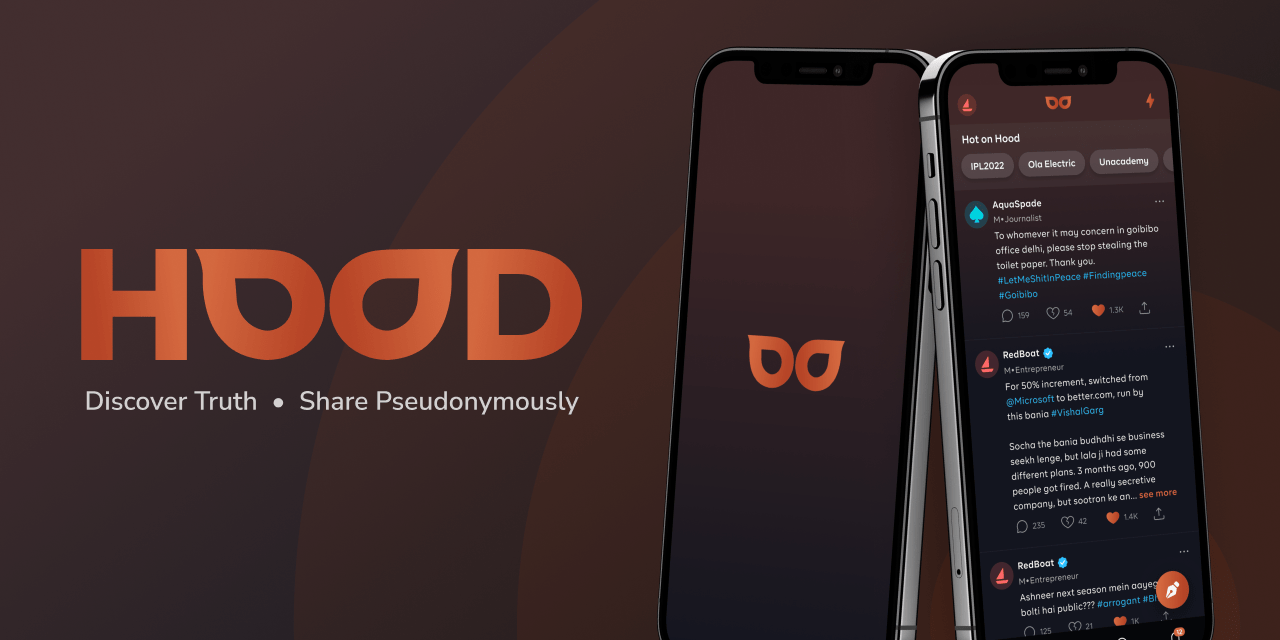
The Hood app features a streamlined interface focused on threads and communities. Upon joining, users are assigned a random username which they can customize. Key features include a “Hot” section for trending topics, a “Salary Comparison” group for corporate transparency, and private “Company Groups” that require contact syncing to verify affiliation while keeping individual identities hidden. The tech stack is built for high concurrency, handling thousands of posts and replies daily with minimal latency.
Market Position
Hood competes in the niche space of “Privacy Tech” and “Alternative Social Media.” Unlike Reddit or Quora, which are global and topic-focused, Hood targets localized, community-driven interactions specific to the Indian professional and academic landscape. Its Unique Selling Proposition (USP) lies in the combination of pseudonymity and verified community access, filling the gap between public platforms like X (Twitter) and private messaging apps like WhatsApp.
| Business Detail | Information |
|---|---|
| Company Name | Hood (formerly Zoro) |
| Founders | Jasveer Singh, Abhishek Asthana, Deepak Kumar |
| Product Type | Social Networking App |
| Daily Active Users | 60,000 |
| Primary Channel | Mobile App (iOS/Android) |
| Headquarters | Gurgaon, Haryana |
About Founder’s
The founding trio brings a powerhouse combination of serial entrepreneurship, social media influence, and deep technical expertise. According to YourStory, Jasveer Singh is a seasoned entrepreneur who previously built and exited two successful ventures, netting ₹10 Crores from those exits alone.
- Jasveer Singh: A mathematics graduate from a small town in UP with a track record of scaling and exiting tech businesses.
- Abhishek Asthana: Widely known as @GabbarSingh on social media, he is an MBA with corporate experience and a massive digital footprint.
- Deepak Kumar: The technical backbone, a coder from Jammu who specializes in building scalable social architectures.
- Previous Funding: Before Shark Tank, they raised $3.2 Million from high-profile institutional investors and 20 unicorn founders.
Shark’s and Founder’s QnA
Is the Shark Tank pitch scripted?
Actually, some people think it’s scripted because decisions happen in 10 minutes, but it’s very real. We are here to show you Hood, where you can share anything without revealing your identity.
What is the core feature of the app?
Our most popular feature is anonymous groups. You can create a group for your company or college. The data is end-to-end encrypted, so what you share is confidential and secure.
Why is your valuation ₹600 Crores while being pre-revenue?
Social network valuation depends on growth velocity and the size of the market being addressed. In 45 days, we grew 7x. We have already raised 3.2 Million dollars from 20 unicorn founders.
How many active users do you currently have?
We have around 7.5 Lakh total users and 2.4 Lakh monthly active users. Our daily active users (DAU) stand at 60,000 per day.
How do you ensure the platform doesn’t become a gossip forum?
It is a discussion forum. For example, founders discuss investor feedback or employees compare salaries. It provides value through transparency that doesn’t exist elsewhere.
Why do you need to go to colleges to market a viral product?
I go there to give lectures and build the initial community. Once the 21st person joins a group of 20 colleagues, the fear of missing out (FOMO) creates organic virality.
Key Stats & Financials
At the time of the pitch, Hood was in a high-growth phase but remained pre-revenue. Their focus was entirely on user acquisition and retention metrics, which are standard for early-stage social platforms seeking venture capital.
Revenue and Profitability
- Yearly Revenue: ₹0 (Pre-revenue stage)
- Monthly Active Users (MAU): 2.4 Lakhs
- Daily Active Users (DAU): 60,000
- Ask Valuation: ₹600 Crores
- Raised Capital: ₹25 Crores+ ($3.2M) from previous rounds
Financial Breakdown
| Metric | Amount / Value |
|---|---|
| Previous Funding | ₹25 Crores |
| Current Cash Burn | High (Tech & Acquisition) |
| Total Downloads | 7.5 Lakhs |
| Daily New Threads | 1,800+ |
| Cost per Acquisition | Minimal (Viral focus) |
| Requested Equity | 0.2% |
Business Potential and TAM
The Total Addressable Market (TAM) for Hood is massive, targeting the 500 Million+ smartphone users in India who utilize social media. As digital privacy awareness grows, the demand for platforms that decouple identity from expression is skyrocketing. The global anonymous social media market is part of the larger $250 Billion social media industry, with specific niches in corporate whistleblowing and community networking seeing double-digit growth.
Market Size Analysis
With India being the world’s second-largest internet market, the potential for a homegrown social network is significant. While global giants like Reddit have a presence, Hood’s focus on hyper-local Indian contexts (like specific PSU groups or local colleges) provides a moat. The market for professional networking and salary transparency alone is valued at over ₹5,000 Crores in India, currently served by fragmented offline groups.
Growth Opportunities
- US Market Expansion: Founders expressed a goal to target the US market after hitting 10 Million Indian users.
- Corporate Partnerships: Offering verified, anonymous feedback channels for HR departments.
- Monetization through Ads: Contextual advertising based on interest groups without compromising privacy.
- Premium Features: Subscription models for verified experts or advanced community management tools.
Hood: Ideal Target Audience & Demographics
| Demographic | Details |
|---|---|
| Primary Age Group | 18–24 (Students) |
| Secondary Age Group | 25–35 (Working Professionals) |
| Interests | Career, Gaming, Relationships, Tech |
| Platform Preference | Mobile-first (Android/iOS) |
| Geography | Tier 1 & Tier 2 Cities in India |
| Buying Behavior | Ad-receptive, tech-savvy |
Marketing and Distribution Strategy
Hood relies on a product-led growth strategy where the features themselves drive user acquisition. By creating “private groups” that require contact syncing, they turn every user into a potential node for new user invites.
Customer Acquisition
The founders utilize “Viral Loops” where controversial or highly valuable content (like salary slips) is shared externally, prompting new users to download the app to join the conversation. They also engage in high-impact offline activities, such as university guest lectures by Abhishek Asthana, to seed the initial community.
Distribution Channels
- Apple App Store: Targeted for high-LTV urban users.
- Google Play Store: Primary volume driver for the Indian market.
- Influencer Network: Leveraging Abhishek Asthana’s (@GabbarSingh) existing 1M+ reach.
- Organic Search: Viral threads appearing in web search results.
Social Media and Content Strategy
The strategy revolves around user-generated content (UGC). Hood does not create content; it provides the stage. Their marketing emphasizes the “unfiltered” nature of the platform, contrasting it with the “perfect life” imagery found on Instagram. This positioning resonates with Gen Z users seeking authenticity.
Hood Shark Tank Deal Outcome
The negotiation was one of the most intense in Season 2. While Anupam Mittal and Namita Thapar were skeptical about the valuation and the long-term viability of anonymous networks, Aman Gupta and Peyush Bansal saw potential in the founders’ grit.
| Shark | Offer Detail |
|---|---|
| Anupam Mittal | Out. Felt anonymous networks are dead and government will stop it. | Out. Cited lack of humility and valuation reality check. |
| Vineeta Singh | Out. Skeptical of product-market fit. |
| Aman Gupta & Peyush Bansal | ₹60 Lakhs for 0.54% Equity + ₹60 Lakhs Debt @ 12%. |
| Final Decision | Accepted offer from Aman and Peyush. |
Hood Post-Show Update
Following the episode, Hood experienced a massive surge in traffic, reaching the Top 10 apps on the Apple App Store in India. According to YourStory, the ₹1.2 Crore funding helped stabilize their infrastructure to handle the sudden influx of millions of users. They have since focused on strengthening their moderation AI to prevent misuse while maintaining pseudonymity.
Business Analysis & Lessons
Hood’s pitch was a masterclass in leveraging founder pedigree to justify high valuations. Even though they had zero revenue, the fact that Jasveer had exited businesses and Abhishek had a massive social media following convinced two sharks to bet on the “people” rather than the current “paisa.” However, the skepticism regarding the “anonymous” category remains a significant hurdle for their long-term regulatory compliance.
The primary lesson here is the importance of Growth Velocity. In the tech world, if you can demonstrate a 7x growth in 45 days, investors are often willing to overlook current losses or lack of a revenue model. It also highlights the “Shark Tank Effect” for tech startups, where the publicity acts as a massive customer acquisition tool that would otherwise cost crores in marketing spend.
Key Takeaways
- Founder Market Fit: Having a tech lead, a serial entrepreneur, and a social influencer is a “dream team” for a social startup.
- Valuation Realism: While they asked for ₹600 Crores, they accepted a deal at roughly ₹111.11 Crores, showing that flexibility is key to closing deals.
- The Privacy Pivot: Transitioning from “Anonymous” to “Pseudonymous” was a strategic move to ensure accountability and safety.
- Network Effects: The success of such a platform depends entirely on reaching a critical mass where the value of the network increases for every user.
Pitch Conclusion
The Hood Shark Tank India journey is a fascinating look at the high-growth, high-risk world of Indian social media startups. By securing the backing of Aman Gupta and Peyush Bansal, the founders gained more than just capital; they gained strategic mentors to navigate the complex digital landscape. If you enjoyed this breakdown, check out Primebook, Grow Fitter, and PNT Robotics.
[faq_accordian]