


Pitch Introduction
Menstrupedia Shark Tank pitch opened with a powerful cultural insight—period myths that force girls into isolation. Tuhin Paul & Aditi Gupta, husband-wife founders from Ahmedabad, stepped into the tank asking ₹50 lakh for 10% equity to scale their period-education comic platform that had already educated 1.5 crore girls across India and 8 countries.
Business Overview
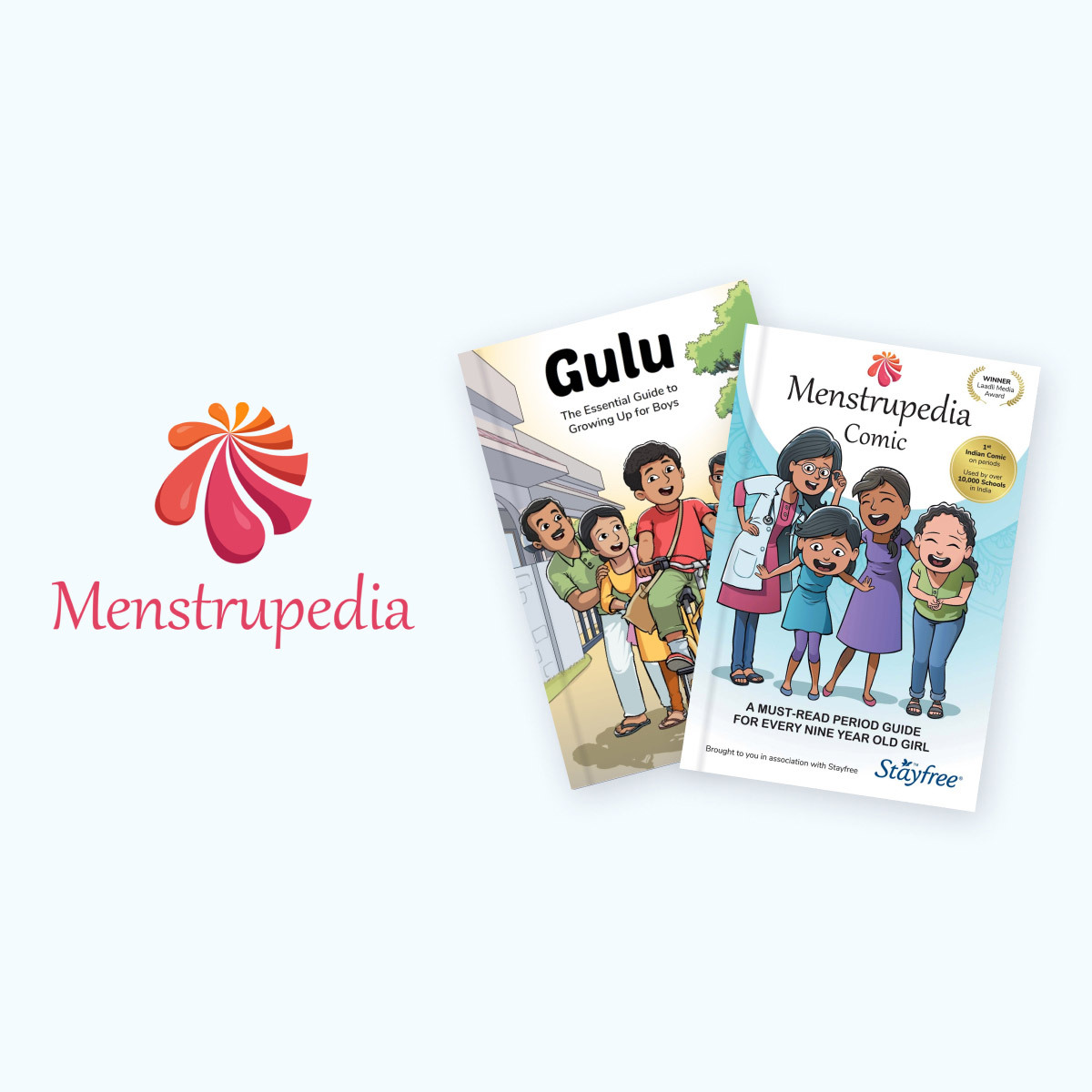
Menstrupedia creates friendly, medically-accurate comic books and digital content that teach adolescent girls about menstruation, puberty and body safety. The product solves the massive awareness gap in menstrual health, replacing taboo with scientifically correct, story-driven learning. Schools, NGOs and parents form the core B2B market, while parents and girls 9-15 yrs drive D2C sales. Its unique selling proposition is cultural relatability—characters like “Priya Didi” and “Amam Bhaiya” make awkward conversations comfortable, something no traditional textbook offers.
| Company Detail | Data |
|---|---|
| Started | 2012, Ahmedabad |
| Founders | Tuhin Paul & Aditi Gupta |
| Product | Period-education comic & app |
| FY-21 Revenue | ₹1.15 Cr |
| Gross Margin | 27% |
About Founder’s
Tuhin, 37, is an design-research strategist; Aditi, 37, a former media professional turned menstrual health researcher. After facing blatant period myths within their own families, the duo quit comfortable jobs in 2013, pooled life-savings of ₹15 lakh and self-published the first Menstrupedia comic in Hindi & English. They bootstrapped for eight years, living on royalties while iterating content with gynaecologists and 2,000+ school girls.
- Bootstrapped for 8 years—no prior external funding
- Work division: Aditi handles research & content; Tuhin oversees finance & partnerships
- Clear departmental boundaries to keep personal life intact
- Dream to free next-gen women from all period-related myths
Shark’s and Founder’s QnA
Namita: What was last year’s revenue and profit?
Aditi: We generated ₹1.15 crore revenue and ₹31 lakh profit.
Namita: Break-up between book sales and sponsorship?
Aditi: Around 60% from book sales, 40% from sponsor partnerships with a feminine-hygiene brand.
Peyush: Future direction—B2C app?
Tuhin: Yes, parents currently call asking for instant access. We want an India-focused and global app so help is at their fingertips.
Vineeta: Why not become a sanitary-pad company?
Aditi: We respectfully decline; pads are commoditised and outside our expertise.
Aman: Will you take sanitary-pad brand equity to scale faster?
Aditi: We can’t commit to something we don’t believe in; we said NO.
Key Stats & Financials
Namita’s pharma background spotted distribution synergy—she visualised pushing comics via 3-lakh+ doctors and medical reps. The duo valued company at ₹5 Cr pre-money; Namita finally sealed deal at ₹2.5 Cr post-money.
- Sales: FY-21 ₹1.15 Cr; 60% book, 40% sponsorship
- Margins: 27% gross; 27% net (lean team, no heavy tech)
- Valuation: Negotiated down from ₹5 Cr to ₹2.5 Cr
- Investment Request: ₹50 L for 10% (original)
- Use of Funds: App development, B2C marketing, inventory
| Shark | Offer |
|---|---|
| Namita | ₹50 L for 20% |
| Aman | ₹50 L for 22% (pads pivot) |
| Peyush | Out |
| Vineeta | Out |
| Anupam | Out |
Business Potential and TAM
India has 120 million adolescent girls; 70% receive no formal period education. Government’s Samagra Shiksha scheme allocates ₹100 Cr yearly for menstrual-health kits, creating ready institutional demand. Ed-tech & healthcare content TAM exceeds $3 Bn; Menstrupedia can cross-sell puberty workshops, parent webinars, licensing to OTT and vernacular apps.
- 120 Mn target girls aged 9-15 in India alone
- NGO + Govt annual procurement ₹1,000 Cr+
- Global English & Spanish markets add 200 Mn girls
- Adjacent women’s health content expands LTV 5×
Menstrupedia: Ideal Target Audience & Demographics
| Demographic | Details |
|---|---|
| Age | 9-15 yrs girls, 25-45 yrs mothers |
| Region | Metro & Tier-2 India, SAARC, LatAm |
| Purchaser | Private schools, NGOs, conscious parents |
| Price Sensitivity | Mid; bulk discounts for institutions |
Marketing and Distribution Strategy
Menstrupedia drives 50% sales via 350+ school workshops annually; 30% through Amazon & own site; 20% via NGO & corporate CSR bundles. Social media reels starring comic characters clock 5 Mn monthly views, funneling parents to WhatsApp catalog. Future roadmap: freemium app with regional audio, tie-ups with tele-health platforms, micro-learning licensing to Ed-Tech giants.
- Workshop-led school bulk orders (50%)
- Amazon, Flipkart, own D2C site (30%)
- CSR & NGO partnerships (20%)
- Upcoming: vernacular app, OTT mini-series
Menstrupedia Deal Outcome
After three sharks opted out, Namita Thapar agreed to ₹50 lakh for 20% equity. Founders countered initial 25% ask down to 20%, emphasising their 8-year track-record and scalable content engine. Deal closed on-stage with a hug and Namita’s promise to open pharma distribution channels.
| Final Deal | Details |
|---|---|
| Investor | Namita Thapar |
| Amount | ₹50 lakh |
| Equity | 20% |
| Condition | None; strategic support promised |
Menstrupedia Post-Show Update
Within six months of airing, Menstrupedia app beta crossed 1 lakh downloads, Hindi audio chapters added, and comic translations in Marathi & Bengali released. Namita-led introductions helped place 1.5 lakh books in 3 states’ public-health departments, pushing FY-22 revenue to ₹2.1 Cr.
Business Analysis & Lessons
Menstrupedia teaches founders to stay stubborn on vision yet flexible on valuation. Rejecting Aman’s pad-pivot preserved brand authenticity and kept margins intact. Namita’s ₹50 lakh brought more than cash—channel access compressed adoption cycles by 18 months. Key takeaway: when mission and money align, strategic capital beats dilutive capital.
- Deep, authentic insight > surface-level idea
- Bootstrapping proves discipline to investors
- Choose investors offering market gateways
- Say NO to feature-creep that blurs brand
Pitch Conclusion
Menstrupedia turned taboo into teachable moments and walked away with the exact partner they needed. The pitch reminds us that when your product solves a silent, universal problem, staying mission-first attracts the right capital. Drop your thoughts below—would you have taken the sanitary-pad pivot or stayed pure-play content?