


Pitch Introduction
NeoMotion Shark Tank India appearance marked a watershed moment for assistive technology startups in the country, bringing much-needed attention to the mobility challenges faced by over 1.5 crore Indians. Founded by three IIT Madras alumni, the Chennai-based company presented a compelling case for premium yet practical wheelchair solutions that bridge the gap between basic manual chairs and expensive imported alternatives. Their pitch highlighted not just a business opportunity but a social mission to restore dignity and independence to people with disabilities and the elderly.
The founders entered the tank with confidence, backed by solid numbers and a clear vision. They demonstrated how their products had already transformed lives, including that of a Zomato delivery partner who multiplied his income after adopting their technology. With ₹4.7 Crore in revenue and ₹13 Crore in order bookings, NeoMotion represented a rare combination of social impact and commercial viability that immediately captured the Sharks’ attention.
Business Overview
NeoMotion operates at the intersection of healthcare and manufacturing, providing personalized mobility solutions designed specifically for the Indian context. The company addresses a critical market gap where standard wheelchairs fail to provide adequate support for long-term use, while imported motorized options remain prohibitively expensive for the majority of the population.
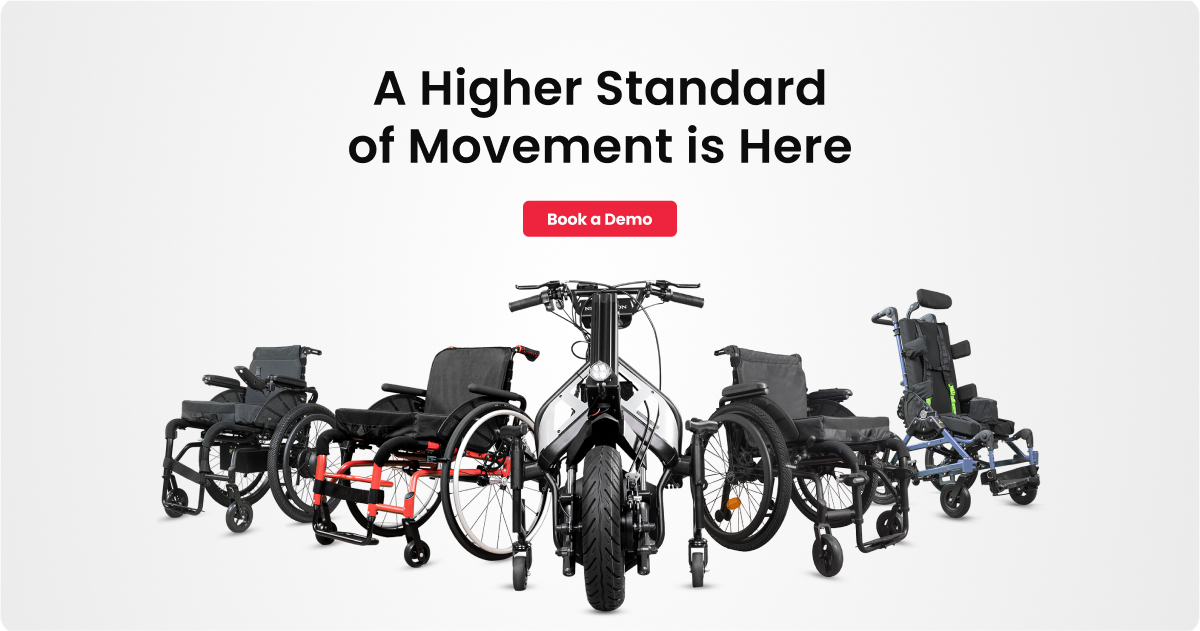
The startup offers two flagship products that work independently or together as a comprehensive mobility system. Neo Fly is a customized wheelchair built to exact body measurements, ensuring proper posture and reducing energy expenditure by four to five times compared to standard wheelchairs. Neo Bolt is an innovative attachment that converts a regular wheelchair into an electric scooter, enabling outdoor mobility without requiring assistance. This modular approach allows users to choose solutions based on their specific needs and budget constraints.
| Company Detail | Information |
|---|---|
| Company Name | NeoMotion Assistive Solutions Pvt Ltd |
| Founded | 2020 |
| Founders | Siddharth Daga, Ashish Sharma, Swastik Das |
| Headquarters | Chennai, Tamil Nadu |
| Industry | Assistive Technology / Manufacturing |
| Primary Products | Neo Fly Wheelchair, Neo Bolt Mobility Attachment |
| Website | neomotion.in |
About Founder’s
The trio behind NeoMotion met during their undergraduate years at IIT Madras, where they developed both their technical expertise and their commitment to social innovation. Swastik Das serves as the Chief Executive Officer, bringing over five years of experience from the Center for Innovation at IIT Madras, where he worked extensively on robotics and aeromodelling projects. Siddharth Daga leads Sales and Marketing, leveraging his understanding of user psychology and market dynamics. Ashish Sharma manages Production and Supply Chain, ensuring quality manufacturing processes and operational efficiency.
The journey began organically in 2015 when Swastik’s professor invited him to manage a funded project developing a standing wheelchair prototype. During the trials for this early product, the team interacted with nearly 200 wheelchair users across 20 to 30 locations in India. These immersive field visits revealed the harsh reality of existing solutions—users struggled with poor posture, dependence on family members for basic movement, and social stigma. This direct exposure to user pain points inspired the founders to launch NeoMotion in 2020 with a focus on dignity-enhancing, personalized mobility aids.
- IIT Madras Engineering Background
- Center for Innovation Experience
- 2015 Standing Wheelchair Project Origin
- 200+ Direct User Interactions
- Social Impact Mission Driven
Shark’s and Founder’s QnA
How do you three know each other?
We are friends from college. All three of us studied together at IIT Madras and share a common passion for using technology to solve real-world problems.
Which college did you attend?
IIT Madras. We graduated from IIT Madras with engineering degrees.
Is there any personal reason why you entered this field?
I completed my engineering in 2013 and always had a keen interest in design. We have a Center for Innovation at IIT Madras where robotics and aeromodelling work happens. I spent five years there working on various projects. After graduation, I felt I wanted more time to create meaningful products that help people. Coincidentally, my professor called me in 2015 saying they had a prototype and funding for a standing wheelchair project. They needed a project manager. I joined, and during the trials, we met nearly 200 wheelchair users across 20 to 30 locations. These interactions made us understand exactly what products people currently use and what gaps exist in the market.
Do you use this motor regularly?
Yes sir, I use it regularly. It has been five months since I started using the Neo Bolt attachment.
What changed in your life after using this product?
When I used a normal wheelchair before, I was completely dependent on my family members for everything. But since NeoMotion gave me this wheelchair, my family now depends on me. I used to work in a factory packing goods for ₹3,000 salary, which was insufficient. Since I got this vehicle, I have been doing Zomato delivery and earned over ₹32,000 in just four months.
How did you obtain this wheelchair? Did you purchase it?
The president of the company where I previously worked gave this to me as a donation. I contribute 40% of my earnings back to that NGO so that they can sponsor someone else in need. I want others to benefit as I have benefited.
How do you charge the battery?
It has a removable battery. You can remove it and plug it into any normal charging point at home.
How many kilometers does it run on a full charge?
It runs for 25 kilometers on a single charge, which is sufficient for my delivery work.
What are the specific features of your products?
We customize everything according to the user’s body. We adjust seat width, seat depth, back support angle, and foot position. The Neo Bolt has an accelerator like a bike, proper brakes, lights, horn, and seat belt for safety. It also has front suspension for comfort during outdoor use.
Where do your orders come from? Is it companies, NGOs, or direct consumers?
Approximately 65% of our orders come from individual users through our website and social media campaigns. The remaining 35% is equally divided between government tenders and CSR initiatives.
What is the pricing of your products?
The complete set including Neo Fly and Neo Bolt has an MRP of ₹118,000, but we currently provide it at ₹99,000. The Neo Fly wheelchair alone has an MRP of ₹49,000, which we currently offer at ₹42,900.
How does this compare to normal wheelchair prices in India?
Average wheelchairs in India cost about ₹12,000 to ₹13,000. Used ones are available for ₹3,000 to ₹5,000. However, these do not provide the ergonomic support or mobility independence that our products offer.
What is the competition in this space?
Nobody manufactures this in India currently. People import attachments and sell them for ₹5 to ₹6 lakhs for only the attachment. Our combined set costs ₹1 lakh, making it significantly more accessible.
What funding have you raised previously?
We received a ₹44 lakh grant from IIT Madras Incubation Cell with no equity dilution. We also have ₹53 lakh in debt on our books.
Who handles what in the company?
I am the CEO handling overall strategy. Siddharth manages Sales and Marketing. Ashish looks after Production and Supply Chain.
What was your revenue last year?
Last year we recorded ₹4.7 Crore in revenue with a net profit after tax of ₹30 lakh. This year, we already have ₹13 Crore in order bookings.
Why are you asking for such a high valuation of ₹100 Crore?
If you look at this year’s run rate, we will make ₹4 Crore in profit. We have established product-market fit, strong order books, and a clear path to profitability. We believe the valuation reflects our growth trajectory and social impact potential.
Can you reduce the cost to make it more mass-market?
As volumes increase, the combined set cost might come down to around ₹80,000, but not lower with current specifications. We are working on parallel products that will offer 60 KM range at the same price point. We also plan to launch mass-market wheelchairs in the ₹12,000 to ₹15,000 range that will be a quantum jump from what is currently available at that price.
Key Stats & Financials
NeoMotion entered the Shark Tank with impressive financial metrics that validated their business model beyond just social impact. The company had already achieved significant revenue figures without external equity funding, demonstrating strong operational efficiency and market demand for their premium positioning.
- Sales: ₹4.7 Crore revenue in FY 2022-23 with ₹13 Crore order book for current year
- Margins: ₹30 Lakh net profit after tax with healthy unit economics
- Valuation: Asked ₹100 Crore valuation (₹1 Crore for 1% equity)
- Investment Request: ₹1 Crore for 1% equity stake
- Use of Funds: Planned for business expansion, product line development, and scaling manufacturing
| Financial Metric | Value |
|---|---|
| Yearly Revenue (FY22-23) | ₹4.7 Crore |
| Net Profit After Tax | ₹30 Lakh |
| Current Order Book | ₹13 Crore |
| Valuation Asked | ₹100 Crore |
| Final Deal Valuation | ₹100 Crore |
| Previous Grant Funding | ₹44 Lakh (IIT Madras) |
Business Potential and TAM
The total addressable market for NeoMotion is substantial, with approximately 1.5 crore people in India requiring wheelchairs. While the current premium products target the top 1% who can afford ₹1 lakh solutions, the company plans to expand into the mass market with products priced between ₹12,000 and ₹15,000. This represents a ₹2,000+ Crore opportunity domestically, with additional potential in emerging markets facing similar accessibility challenges.
The company’s growth is driven by multiple tailwinds including increasing disability awareness, government mandates for accessibility, corporate CSR spending on health initiatives, and a growing aging population. Unlike imported solutions, NeoMotion’s products are designed specifically for Indian infrastructure—including narrow doorways, small bathrooms, and uneven roads—giving them a significant competitive advantage in the domestic market.
- 1.5 Crore potential beneficiaries in India alone
- Premium segment targets spinal cord injury patients and para-athletes
- Mass market opportunity at ₹12,000-15,000 price point
- Government and CSR channels provide B2B stability
- Export potential to similar emerging markets
NeoMotion: Ideal Target Audience & Demographics
| Demographic | Details |
|---|---|
| Age Group | 18-60 years (working professionals and athletes) |
| Income Level | Upper middle class for current products |
| Location | Urban and semi-urban areas with road access |
| Specific Segments | Spinal cord injury patients, para-athletes, office workers |
| Institutional Buyers | Hospitals, NGOs, Corporates (CSR), Government |
Marketing and Distribution Strategy
NeoMotion employs a multi-channel distribution strategy that balances direct-to-consumer sales with institutional partnerships. Their digital-first approach leverages social media campaigns and their website to drive 65% of sales, allowing them to maintain margins while building direct relationships with users. The remaining 35% comes from government tenders and CSR partnerships, providing steady bulk orders and brand credibility.
The company plans to expand its reach through rehabilitation centers and hospital networks, creating touchpoints where potential users can experience the products firsthand. They also utilize user testimonials and success stories—like the Zomato delivery partner who tripled his income—as powerful marketing tools that demonstrate real-world impact rather than just technical specifications.
- Direct-to-consumer via website and social media campaigns
- Government tender participation for bulk institutional sales
- Corporate CSR partnership programs
- Rehabilitation center and hospital network expansion
- User testimonial driven word-of-mouth marketing
NeoMotion Deal Outcome
The negotiation process revealed the tension between NeoMotion’s social mission and commercial scalability. While multiple Sharks appreciated the product innovation, concerns about pricing accessibility and valuation created initial hesitation. Peyush Bansal ultimately structured a unique deal that satisfied both parties—providing the capital needed for growth while ensuring the investment generated direct social impact through donated wheelchairs.
| Deal Detail | Information |
|---|---|
| Investing Shark | Peyush Bansal |
| Investment Amount | ₹1 Crore |
| Equity Stake | 1% |
| Company Valuation | ₹100 Crore |
| Special Condition | ₹1 Crore to be returned/donated for free wheelchairs |
| Other Offers Declined | Aman Gupta, Anupam Mittal (higher equity asks) |
NeoMotion Post-Show Update
Following their Shark Tank appearance, NeoMotion experienced significant brand recognition growth across India. The company continues to fulfill its ₹13 Crore order book while expanding its product line to include the promised mass-market wheelchairs. The partnership with Peyush Bansal has opened doors to healthcare networks and supply chain optimizations. The founders remain committed to their goal of serving all 1.5 crore potential users in India, starting with their premium offerings and gradually moving down the price curve as manufacturing scales.
Business Analysis & Lessons
The NeoMotion pitch offers several valuable lessons for social entrepreneurs and tech startups. First, the founders demonstrated that deep user research—conducting 200+ interviews before launching—creates unshakeable product-market fit. Their understanding of specific pain points, such as the energy expenditure of using standard wheelchairs or the need for narrow frames to navigate Indian homes, could only come from immersive field work rather than laboratory development.
Second, the negotiation highlighted the importance of valuation clarity. The founders stuck to their ₹100 Crore valuation despite pressure from multiple Sharks, indicating strong confidence in their order book and growth trajectory. However, they also showed flexibility in deal structure, accepting Peyush’s condition regarding the return of capital for social good. This balance between firm valuation and creative deal-making secured them the partnership without excessive dilution.
- Deep user immersion creates defensible product advantages
- Premium positioning can precede mass market penetration
- Social impact metrics enhance rather than replace financial metrics
- Strategic patience in negotiation preserves founder equity
- Institutional sales channels provide stability for D2C growth
Pitch Conclusion
NeoMotion’s Shark Tank journey exemplifies how engineering excellence combined with social empathy can create venture-scale opportunities in underserved markets. By refusing to compromise on their valuation while remaining open to impact-focused deal structures, the founders secured both the capital and the credibility needed to scale their mission. Their story serves as inspiration for entrepreneurs looking to build profitable businesses that fundamentally improve human dignity. As they expand from premium solutions to mass-market accessibility, NeoMotion stands poised to transform mobility for millions of Indians.