



Pitch Introduction
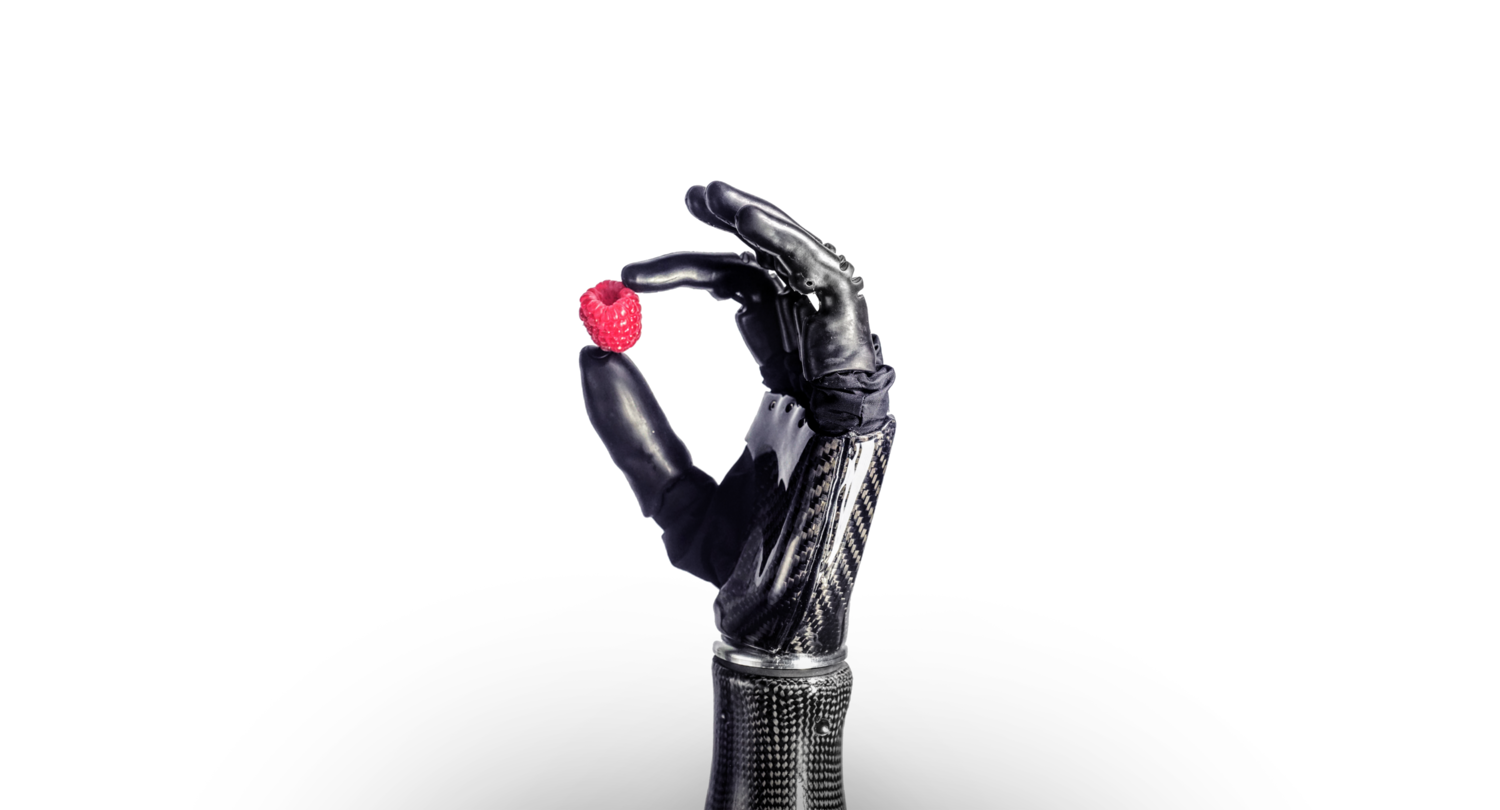
The Psyonic Shark Tank deal was one of the most inspiring and technologically advanced pitches in Season 15. Founder Dr. Aadeel Akhtar entered the tank seeking a $1 million investment to scale his company, Psyonic, which develops groundbreaking bionic limbs. His mission, born from a childhood encounter, was to create advanced prosthetics that were not only high-performance but also accessible to those who need them most. The pitch showcased the Ability Hand, a marvel of engineering that promises to change the world one hand at a time.
Business Overview
Psyonic is a medical technology company focused on revolutionizing the prosthetics industry. Their flagship product, the Ability Hand, is designed to restore functionality and a sense of touch for amputees. The company addresses a critical market gap where traditional prosthetics are often expensive, heavy, slow, and lack the dexterity of a human hand. Psyonic’s target market includes both individual amputees, particularly veterans, and research organizations using the technology for robotics. The unique selling proposition of the Ability Hand lies in its combination of speed, tactile feedback, durability, and a significantly lower cost compared to competitors, making it a game-changer in the field of bionic limbs.
| Company Detail | Information |
|---|---|
| Company Name | Psyonic |
| Founder | Dr. Aadeel Akhtar |
| Product | Ability Hand |
| Industry | Health/Wellness, Robotics |
| Headquarters | San Diego, California |
| Shark Tank Ask | $1,000,000 for 2% Equity |
About Founder’s
Dr. Aadeel Akhtar, the founder and CEO of Psyonic, is a visionary with a deeply personal motivation for his work. His journey into neuroengineering began at the tender age of seven during a visit to Pakistan. There, he met a young girl his own age who had lost her leg and was using a tree branch as a crutch. This profound experience ignited a passion in him to create advanced and accessible prosthetic limbs. Dr. Akhtar’s academic credentials are extensive, reflecting his dedication to this mission. He pursued a diverse and rigorous educational path to gain the expertise needed to bring his vision to life.
- Bachelor’s degree in Biology from Loyola University Chicago
- Master’s degree in Computer Science
- Another Master’s in Electrical and Computer Engineering
- PhD in Neuroscience
- Left medical school to focus full-time on Psyonic
Shark’s and Founder’s QnA
Tell us about you and how you came up with this?
After I had met that seven-year old girl in Pakistan, I ended up getting a bachelor’s degree in biology from Loyola University of Chicago, a master’s degree in computer science, another master’s in electrical and computer engineering, and a PhD in neuroscience. I then left medical school because this was a bit more fun. When I was a graduate student, we started 3D printing these hands.
How much have you raised?
We have raised 3.6 million so far. We are also in the middle of a StartEngine crowdfunding campaign where we raised 2.2 million.
What money have you raised in total and at what valuation?
We raised 1.4 million at a $12 million valuation and then we raised 2.2 million so far on StartEngine at a $50 million valuation.
This doesn’t make sense. Why would you spend all that time on StartEngine to raise 2.2 million?
There are several reasons why we decided to go the equity crowdfunding route. One of them is that half of our sales actually come from social media. This is an FDA registered medical device and we got it covered by Medicare in the US. But before this hand came along, only 10% of patients in the US could afford a device like this.
How much does it cost?
This costs $15,000.
What does it cost you to make it?
It cost us $1,800 to make it.
How many patients do you now have?
We have over 100 patients. Our biggest problem is that we have more demand than we can produce. We want to start ramping up our production so we can get these hands to more people.
What is your production capacity a year?
Right now, we are at a capacity of like 100 a year. By next year, we are looking at potentially doing at least 500 hands per year, and then a thousand and more.
Why aren’t doctors and the VA all over you?
They haven’t taken all that we can make, and that’s why we’re trying to build our production capacity.
How much are you going to have to invest to increase manufacturing to a thousand units a year?
To get to a thousand units a year, up to $5 million in this round.
Did you ever pitch equity guys that specialize in healthcare? What was the feedback?
What we’ve seen in that space is that it’s either one or the other. They’re either going into robotics purely or they’re going into the healthcare field. Some of the robotics investors didn’t care for the mission for humans.
What are lifetime sales?
Lifetime sales is about $2 million.
What were the sales last year?
It was just over a million and we made money on that.
How much profit did you make?
We made $100,000.
What do you think you’ll do in sales this year?
We will probably be around two million at least.
Key Stats & Financials
The financials presented by Psyonic painted a picture of a company on the brink of massive growth. While the current revenue was modest, the profit margins were exceptionally strong, and the demand was clearly outstripping supply. The sharks were particularly interested in the unit economics and the potential for scaling the business, which was the core reason for the investment request. The company’s valuation was a major point of contention, leading to a tense but ultimately successful negotiation.
- Sales: Lifetime sales of approximately $2 million, with over $1 million in the prior year.
- Margins: A production cost of $1,800 on a $15,000 selling price indicates very strong margins.
- Valuation: Initially requested a $50 million valuation ($1M for 2%).
- Investment Request: $1,000,000 for scaling production.
- Use of Funds: To increase manufacturing capacity from 100 to 1,000 units per year.
| Financial Metric | Amount |
|---|---|
| Initial Ask | $1,000,000 for 2% Equity |
| Requested Valuation | $50,000,000 |
| Lifetime Sales | $2,000,000 |
| Prior Year Sales | $1,000,000+ |
| Cost Per Unit | $1,800 |
| Final Deal | $1,000,000 for 6% Equity |
Business Potential and TAM
The total addressable market for Psyonic is substantial, encompassing both the medical prosthetics market and the robotics research sector. Globally, millions of individuals live with limb loss, and a significant portion could benefit from advanced prosthetic solutions. The Ability Hand’s competitive pricing and superior features position it to capture a significant share of this market. Furthermore, the application in robotics for companies like Meta and NASA opens up an entirely new and lucrative revenue stream, demonstrating the product’s versatility and cutting-edge technology.
- Over 2 million people living with limb loss in the U.S. alone.
- Global prosthetics market is projected to reach tens of billions of dollars.
- Growing demand from the robotics and AI research sectors.
- Medicare coverage in the US opens a large, insured customer base.
Psyonic: Ideal Target Audience & Demographics
| Demographic | Details |
|---|---|
| Primary Users | Upper-limb amputees (veterans, accident victims, congenital) |
| Secondary Users | Robotics companies, research institutions, universities |
| Age Range | All ages, but particularly active adults and veterans |
| Geography | Global, with initial focus on the US market |
| Purchasers | Individuals, VA hospitals, insurance providers (Medicare) |
Marketing and Distribution Strategy
Psyonic has employed a unique and modern marketing strategy, leveraging social media to drive a significant portion of its sales. This direct-to-consumer approach, combined with securing Medicare coverage, has been effective in generating both sales and awareness. The company has also successfully utilized grants from organizations like the Department of Defense to fund research and development. The investment from the Shark Tank deal will be pivotal in scaling production, which is the current bottleneck. Future business plans include expanding manufacturing capabilities, increasing direct sales efforts, and forging more partnerships within the healthcare and robotics industries to meet the overwhelming demand.
- Social Media Marketing: Half of sales driven by online engagement and viral content.
- Healthcare Integration: Secured coverage from Medicare, a key distribution channel.
- Grant Funding: Secured millions in non-dilutive funding from government grants.
- Partnerships: Collaborations with major tech companies and space agencies.
After a fascinating round of negotiations, Dr. Aadeel Akhtar successfully secured a deal with three sharks. Kevin O’Leary, Lori Greiner, and Daymond John teamed up to invest $1 million in Psyonic. The final agreement was for 6% equity in the company, with each shark taking a 2% stake. This deal valued the company at approximately $16.67 million, a significant adjustment from the initial $50 million valuation, but it provided the capital and strategic partnership needed to scale production and fulfill the company’s mission.
Investor Investment Amount & Equity Kevin O’Leary $333,333 for 2% Equity Lori Greiner $333,333 for 2% Equity Daymond John $333,333 for 2% Equity Total Deal $1,000,000 for 6% Equity
Psyonic Post-Show Update
| Investor | Investment Amount & Equity |
|---|---|
| Kevin O’Leary | $333,333 for 2% Equity |
| Lori Greiner | $333,333 for 2% Equity |
| Daymond John | $333,333 for 2% Equity |
| Total Deal | $1,000,000 for 6% Equity |
Following its appearance on Shark Tank, Psyonic experienced a significant surge in public interest. The StartEngine crowdfunding campaign mentioned during the pitch ultimately closed at an impressive $3.1 million, far surpassing the $2.2 million raised at the time of filming. This, combined with the $1 million from the sharks, has provided the company with substantial capital to execute its growth plans. The exposure from the show has undoubtedly accelerated its mission to get the Ability Hand into the hands of more users who need it, both human and robotic.
Business Analysis & Lessons
Psyonic’s Shark Tank journey offers several powerful business lessons. Firstly, a strong, authentic mission can be a company’s greatest asset. Dr. Akhtar’s personal story resonated deeply and gave the business a soul that many investors found compelling. Secondly, navigating the space between two distinct industries, like healthcare and robotics, presents unique challenges in fundraising, as investors often specialize in one vertical. Finally, the negotiation highlighted the classic Shark Tank tension between founder valuation and investor equity. Dr. Akhtar’s willingness to be flexible and negotiate, while still protecting his company’s core interests, was key to closing the deal with three high-profile partners.
- A powerful mission narrative can be as valuable as the product itself.
- Be prepared to justify your valuation with solid data and a clear use of funds.
- Understand the investment landscape and know which investors to target.
- Flexibility in negotiations can lead to a better long-term partnership than a rigid stance.
Pitch Conclusion
The Psyonic Shark Tank deal is a testament to the power of innovative technology driven by a profound human purpose. Dr. Aadeel Akhtar not only secured the funding he needed but also gained three strategic partners to help him scale his life-changing business. The Ability Hand is more than just a prosthetic; it’s a symbol of hope and a glimpse into the future of bionics. As Psyonic ramps up production, the world will be watching to see the incredible impact this company will have on the lives of so many. What do you think about this bionic revolution? Share your thoughts in the comments below!