


Pitch Introduction
The Smotect Shark Tank India pitch introduced a revolutionary approach to one of the world’s most difficult addictions: smoking. Founder Gurseet Singh entered the tank with a deeply personal mission, seeking ₹1 Crore for 1% equity at a staggering ₹100 Crore valuation. While most smoking cessation products rely on nicotine replacement therapy (NRT), Smotect offers a 100% natural, nicotine-free alternative backed by extensive clinical research.
Gurseet’s journey began after losing a close friend to lung cancer, a tragedy that served as a wake-up call for his own 40-cigarette-a-day habit. After struggling to quit for years and failing 30 times, he dedicated eight years to research, investing ₹2.5 Crores of his own money into developing a scientific, Ayurvedic formulation. The pitch became one of the most debated segments of Season 3, pitting the founder’s clinical claims against the skepticism of sharks like Deepinder Goyal and Namita Thapar.
Business Overview
Smotect is a Medical/Health startup based in Mumbai, Maharashtra, focusing on tobacco cessation through a holistic science-based approach. Unlike conventional patches or gums that keep the user addicted to nicotine, Smotect uses a unique blend of 12 therapeutic herbs to address both the biological and psychological triggers of smoking. The brand operates primarily through its D2C website and major e-commerce platforms, targeting the 1.3 billion smokers globally who struggle to quit.
The company differentiates itself by offering more than just a pill. Recognizing that smoking is a psychological habit as much as a physical addiction, Smotect provides a comprehensive support system. This includes access to psychologists, guided exercises through a digital platform, and specific formulations tailored for light, moderate, and heavy smokers. By treating the root causes of addiction—such as stress and restlessness—the product aims to help users “unlearn” the habit of lighting up.
Product Details
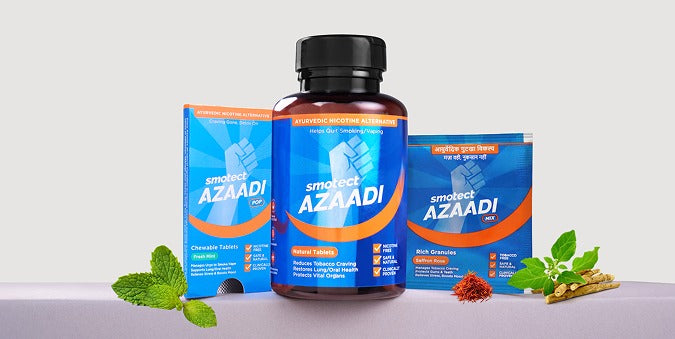
The core product consists of tablets containing a proprietary Ayurvedic formulation. Key ingredients include Kapikacchu, Ashwagandha, Haridra, and Tulsi, which are known for their adaptogenic and anti-inflammatory properties. These tablets work by stimulating the production of dopamine naturally, mimicking the “hit” of a cigarette without the toxic chemicals. Furthermore, the product is designed to repair lung capacity and reduce the internal damage caused by years of tobacco use.
Market Position
In a market dominated by pharmaceutical giants offering Nicotine Gums (like Nicotex), Smotect occupies a premium, natural niche. It appeals to health-conscious individuals who are wary of the side effects of synthetic drugs or the lingering addiction of NRT. Its unique selling proposition is its clinical validation; the company conducted a randomized, double-blind, placebo-controlled study to prove its efficacy, a rarity in the herbal supplement space in India.
| Business Detail | Information |
|---|---|
| Company Name | Smotect (Project Happiness) |
| Founder | Gurseet Singh |
| Product Type | Herbal Quit-Smoking Tablets |
| Price Range | ₹1,000 – ₹5,000 per course |
| Primary Channel | D2C Website & Amazon |
| Headquarters | Mumbai, Maharashtra |
About Founder’s
Gurseet Singh is a creative entrepreneur with a background in the arts. Before launching Smotect, he founded Art Effects, a successful art installation and sculpting company in Mumbai. His transition from art to medical research was driven by the loss of his friend Nikhil in 2012. Gurseet’s personal battle with smoking, which lasted nearly two decades, gave him a first-hand understanding of why people fail to quit. According to his LinkedIn profile, he remains committed to scaling Smotect into a global wellness brand.
- Successfully quit a 40-cigarette-a-day habit using his own research.
- Spent 8 years and ₹2.5 Crores of personal capital on clinical trials.
- Maintains 100% equity in the company prior to the Shark Tank deal.
- Runs a separate profitable art installation business that operates on “autopilot.”
Shark’s and Founder’s QnA
When did you quit smoking yourself and how many times did you fail?
I stopped smoking completely in 2018-19. Before that, I had failed 30 times in my journey. Smoking is not just a biological addiction to nicotine; it is a psychological one tied to your morning tea or socializing with friends. That is why it is so hard to break.
You claim a 95% success rate in your clinical trials. Is that accurate?
Our clinical trial is a double-blind, randomized, placebo-controlled multi-centric study—the gold standard. The output showed that 95% of people who used our product either quit or significantly reduced their smoking. This was based on a sample of 100 patients.
How much have you invested in this research and where did the money come from?
I have invested ₹2.5 Crores over eight years. The money came from my other business, Art Effects, which is an art installation company. I am a sculptor by trade, and that business now runs on autopilot, allowing me to focus on Smotect.
If 20,000 people have quit using Smotect, why aren’t you going viral?
Deepinder, we are selling to about 3,500 to 4,000 people every month currently. While we have a high success rate, the awareness is still growing. We follow up with every customer who buys from our website to track their progress and offer psychologist support.
The tablets cost ₹25 each, and a user takes four a day. Isn’t ₹100/day too expensive?
Pricing does matter, but if the product works, smokers are willing to pay. A pack of cigarettes costs much more over time, not to mention the medical bills associated with smoking-related illnesses. We are offering a life-saving solution.
Are you doing two businesses at once? How will you focus?
My art business is stable and managed by a team. My life’s dedication and mission is Smotect. I want to help the 1.3 billion people worldwide who are trapped in this addiction. This is where all my energy goes.
Key Stats & Financials
At the time of the pitch, Smotect demonstrated strong unit economics despite the high customer acquisition costs that sparked a debate among the sharks. The company achieved a monthly revenue of ₹1 Crore leading up to the episode, showing significant growth from its first year of operations.
Revenue and Profitability
- Yearly Sales (FY 22-23): ₹2.81 Crores
- Current Year Sales (Projected): ₹5 Crores (with ₹4.25 Crores already achieved)
- Gross Margin: 80%
- EBITDA Margin: 18%
- Original Valuation: ₹100 Crores
- Deal Valuation: ₹10 Crores
Financial Breakdown
| Metric | Amount / Value |
|---|---|
| FY 2022-23 Sales | ₹2.81 Crores |
| FY 2023-24 (Till Pitch) | ₹4.25 Crores | ₹1 Crore |
| Profit After Tax (PAT) | 12% |
| Cost of Acquisition (CAC) | High (approx. 40-50%) |
| Manufacturing Margin | 80% |
Business Potential and TAM
The market for smoking cessation is massive and underserved. In India alone, there are over 100 million smokers, and according to GATS surveys, nearly 70% of them want to quit. Globally, the smoking cessation and nicotine de-addiction market is valued at approximately $25 Billion and is expected to grow as health awareness increases. Smotect’s potential lies in its ability to capture a share of this market from traditional NRT products by offering a “cleaner,” chemical-free alternative.
Market Size Analysis
The Total Addressable Market (TAM) for Smotect includes not just cigarette smokers, but also users of gutka and other smokeless tobacco products, which are prevalent in rural and semi-urban India. The global herbal supplement market is also a tailwind, as consumers move away from synthetic pharmaceuticals. With a CAGR of over 10% in the wellness sector, Smotect is positioned at the intersection of traditional Ayurveda and modern clinical science.
Growth Opportunities
- International Expansion: Targeting the US and European markets where smoking cessation products are highly regulated but in high demand.
- B2B Corporate Wellness: Partnering with large corporations to offer “Quit Smoking” programs to employees as part of insurance and health benefits.
- Product Diversification: Developing anti-anxiety and lung-repair supplements for the non-smoking market using existing Ayurvedic research.
- Offline Retail: Entering pharmacy chains and health stores across Tier 1 cities to increase brand trust and accessibility.
Smotect: Ideal Target Audience & Demographics
| Demographic | Details |
|---|---|
| Primary Age Group | 25 – 45 Years |
| Secondary Age Group | 45 – 60 Years |
| Interests | Health, Fitness, Biohacking, Ayurveda |
| Platform Preference | Google Search, Facebook, Instagram |
| Geography | Metropolitan Cities (Mumbai, Delhi, Bangalore) |
| Buying Behavior | Problem-solving seekers, high intent |
Marketing and Distribution Strategy
Smotect employs a digital-first approach to reach its audience. Because smoking is a sensitive topic, the brand focuses on educational content and empathetic storytelling. Their marketing emphasizes the “Science of Quitting” rather than just the fear of death, which helps in building a deeper connection with the user who has likely failed to quit multiple times before.
Customer Acquisition
The primary driver for sales is Performance Marketing through Meta and Google Ads. However, the sharks noted a high CAC, which Gurseet explained was necessary to build the category. The company uses a consultative sales approach, where they follow up with leads through tele-calling to explain the dosage and the psychology behind the product, which significantly improves conversion rates for high-value bundles.
Distribution Channels
- D2C Website: High-margin channel accounting for 70% of sales.
- Amazon & Flipkart: Key for discovery and social proof through reviews.
- Clinical Referrals: Direct partnerships with doctors and wellness centers.
- International Shipping: Early-stage export to customers via the global website.
Social Media and Content Strategy
Smotect uses its social media platforms to host webinars, share success stories, and provide tips on managing withdrawal symptoms. Their content is designed to act as a “digital companion” for someone on their 12-week quitting journey. By providing value-added content like breathing exercises and stress management techniques, they reduce churn and increase the Lifetime Value (LTV) of the customer.
Smotect Shark Tank Deal Outcome
The negotiation was intense. Deepinder Goyal was highly skeptical of the success rate and the high marketing spend, eventually deciding to stay out. Aman Gupta and Vineeta Singh also bowed out due to concerns about the founder managing two businesses simultaneously. However, Anupam Mittal saw potential in the category and the founder’s passion, offering a deal with strict conditions regarding the verification of the 20,000-customer success claim.
| Shark | Offer Detail |
|---|---|
| Anupam Mittal | ₹50 Lakhs for 5% Equity + ₹50 Lakhs Debt @ 15% |
| Deepinder Goyal | Out – Doubted product effectiveness |
| Namita Thapar | Out – Concerns over valuation and clinical claims |
| Aman Gupta | Out – Founder’s split focus |
| Final Decision | Accepted Anupam Mittal’s Offer |
Smotect Post-Show Update
Following the airing of the episode, Smotect saw a massive surge in website traffic and sales. According to a report by The Indian Express, the deal with Anupam Mittal was a “gamble” that sparked significant interest in the medical community. While the clinical results have been discussed in major publications like Mint, the company continues to work on peer-reviewing its studies to silence skeptics. Since the show, the brand has expanded its product line to include gutka-flavored cessation tablets to address a larger demographic in India.
Business Analysis & Lessons
The Smotect pitch serves as a fascinating case study in clinical-led marketing. The business model relies heavily on the integrity of its research. If the product truly delivers a success rate significantly higher than the industry average of 4-7%, the business is a gold mine. However, the high CAC indicates that the product does not yet benefit from strong organic word-of-mouth, which is a critical metric for long-term sustainability in the wellness space.
For entrepreneurs, the lesson is clear: specialized medical products require extraordinary evidence. Gurseet’s willingness to spend ₹2.5 Crores on research before seeking external funding showed his conviction, which ultimately won over Anupam Mittal. However, the struggle to justify a ₹100 Crore valuation based on ₹2.81 Crores in sales highlights the importance of aligning expectations with market reality.
Key Takeaways
- Validation is King: In health-tech, having a double-blind clinical trial is the only way to gain high-level credibility and secure investments.
- Personal Connection Sells: Gurseet’s personal story of losing a friend and his own struggle with addiction provided the emotional anchor needed for the pitch.
- Address the Psychology: Solving only the physical addiction (nicotine) isn’t enough; addressing behavioral triggers (morning tea/socializing) is a unique market advantage.
- Unit Economics Matter: An 80% gross margin provides the necessary “buffer” to sustain high digital marketing costs during the brand-building phase.
Pitch Conclusion
The Smotect Shark Tank India pitch was a classic battle between data and doubt. By securing a deal with Anupam Mittal, Gurseet Singh proved that even in a skeptical environment, a founder’s deep-rooted passion and scientific commitment can prevail. As the company continues to scale, it stands as a potential game-changer for the millions looking to reclaim their health from tobacco. If you enjoyed this breakdown, check out Matri, MeduLance, and CureSee.
[faq_accordian]