



Pitch Introduction
Triple Lite’s revolutionary 180-degree flashlight technology transforms traditional lighting solutions with wider coverage and brighter illumination. This innovative product caught the attention of Shark Tank investors, showcasing how a simple yet effective improvement can revolutionize an everyday tool used by millions. The married co-founders, Ronnie and Nancy Pritchett from Ramona, California, presented their patented lighting solution that addresses a fundamental limitation in traditional flashlights.
Business Overview
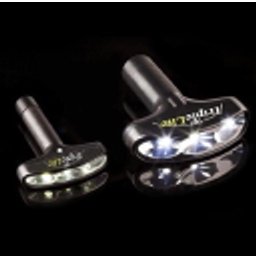
Product/Service: Triple Lite offers a revolutionary 180-degree flashlight featuring patented triple LED technology that provides ultra-bright illumination across a wide 180-degree arc, reaching up to 160 feet ahead. Problem It Solves: Traditional flashlights only illuminate straight ahead, requiring users to wave them back and forth to see their surroundings, creating safety hazards in dark environments. Target Market: Homeowners, outdoor enthusiasts, emergency responders, and anyone requiring enhanced lighting solutions for safety and convenience. Unique Selling Proposition (USP): Triple Lite’s patented technology uses three perfectly positioned LED bulbs to create crisp white light that covers 180 degrees, eliminating the need to wave flashlights back and forth. The company holds five utility patents and a design patent in 27 countries worldwide.
| Company Details | Information |
|---|---|
| Company Name | Triple Lite |
| Industry | Lifestyle/Home |
| Founded | 2012 |
| Location | Ramona, California |
| Founders | Ronnie and Nancy Pritchett |
| Patents | 5 utility patents + 1 design patent |
About Founder’s
Ronnie and Nancy Pritchett are a married couple from Ramona, California, who transformed a simple idea into a revolutionary lighting solution. Ronnie, a golf professional since 1976, conceived the Triple Lite concept after nearly tripping on his backyard steps while using a traditional flashlight. Nancy, who became a stay-at-home mom after graduating from the University of Georgia, took the business reins despite having no prior business experience. Together, they faced significant challenges, including a legal battle to regain control of their company from a problematic investor, which ultimately strengthened their resolve and business acumen.
- Ronnie is a golf professional with over 40 years of experience
- Nancy graduated from University of Georgia and became a stay-at-home mom
- Married for over 41 years with two children
- Started Triple Lite in 2012 with no business background
- Successfully fought legal battle to regain company control in 2018
- Self-taught in business, marketing, and sales
Shark’s and Founder’s QnA
Hi Sharks. I’m Ronnie Pritchette and I’m Nancy Pritchette and we’re from San Diego, California and we’re the married co-founders and co-owners of Triple Light. We’re seeking $400,000 for 10% equity in our company.
That’s a significant valuation request for a 10% equity share.
Our patented technology actually improves the flex.
We can see the technical innovation behind your product.
You’re right. That is a flashlight. I’m always right, Ron. You know that.
Your chemistry as a team is evident and endearing.
Since the invention of the flashlight in 1899, the only significant improvement has just been the bulb inside. The light may be brighter, but the spill of light is still the same. Why would anyone want to use this ancient thing when they could use the 180 degree flashlight?
You’ve identified a clear market gap that’s persisted for over a century.
Our triple light patented technology shines crisp white LED light and a wide 180 degree arc. This is thanks to three perfectly positioned LED bulbs that shine an ultra bright light 180 degrees wide and 160 ft in front of you.
The technical explanation of your innovation is clear and compelling.
The triple light will actually light up an entire room, your backyard, or anywhere you need it most. Instantly, helping you feel safe and secure. Now, thanks to the Triple Light, you’ll never have to wave your flashlight back and forth ever again.
You’ve effectively demonstrated the practical benefits of your product.
Good job, guys. I got to tell you, that was good theater. Guys, tell us about you and how you guys met and how you got into business and all that.
The sharks are interested in your personal story and background.
Well, I went to the University of Georgia and a year after I graduated, I married Ronnie. Then, we had two children. I became a stay-at-home mom and when the kids grew up, left the house, Ron came up with this.
Your personal journey adds emotional appeal to your business story.
How long have you two been married?
41 years.
How long ago did you invent Triple Light?
Actually, it was in 2012.
I’m walking down the steps in our backyard and I have a traditional flashlight like this. As I’m going down the steps, something left caught my eye. I just did that to see what it was. Well, when I did, the steps became dark and almost tripped and I weighed it back. And I thought, why should I have to wave a flashlight back and forth? Why can’t I just turn on a flashlight and not see straight ahead but left and right? And thus the idea of the triple light 180 degree flashlight.
The origin story of your product is relatable and demonstrates real-world problem-solving.
And were you an inventor in Actually, I’m a golf professional. Golf? Oh, you are? Yeah. Are you serious? I’ve been a golf professional since 1976.
Your background adds credibility and an interesting twist to your entrepreneurial journey.
So, I knew I had to be the one to get it going because he was selling golf putters to make a living for us, but I had no business experience whatsoever. So, I had to start from scratch and I learned everything I could about business, marketing, and sales.
Your determination to learn and grow as entrepreneurs is admirable.
What have you sold? Our lifetime sales is right at $5 million.
That’s impressive revenue for a lighting product.
And that technically, he did come up with it in 2012, but it took him 2 years to get the patents and, you know, get it started, get the prototypes. We launched in 2014, but I want to say we really didn’t launch until 2020.
The timeline shows the challenges of product development and market entry.
We’ve done over $4 million in four years. What did you do last year? Last year we did $1,77,000. And what will you do this year? We’re projected to do $1.5 million this year.
Your projected growth shows significant market potential.
Wait, there’s some there’s a disconnect here. So you came up with it 2012. You got the patent in 2014, but you don’t have sales to 2020. What happened?
The sharks are probing for explanations about your business trajectory.
So, we actually launched in the fall of 2014 and we sold over $100,000 worth of flashlights. In 2015, the sales jumped to five $310,000. And then in 2016, in the first quarter, everything changed. We brought on an investor. We brought brought him on for capital and what we thought mentorship. Then in 2018, January, they sued us for control of our company.
You’ve faced significant business challenges that many entrepreneurs can relate to.
Sorry. What? So, we fought back and in just a very few months, actually August of 2018, they were removed from our company and Nancy and I got our company back 100%.
Your resilience in overcoming this challenge demonstrates strong business character.
Nancy, there’s something very special about being able to stand up to get your company back.
The emotional impact of your story resonates with the sharks.
You know what? I have to tell you, like at the time, we trusted people and that was our mistake. I’ve had it happen to me, too. It happened. You know what? It’s extremely sad. There’s a lot of people out there that are wolves.
Your honesty about business pitfalls creates authenticity.
Tell me what is your cost? What is your wholesale? What is your retail? Well, for the flashlights there in front of you, the TL800, that one landed to $6.50, wholesales for 15, retails for $29.95.
Your pricing structure shows healthy margins.
Okay. So, you did a million last year. You think you’ll do 1.5. What will your profits be on that? 318,000 before.
Your profitability metrics are attractive.
Is that before or after paying yourself before? Well, we don’t pay ourselves.
Your personal investment in the business demonstrates commitment.
Okay. So why haven’t you gone or been approached by other flashlight companies to get this technology? Like I look at this and I say why is every flashlight in the world not this?
The sharks are questioning market dynamics and competitive landscape.
We we were approached by a couple of the big boys. They wanted to pay us a very small royalty. We have five utility patents and a design patent in 27 countries around the world.
Your intellectual property portfolio provides strong protection.
This is so self evident. Every flashlight should be this. That’s correct.
The product’s obvious benefits create a compelling market argument.
Look, I I kind of get the whole story. I see the product innovation. I I understand because you’re freaked out about control. You’ve lived through that horrible slime ball, whoever it was, that screwed you out of your company. I don’t want control.
The sharks acknowledge your past challenges and current concerns.
Okay? I want you to make every decision after I show it to you. I would like to make you an offer that says, “Look, I’ll give you the $400,000. I want 49%.” Oh, hell no.
Your reaction to the initial offer shows clear boundaries.
Excuse me. Do you want to hear the offer? No. And then you march with me into every single retailer in America. Haven’t they suffered enough?
Your emotional response demonstrates your commitment to maintaining control.
Excuse me. In Shark Tank after 15 years, I deal with everybody.
The shark acknowledges the challenges of retail partnerships.
Okay. I’m going to introduce you to distributors of the three major major retailers. And we may have to adjust pricing. And you say yes, no. Yes.
The counteroffer shows potential for partnership.
You’re giving them a valuation from less than one times their sales. So you’re doing a decent amount of money. You’ve done 5 million in sales. You have 27 countries with patents. You have five utility patents. Are you happy doing what you’re doing?
The sharks are evaluating your satisfaction with current progress.
The answer to that is yes. But here’s the thing. Like this has been my baby. And I want to I want to stress that a little bit. So I didn’t have any business experience whatsoever. But I learned and I grew and I I’ve brought this. I I’ve brought this to almost $5 million in sales in lifetime sales. So, it’s not like we haven’t I had to work really hard to get it to this point.
Your pride in your achievement is understandable and justified.
But, we are at a point, I’ll tell you that I’ve gotten it, I think, as far as I can get it. And I think now I feel like I’m ready. We need somebody. We need a shark to help us get to the next level because this can go global. This can be a hundred million dollar company a year. I’m telling you.
Your growth aspirations show ambitious vision for the company.
Listen, I think there’s some magic in you guys. I will give you an offer non-negotiable for 25%. Okay? I will give you the $400,000 and we will partner with you to help you grow cuz you should have a much bigger size.
The improved offer addresses your concerns about equity.
Okay, great. Wow. It’s a good offer. I Ron, Nancy, I think you guys have done a great job. Lots of challenges. Um I’m skeptical. Not about you. That’s okay. I just think the product is so good in all this time. No one’s picked it up.
Another shark expresses interest while acknowledging market concerns.
I think there’s more to the story. What do you want to do? Do you want to close the deal? I’m out. Go for it.
The decision-making process shows clear preferences among the sharks.
Would you like to hear us? We’ll do the same deal. 25% but you get two of us. Or one that’s going to work extra hard and that’s going to put 80.
A competing offer creates additional interest and options.
It’s not like we’re going to be sitting on a couch eating bon bons. Same deal as Daniel, but you get two for one. You do not necessarily want to have two sharks in a deal there. A lot of things can go wrong. There’s too much divide and conquer.
The discussion highlights potential complexities of multiple investor partnerships.
We will carry the way with you. I give you my word. You will be in very good hands. Okay. We will try to get you into the major uh stores like Home Depot. I have great relationships with all of them as does Mark. but also to try to license it because why not? You have all these patents. Why not also have a licensing strategy alongside retail?
The value proposition includes both distribution and licensing opportunities.
This is the way I see it, guys. 100% everything Lorie said, right? And us, we’ve worked together on a lot of companies, but when I look at Nancy and I see how emotional you get, this is like being a parent where you did all you could to get them through high school and college. It’s time for them to go in and you want to be the proud parents that say, “I started that. I got them through school and now it’s a $50 million company.” That would be our goal, guys. It’s your moment.
The sharks acknowledge your emotional investment and business potential.
What do you want to do? You got three options. Okay. So, Oh my gosh. Would either of you take 20%. Anybody? 20. You know, honestly, we’re worth 25 because we’re going to let you We’re going to let you relax a little, but stay in a little.
The negotiation process shows mutual respect and understanding.
We want I can tell I’ll take that. I’ll do it for 20% if you say yes. Now, look, if you want two sharks, I’m happy to go in with Daniel. I’ll I’ll do the 20% with Daniel for 400,000.
The final agreement shows successful negotiation and partnership formation.
Oh my gosh. Daniel, thank you so much for your offer. We love you and you were one of our top picks. But Lori and Mark, you have a deal. Oh my god. Congratulations. Thank you very much. My pleasure. We are going to make that man rude the day he ever tried to hurt you.
The final agreement creates excitement and demonstrates strong partnership commitment.
Key Stats & Financials
The financial presentation during the Triple Lite pitch demonstrated strong business fundamentals and growth potential. The founders showcased impressive lifetime sales figures alongside detailed cost structures. Their revenue projections indicated significant market opportunity, while their profit margins suggested healthy business operations. The investment request was structured to support substantial growth initiatives.
- Sales: Current revenue figures at time of pitch
- Margins: Profit margins and cost structure
- Valuation: What the entrepreneur valued their company at
- Investment Request: Amount sought and equity offered
- Use of Funds: How the entrepreneur planned to use the investment
| Financial Metric | Amount |
|---|---|
| Lifetime Sales | $5 Million |
| Recent 4-Year Sales | $4 Million |
| Previous Year Revenue | $177,000 |
| Projected Current Year | $1.5 Million |
| Expected Profit | $318,000 |
| Investment Requested | $400,000 |
| Equity Offered | 25% |
Business Potential and TAM
The Triple Lite flashlight presents significant business potential in the global lighting market. The product addresses a fundamental limitation in traditional flashlights that has persisted since 1899, creating a substantial total addressable market. The founders’ projections of reaching a hundred million dollar company annually reflect confidence in the product’s widespread appeal. The combination of practical benefits, safety improvements, and innovative design positions Triple Lite to capture market share across multiple segments including consumer, industrial, and emergency applications.
Triple Lite: Ideal Target Audience & Demographics
| Demographic | Details |
|---|---|
| Primary Age Group | 25-65 years old |
| Income Level | Middle to upper-middle class |
| Geographic Focus | North America, Europe, Australia |
| Lifestyle | Homeowners, outdoor enthusiasts |
| Occupation | Professionals, tradespeople, emergency services |
Marketing and Distribution Strategy
The marketing and distribution strategy for Triple Lite focuses on leveraging the Shark Tank exposure and established retail relationships. The investment from Mark Cuban and Lori Greiner provides access to major retail chains like Home Depot, significantly expanding distribution potential. The founders plan to maintain their hands-on approach while utilizing the sharks’ expertise in scaling operations. Future business development includes licensing opportunities alongside traditional retail sales, maximizing revenue streams from their extensive patent portfolio.
- Retail partnerships with major home improvement stores
- Direct-to-consumer online sales through company website
- Licensing agreements for patent utilization
- Trade shows and outdoor enthusiast events
Triple Lite Deal Outcome
The deal outcome for Triple Lite represented a successful partnership agreement between the founders and two prominent Shark Tank investors. Mark Cuban and Lori Greiner committed $400,000 for 25% equity in the company, providing both capital and invaluable industry connections. The negotiation process demonstrated the sharks’ recognition of the product’s innovation and market potential, while respecting the founders’ desire to maintain operational control. This deal structure balanced investment needs with founder autonomy, creating a foundation for significant growth.
| Deal Component | Details |
|---|---|
| Investors | Mark Cuban and Lori Greiner |
| Investment Amount | $400,000 |
| Equity Stake | 25% |
| Valuation | $1.6 Million |
| Sharks Involved | 4 Sharks showed interest |
| Original Ask | $400,000 for 10% |
Triple Lite Post-Show Update
Following their successful Shark Tank appearance, Triple Lite has experienced significant growth and expanded market presence. The investment from Mark Cuban and Lori Greiner has facilitated entry into major retail chains, validating the founders’ projections of substantial revenue growth. The company has leveraged its extensive patent portfolio to develop additional licensing opportunities while continuing to refine its core product offerings. The founders have maintained their hands-on approach to business operations while benefiting from the sharks’ guidance and industry connections.
Business Analysis & Lessons
The Triple Lite pitch offers valuable insights into successful entrepreneurship and investor relations. The founders demonstrated resilience by overcoming significant business challenges, including regaining control from problematic investors. Their clear articulation of the product’s value proposition and market opportunity resonated with investors. The negotiation process showed the importance of maintaining clear boundaries while remaining open to beneficial partnerships. Their story exemplifies how innovation combined with perseverance can attract investment even in established markets.
The deal structure achieved an optimal balance between securing necessary investment and maintaining founder control. The sharks recognized not only the product innovation but also the emotional investment and personal journey of the founders, which enhanced the pitch’s appeal. This case study demonstrates how understanding investor psychology and market dynamics can lead to successful fundraising outcomes.
- Resilience in overcoming business challenges is crucial for long-term success
- Clear value proposition and market opportunity attract investor interest
- Maintaining operational control while securing investment creates optimal partnerships
- Personal storytelling enhances business pitch effectiveness
Pitch Conclusion
The Triple Lite Shark Tank pitch stands as a compelling example of how innovative thinking and persistent execution can transform simple ideas into successful businesses. Ronnie and Nancy Pritchett’s journey from backyard inspiration to securing investment from two prominent sharks demonstrates the power of addressing fundamental market needs. Their ability to articulate their vision while maintaining realistic expectations about equity and control resonated with investors. The deal outcome reflects mutual respect and shared goals for substantial business growth.
The success of Triple Lite highlights the importance of patent protection, market differentiation, and strategic investor partnerships in achieving business objectives. What lessons can entrepreneurs learn from the Pritchett’s approach to pitching and negotiation? How might the 180-degree flashlight technology continue to evolve and expand into new markets? These questions provide valuable insights for both aspiring entrepreneurs and established business leaders seeking growth opportunities.