



Pitch Introduction
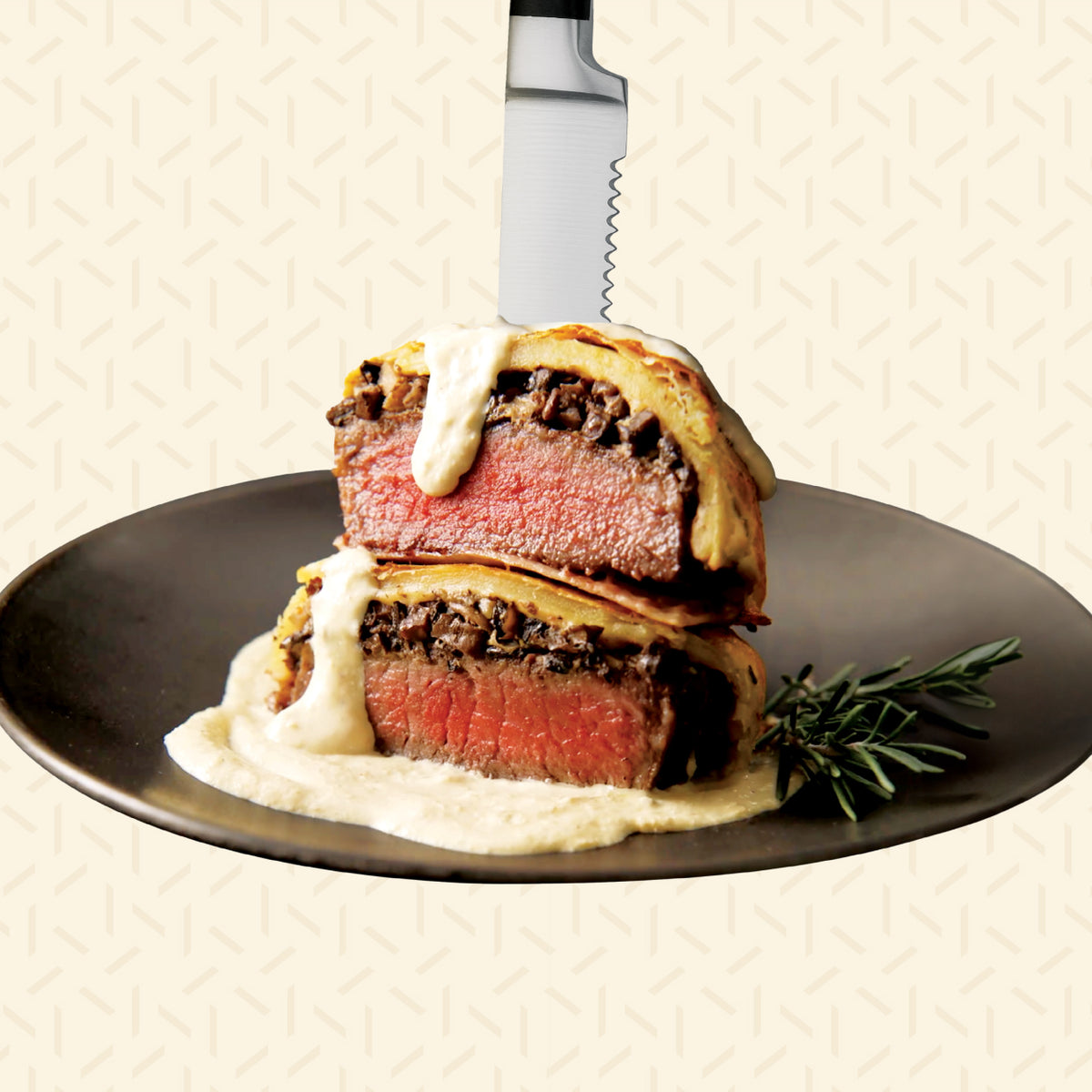
Wellingtons Shark Tank pitch showcased an innovative solution to enjoying a traditionally complex dish at home. The founders presented their frozen Beef Wellingtons as a convenient alternative to the labor-intensive recipe that typically requires special occasion preparation. With their appearance on Shark Tank Season 15, Wellingtons aimed to secure investment to scale their direct-to-consumer food business and expand their product line beyond their current offerings.
Business Overview
Wellingtons specializes in creating frozen Beef Wellingtons that eliminate the complexity of preparing this gourmet dish at home. The company addresses the common problem of wanting to enjoy luxurious meals without spending hours in the kitchen. Their target market includes home cooks who appreciate fine dining but lack the time or expertise to prepare elaborate dishes from scratch. The unique selling proposition of Wellingtons is their ability to deliver restaurant-quality Beef Wellingtons that require only 35 minutes in the oven before serving.
| Company Detail | Information |
|---|---|
| Product Line | Classic Beef Wellington, Cheeseburger Wellington, Breakfast Wellington, Hazelnut Chocolate Wellington, Wellington Bites |
| Price Point | $35 for single Classic Wellington, $140 for four-pack on website, $169 on Goldbelly |
| Preparation Time | 35 minutes in oven |
| Primary Sales Channel | Goldbelly and company website |
| Business Model | Direct-to-Consumer frozen meal delivery |
About Founder’s
Wellingtons was founded by Anastasia (Tasha) and Arya Alexander, a mixed-gender team from Los Angeles, California. The entrepreneurs identified a gap in the market for convenient gourmet meals that didn’t compromise on quality. Their passion for food and desire to make luxurious dishes accessible to home cooks drove them to create Wellingtons. The founders have developed their products in a commercial kitchen in Los Angeles, focusing on maintaining high standards while simplifying the preparation process for consumers.
- Middle-aged entrepreneurs with food industry experience
- Based in Los Angeles, California
- Developed products in commercial kitchen setting
- Successfully secured placement on Goldbelly platform
Shark’s and Founder’s QnA
Have any of you ever tried making a beef wellington?
If you have, you would know that it’s incredibly complicated and time-consuming, which is why most people only have it at a restaurant or on a special occasion. We thought there has to be a simpler way to enjoy our favorite dish at home, so we set out to create Wellingtons – incredible frozen beef wellingtons shipped directly to you.
What is your best-selling product?
Our number one seller is the classic Wellington. We sell the classic Wellington for $35. That includes all our food COGS, including our kitchen labor, which comes to $9.41.
How do you sell your products? Is it direct to consumer?
We actually sell on Goldbelly and more recently on our own website. Now we’re selling direct to consumer. We still have a majority of our business on Goldbelly, especially during the holidays.
What is Goldbelly?
It’s like Postmates but with overnight shipping. It’s all direct to consumer.
How does the pricing work on Goldbelly versus your website?
On Goldbelly, they sell a four-pack of the classic Wellingtons for $169, and that includes shipping to the customer. On our website, the four-pack is $140. Our cost on it is about $37 plus $27 shipping plus $9 for the box and dry ice.
What are your sales figures?
Last year we did $313,000 in sales, about $240,000 of that was Goldbelly.
Are you making any money?
No, last year we lost $260,000.
Are you trying to move away from Goldbelly onto your own website?
That’s the goal. We were thinking about going straight into grocery stores and going national, trying to get into 12,200 stores, but I just think it’s premature for that.
What are you looking for in a shark?
We’re looking for a partner. We need mentors, access to distribution channels, co-packers. We really want to invest in our own operational setup.
Have you considered other distribution channels?
We have just closed our first PO with a food service business. I think the food service business is actually going to be a really good route. For this hotel in particular, the product that’s going to resonate with their customer base is the Wellington bites, and they want to do about 200 units. The PO is for 200 units at two hotels to start per month.
Key Stats & Financials
Wellingtons presented their financial situation to the Sharks, revealing both promising sales figures and significant challenges in their business model. The company demonstrated substantial revenue but also highlighted the high costs associated with their current distribution strategy, particularly shipping expenses that impact their profitability.
- Sales: $313,000 in the previous year, with approximately $240,000 coming from Goldbelly
- Margins: Currently operating at a loss, with $260,000 lost in the previous year
- Valuation: Seeking $200,000 for 10% equity, implying a $2,000,000 company valuation
- Investment Request: $200,000 for 10% equity stake
- Use of Funds: Mentors, distribution channels, co-packers, and investment in operational setup
| Financial Metric | Value |
|---|---|
| Annual Sales | $313,000 |
| Annual Loss | -$260,000 |
| Classic Wellington Retail Price | $35 |
| Classic Wellington COGS | $9.41 |
| Four-pack Cost (Product + Shipping + Packaging) | $73 ($37 + $27 + $9) |
Business Potential and TAM
Wellingtons operates in the premium frozen food market, which has seen significant growth as consumers seek convenient yet high-quality meal options. The total addressable market for their products includes not only home cooks looking for convenient gourmet meals but also hotels, event services, and food service businesses. Their recent partnership with hotels for Wellington Bites demonstrates the potential for expansion beyond direct-to-consumer sales.
- Growing market for premium frozen meal solutions
- Expansion opportunities in food service and hospitality sectors
- Potential for retail distribution in grocery stores
- Product line diversification with multiple Wellington varieties
Wellingtons: Ideal Target Audience & Demographics
| Demographic | Details |
|---|---|
| Age Range | 35-65 years old |
| Income Level | Upper-middle to high income |
| Geographic Location | Nationwide, with initial focus on urban areas |
| Lifestyle | Busy professionals who value quality meals but have limited time |
| Food Preferences | Appreciators of gourmet cuisine and fine dining experiences |
Marketing and Distribution Strategy
Wellingtons has primarily utilized two distribution channels: Goldbelly and their direct-to-consumer website. Their marketing has focused on the convenience and quality of their products, emphasizing the ability to enjoy a traditionally complex dish with minimal preparation. The company is exploring expansion into food service, with their first purchase order from a hotel chain for Wellington Bites. Their future business roadmap includes potentially scaling to retail distribution in grocery stores and expanding their product line.
- Primary sales through Goldbelly platform and company website
- Social media marketing highlighting product convenience and quality
- Expansion into food service and hospitality sectors
- Future potential for retail distribution in grocery stores
Wellingtons Deal Outcome
Despite their passionate pitch and innovative product, Wellingtons did not secure an investment from any of the Sharks. Kevin O’Leary identified himself as a potential competitor and advised the founders to change their business model. Mark Cuban expressed concern about the high shipping costs and suggested alternative distribution channels like event services or party planners. Lori Greiner felt the business was too young and small for investment. Barbara Corcoran, while on the fence, ultimately decided she couldn’t provide the specific mentorship the founders needed and declined to invest.
| Shark | Decision | Reason |
|---|---|---|
| Kevin O’Leary | Out | Identified as competitor, advised business model change |
| Mark Cuban | Out | Concerned about high shipping costs, suggested alternative distribution |
| Lori Greiner | Out | Felt business was too young and small |
| Barbara Corcoran | Out | Uncertain about providing needed mentorship |
Wellingtons Post-Show Update
Information about Wellingtons’ business after appearing on Shark Tank is not available in the provided transcript. The founders ended their pitch by expressing their determination as a young company willing to take risks and their excitement about the future of Wellingtons. Despite not securing an investment, they appeared committed to continuing their business journey and expanding their product distribution, particularly through their new food service partnerships.
Business Analysis & Lessons
Wellingtons’ Shark Tank pitch offers several valuable lessons for food entrepreneurs. Their experience highlights the challenges of balancing product quality with profitability in the direct-to-consumer food space. The high shipping costs associated with frozen products significantly impacted their margins, a common issue in this industry. The Sharks’ feedback emphasized the importance of developing a sustainable business model before seeking significant investment.
The founders’ openness to exploring alternative distribution channels, such as food service and hospitality, demonstrates adaptability in response to market feedback. Their willingness to pivot from their initial direct-to-consumer focus shows entrepreneurial flexibility. Despite not securing an investment, Wellingtons gained valuable exposure and feedback that could help guide their business strategy moving forward.
- Shipping costs can significantly impact profitability in direct-to-consumer food businesses
- Exploring multiple distribution channels is crucial for food startups
- Having a clear plan for investment funds is essential when pitching to investors
- Early-stage businesses need to demonstrate a path to profitability before scaling
Pitch Conclusion
Wellingtons’ Shark Tank journey exemplifies both the potential and challenges of innovative food startups. While their frozen Beef Wellingtons solve a genuine consumer problem by making gourmet meals accessible, their business model faces significant hurdles, particularly regarding shipping costs and profitability. The founders’ passion and product quality were evident, but the Sharks’ concerns about the sustainability of their current approach led to no investment deal. As Wellingtons continues to explore food service partnerships and potentially other distribution channels, their ability to adapt and refine their business model will determine their long-term success in the competitive frozen food market.