



Pitch Introduction
The Maisha Shark Tank India pitch introduced a refreshing take on the competitive fashion accessories market. Founders Esha Shah, Nayan Shah, and Neel Vora presented a brand that bridges the gap between dull, mass-produced leather bags and prohibitively expensive designer labels. Based in Ahmedabad, Gujarat, Maisha focuses on handcrafted bags made from sustainable materials like cotton and jute.
During their appearance in Season 2, the founders showcased how they scaled a homegrown business into a significant digital brand. With lifetime sales exceeding 50,000 bags and a strong social media presence, they caught the attention of the Sharks by demonstrating impressive revenue growth from ₹73 Lakhs to ₹2.92 Crores in a single year. Their story is a classic example of a “new age” family business where a daughter led the way and her father joined the entrepreneurial journey.
Business Overview
Maisha operates in the lifestyle and fashion segment, specifically targeting modern women who seek unique, colorful, and eco-friendly accessories. The business was born out of a desire to replace “boring black and brown leather bags” with something more vibrant and culturally rooted. By utilizing local artisans and traditional weaving techniques, the brand offers a product that feels personal and artistic.
The brand’s primary sales channel is its own D2C website, supplemented by presence on marketplaces like Nykaa. Their strategy revolves around high engagement on social platforms, where they have built a community of over 1.47 Lakh followers. This community-driven approach has allowed them to maintain a 20% organic repeat customer rate, reducing their long-term dependence on paid advertising.
Product Details
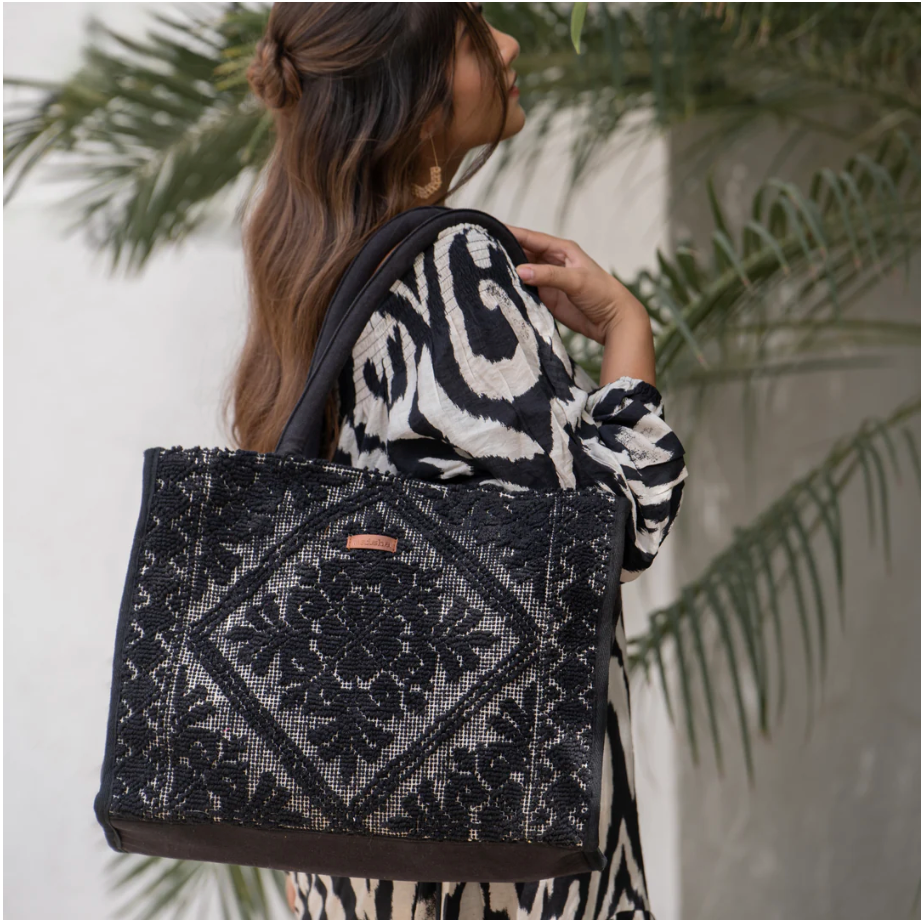
Maisha’s product catalog is extensive, featuring tote bags, slings, clutches, and backpacks. The core USP lies in the materials: they use cotton, slub, and jute, which are woven into intricate patterns. To ensure durability and a premium finish, they use minimal vegan leather instead of animal products, aligning with modern ethical fashion trends.
The bags are designed to be lightweight and functional, addressing common pain points like heavy leather bags or flimsy fabric alternatives. Each piece reflects the heritage of India through its weaves, yet maintains a contemporary aesthetic that fits into office settings, casual outings, or travel. The average price point of ₹1,449 makes them accessible to the middle-market segment looking for affordable luxury.
Market Position
In a market dominated by brands like Zouk and larger traditional players, Maisha carves out its niche through its “handmade by artisans” narrative. They position themselves as a brand for the conscious consumer who values craftsmanship over mass-market brands. Their Market Position is strengthened by their agility in design and their ability to launch new collections based on social media feedback.
| Business Detail | Information |
|---|---|
| Company Name | Maisha Lifestyle |
| Founder | Esha Shah, Nayan Shah & Neel Vora |
| Product Type | Handcrafted Cotton & Jute Bags |
| Price Range | ₹900 to ₹2,500 |
| Primary Channel | D2C Website & Nykaa |
| Headquarters | Ahmedabad, Gujarat |
About Founder’s
The leadership team at Maisha is a tight-knit family unit. Esha Shah, the Creative Head, started the business as a homegrown venture in 2018. Her vision was to elevate Indian handicrafts to a national level. According to YourStory, the brand grew substantially by focusing on aesthetic versatility and building an Instagram community.
Nayan Shah, Esha’s father, brings professional expertise with a background in Mechanical Engineering and an MBA in Marketing. He transitioned from traditional business roles to support his daughter’s vision, taking over Operations. Neel Vora, Esha’s husband and also an MBA graduate, previously worked as a Relationship Manager at ICICI Bank before joining the brand to handle marketing strategies.
- Esha Shah handles everything from concept to pilot production and content creation.
- Nayan Shah manages the operational complexities and supply chain.
- Neel Vora is responsible for the overall marketing strategy and growth.
- The team maintains a 50-50 equity split between the family members.
Shark’s and Founder’s QnA
Who among you three is handling what in the company? Please give me clarity.
Esha is the creative head. She has two main responsibilities: from concept to pilot production, she handles everything. She also manages content creation for social media. My job (Nayan) is Operations, and Neel handles the marketing strategy.
What is the equity split till now?
We have a 50-50 split between the founders currently.
What is your monthly marketing expense?
It is approximately 24% of our revenue. Last month, we spent about ₹11 Lakhs on marketing.
How many people repeat and are they organic?
We have a 20% repeat rate. These customers come back on their own organically, not necessarily through paid remarketing.
What was the primary reason for the jump from ₹73 Lakhs to ₹2.92 Crores?
Before Covid, we sold only through exhibitions. Immediately after the pandemic in 2020, we launched our own website, which triggered this massive growth in reach and sales.
What was the profit last month on ₹47 Lakhs sales?
Out of ₹47 Lakhs, we earned a profit of about ₹10 Lakhs. This is generally our average monthly profit margin.
Key Stats & Financials
Maisha demonstrated a textbook example of post-pandemic D2C acceleration. By moving from physical exhibitions to a digital-first model, they unlocked national demand. At the time of the pitch, the brand was already profitable, which is a significant feat for a bootstrapped startup in the fashion space.
Revenue and Profitability
- FY 2021-22 Sales: ₹2.92 Crores
- FY 2022-23 Projected: ₹6.5 Crores
- Net Margin: Approximately 21% (₹10 Lakhs profit on ₹47 Lakhs monthly sales)
- Marketing Spend: 24% of revenue
- Valuation Requested: ₹25 Crores
Financial Breakdown
| Metric | Amount / Value |
|---|---|
| FY 2020-21 Sales | ₹73 Lakhs |
| FY 2021-22 Sales | ₹2.92 Crores |
| Monthly Sales (Peak) | ₹65 Lakhs |
| Inventory Days | 40 Days | 20% Organic |
| Average Unit Price | ₹1,449 |
Business Potential and TAM
The potential for Maisha is rooted in the burgeoning Indian women’s handbag market, which is increasingly shifting toward organized retail and online D2C brands. The Indian accessories market is part of a multi-billion dollar ecosystem. With the rise of conscious consumerism, materials like jute and cotton are seeing higher adoption compared to traditional synthetic materials.
According to industry reports, the global women’s handbag market is valued at over $50 Billion, with India being one of the fastest-growing regions. As more women enter the workforce and disposable incomes rise in Tier 2 and Tier 3 cities, the demand for affordable yet stylish bags is expected to surge. Maisha’s ability to maintain high margins while keeping prices under ₹2,000 positions them perfectly for this growth.
Market Size Analysis
The total addressable market (TAM) for Maisha includes not just the handbag segment but also the broader lifestyle accessory market, including travel gear and office stationery. The Indian fashion eCommerce market is projected to reach $30 Billion by 2027. Maisha’s focus on the “Indie” and “Ethno-modern” aesthetic allows them to capture a segment that is often ignored by international luxury brands and poorly served by low-quality local unorganized players.
Growth Opportunities
- International Shipping: Tapping into the Indian diaspora in the US and UK who value handcrafted Indian weaves.
- Offline Retail: Setting up experience centers or kiosks in premium malls in metro cities like Mumbai and Delhi.
- Product Diversification: Expanding into home decor, footwear, or apparel using the same signature weaves.
- Corporate Gifting: Developing a B2B vertical for sustainable corporate gifts and event hampers.
Maisha: Ideal Target Audience & Demographics
| Demographic | Details |
|---|---|
| Primary Age Group | 18 – 35 Years |
| Secondary Age Group | 35 – 50 Years |
| Interests | Sustainable Fashion, Travel, Handcrafts |
| Platform Preference | Instagram, Pinterest |
| Geography | Metros & Tier 1 Cities |
| Buying Behavior | Impulse & Occasion-based Gifting |
Marketing and Distribution Strategy
Maisha’s strategy is heavily skewed toward digital discovery. They leverage the visual nature of their products to drive engagement. By focusing on the “story” of the artisans and the raw materials, they create an emotional connection with the buyer that goes beyond simple utility.
Customer Acquisition
The brand utilizes Meta Ads (Facebook and Instagram) as its primary engine for new customer acquisition. With a marketing spend of 24%, they are aggressive in the digital space. However, their 20% organic repeat rate suggests that their quality and design language are strong enough to build long-term brand equity without needing to “re-buy” the same customer repeatedly.
Distribution Channels
- Own eCommerce Store: Central hub for sales, contributing the majority of revenue.
- Nykaa Fashion: Strategic marketplace partnership to reach high-intent fashion buyers.
- Amazon/Myntra: Broader marketplace presence for mass reach.
- Physical Exhibitions: Continued participation in high-end lifestyle exhibitions for brand visibility.
Social Media and Content Strategy
Esha Shah leads the content strategy, focusing on high-quality aesthetics that showcase the textures of the bags. They use influencer collaborations but prioritize behind-the-scenes content involving the artisans. This transparency builds trust and reinforces the “handcrafted” value proposition.
Maisha Shark Tank Deal Outcome
The pitch saw mixed reactions regarding scalability. Peyush Bansal was impressed by the quality but felt the “design language” lacked a distinct USP that could be identified from a distance. Namita Thapar and Vineeta Singh appreciated the aesthetics but expressed concerns about the intensity of competition and the family-centric equity structure.
Aman Gupta, who has invested in Zouk, noted that while Maisha is performing well, competing with established leaders in the space would be tough. Ultimately, Amit Jain was the only Shark to step forward, seeing potential in the founders’ grit and the existing profitability. He offered a deal structured heavily with debt to minimize equity dilution for the founders while providing the necessary mentorship.
| Shark | Offer Detail |
|---|---|
| Amit Jain | ₹10 Lakhs for 1% Equity + ₹65 Lakhs Debt @ 18% Interest |
| Peyush Bansal | Out (Scalability concerns) |
| Vineeta Singh | Out (Market competition) |
| Aman Gupta | Out (Similar portfolio company) |
| Final Decision | Accepted Amit Jain’s Offer |
Maisha Post-Show Update
According to The Times of India, Maisha is among the women-led startups that witnessed encouraging growth after appearing in Season 2 of Shark Tank India. The visibility from the show significantly boosted their website traffic and order volume. The brand has since focused on professionalizing its operations and expanding its collection to include more diverse styles.
Verified post-show updates suggest that Maisha has successfully maintained its profitability while scaling its monthly revenue. They have also deepened their community engagement on Instagram, utilizing the “Shark Tank effect” to acquire customers at a lower cost during the months following the episode air date.
Business Analysis & Lessons
The Maisha pitch highlights a crucial transition point for many Indian SMEs: moving from a localized, exhibition-based model to a national D2C brand. Their strategic use of profit to fuel growth rather than burning cash is a standout feature. However, the Sharks’ critique regarding “design language” is a vital lesson in branding. For a lifestyle brand to become truly iconic, its products must be recognizable without looking at the label.
Another interesting aspect was the family dynamic. While some Sharks saw the family-owned structure as a potential hurdle for raising institutional capital in the future, it currently provides the brand with a stable, low-burn operational base. Founders can learn that profitability and high organic repeat rates are the best defenses when seeking investment at a high valuation.
Key Takeaways
- Lesson 1: Pivot to Digital: Moving from exhibitions to a website can scale revenue 4X (from ₹73 Lakhs to ₹2.92 Crores) by expanding the geographical reach.
- Lesson 2: Focus on Profit: Generating ₹10 Lakhs profit on ₹47 Lakhs monthly sales makes a business attractive even to skeptical investors.
- Lesson 3: Differentiator Branding: A brand needs a signature look; quality alone isn’t enough to build an “investible enterprise” in the fashion world.
- Lesson 4: High Repeat Rate: A 20% organic repeat rate is a strong indicator of product-market fit and reduces long-term CAC.
Pitch Conclusion
Maisha’s journey from a small Ahmedabad startup to a national brand with a ₹10 Crore valuation is a testament to the power of D2C in India. While they faced tough questions regarding scalability and branding, their solid financial foundation secured them a strategic partner in Amit Jain. If you enjoyed this breakdown, check out Pabiben, Midnight Angels By PC, and Bummer.
[faq_accordian]