


Pitch Introduction
The Sonic Lamb Shark Tank India pitch introduced a revolutionary leap in personal audio technology. Founders Navajith Karkera and Jagath Biddappa entered the tank with a bold vision: to bring the bone-shaking experience of a live concert or a high-end home theater into a pair of headphones. Representing Mangalore, Karnataka, they presented a product that doesn’t just play sound but allows the listener to “feel” the music through patented impulse drivers. Their pitch stood out not just for the technology, but for their direct challenge to established giants like Aman Gupta‘s boAt and global premium brands like Beats and Skullcandy.
Business Overview
Sonic Lamb is a deep-tech audio company specializing in immersive sound experiences. Unlike traditional headphones that use standard speakers for all frequencies, Sonic Lamb utilizes a specialized patented impulse driver. This technology converts audio signals into physical mechanical impulses, which are then transmitted to the user’s body through the ear pads. This enables a dual-sensory experience: you hear the high frequencies through the air and feel the low-frequency bass through your skin and bone conduction, mimicking the effect of a dedicated subwoofer.
The company operates in the premium audio segment, positioning itself as a high-performance alternative to legacy audio brands. While the market is flooded with budget Bluetooth earphones, Sonic Lamb targets audiophiles, gamers, and movie enthusiasts who crave depth and realism. They have already gained international recognition, having been selected for a prestigious audio accelerator program in Denmark, where they were one of the few startups chosen from outside Europe to refine their hardware and sound signature.
Product Details
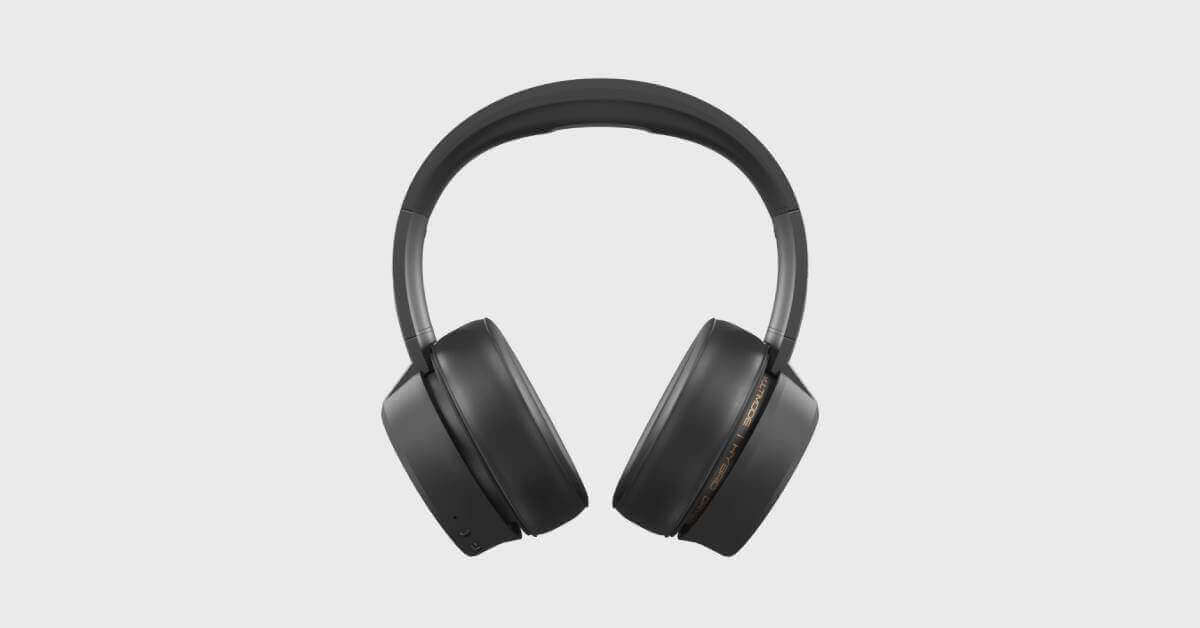
The flagship Sonic Lamb headphones feature a unique Multi-Mode Dial on the right ear cup. This dial allows users to switch between four distinct modes: ‘Hear’ (for instrumental and classical music), ‘Feel’ (where the subwoofer kicks in for general listening), ‘Immerse’ (for heavy bass genres), and a dedicated mode for gaming or movies. The headphones are constructed with high-quality materials designed to facilitate the vibration transfer required for the subwoofer effect. Additionally, the company is developing a smartphone application that conducts a hearing test to create hyper-personalized audio profiles, boosting or reducing specific frequencies based on the individual’s hearing sensitivity.
Market Position
Sonic Lamb occupies a niche but growing segment of the premium consumer electronics market. With a retail price of ₹17,999, they are not competing with mass-market brands but rather with the upper-tier products of brands like Skullcandy (Crusher series) and Beats. Their unique selling proposition (USP) lies in the physical sensation of the sound, which they claim is more accurate and realistic than the haptic motors used by competitors. Beyond consumer headphones, the company has a massive B2B vertical, aiming to license their technology to luxury automotive manufacturers for integration into vehicle seats, providing a surround-sound experience that users can literally feel.
| Business Detail | Information |
|---|---|
| Company Name | Sonic Lamb |
| Founders | Navajith Karkera and Jagath Biddappa |
| Product Type | Subwoofer Headphones |
| Price Range | ₹17,999 |
| Primary Channel | Direct-to-Consumer (D2C) Website |
| Headquarters | Mangalore, Karnataka |
About Founder’s
The founders, Navajith Karkera and Jagath Biddappa, share a deep technical background rooted in engineering. Navajith, born in Muscat and a long-time audio enthusiast, was inspired by his father’s high-fidelity home theater system. While studying engineering at Sahyadri College of Engineering in Mangalore, he met Jagath. In 2013, they began collaborating on research projects, eventually focusing on how to transmit sound without using traditional acoustic methods. Their technical prowess earned them a spot on the Forbes 30 Under 30 Asia list, cementing their status as top-tier innovators in the consumer technology space.
- Navajith grew up in Muscat, where he became an audiophile through his father’s sound systems.
- The founders met in 2013 at the Sahyadri College of Engineering in Mangalore.
- They spent over three years in research and development to perfect the impulse driver technology.
- They were one of six global startups selected for a specialized audio accelerator in Denmark.
Shark’s and Founder’s QnA
How exactly does this technology differ from a regular speaker?
In our case, we have the impulse driver, and they physically move back and forth. All headphones use normal speakers with a diaphragm. Our beats are single-plated; it is actually a speaker but without the diaphragm. The ear pads themselves move back and forth according to every beat, so that physical sensation is felt through your skin and your bone.
What is this hyper-personalized audio you mentioned?
It has two parts. First is the four modes for different genres. The second part is a smartphone application in development. You can take a quick hearing test, and we customize the sound signature based on your listening. If a person is insensitive to certain frequencies, it will boost those. It tunes the headphones exactly to your hearing profile.
What is the difference between you and Skullcandy or Beats?
Brands like Skullcandy use haptics for that vibration experience, which is more like a phone vibration. Our technology is more accurate and realistic because the driver is directly connecting to the ear pads. Beats just uses normal speakers. We are offering a superior sound signature than leading legacy premium brands at a similar price point of around $250.
Let’s address the elephant in the room: what can you do better than boAt?
There is a massive difference in the audio quality and the entire experience. We are in a totally different market. While boAt dominates the mass market, we are taking on the premium global players head-on. Our price point is much higher because the technology and the immersive experience are entirely unique.
You mentioned automotive applications. How does that work?
We are currently doing POs with automotive companies to integrate these impulse drivers inside luxury vehicle seats. Passengers will be able to feel the music through their bodies. It’s an Intel-inside strategy where we provide the hardware and license the technology. We estimate a massive market in the luxury vehicle segment alone.
What are your current sales figures?
We did ₹1.1 Crores in revenue last year. This year, from April to September, we have already done ₹1 Crore. Last month alone, our sales were ₹28 Lakhs. About 92% of our sales currently come from India, though we started with a crowdfunding campaign that saw orders from 45 different countries, including a large chunk from the US.
Key Stats & Financials
Sonic Lamb has demonstrated significant traction for a high-end hardware startup. Their early success was driven by a global crowdfunding campaign that validated international interest. At the time of the pitch, they were maintaining a healthy growth trajectory with monthly revenues reaching nearly ₹30 Lakhs. The founders revealed they had raised previous rounds with a valuation cap of up to ₹30 Crores, reflecting the high value of their intellectual property and patents.
Revenue and Profitability
- Last Year Sales: ₹1.1 Crores
- Current Year Sales (6 Months): ₹1 Crore
- Net Sales Per Unit: ₹15,250
- Cost of Goods Sold (COGS): 34% (approx. ₹5,185 per unit)
- Marketing/Acquisition Cost: 18%
- Net Margin: Approximately 18%
Financial Breakdown
| Metric | Amount / Value |
|---|---|
| Yearly Revenue (Projected) | ₹2.2 Crores | ₹28 Lakhs |
| Gross Margin | 66% |
| Total Raised to Date | ₹4.25 Crores |
| Inventory on Hand | 100 Units |
| Ask Valuation | ₹50 Crores |
Business Potential and TAM
The total addressable market (TAM) for Sonic Lamb is multi-layered. Primarily, they sit within the global headphones market, which is valued at over $70 Billion. However, their true potential lies in the “Immersive Audio” sub-segment. By creating a product that bridges the gap between hearing and feeling, they appeal to a high-ticket consumer base that spends heavily on audio gear. Their strategy to move into the automotive sector increases their TAM exponentially. The founders noted that approximately 12 million luxury vehicles are sold annually. If they can capture just a fraction of that market through seat integration, the revenue potential exceeds $900 Million based on a licensing model.
Market Size Analysis
The Indian premium audio market is currently witnessing a CAGR of 15% as consumer spending power increases. While budget brands dominate in volume, the value resides in the premium segment where margins are higher. Globally, the demand for VR and AR headsets is also rising, providing another massive opportunity for Sonic Lamb’s impulse drivers. Since spatial audio and physical immersion are critical for VR, their technology is perfectly positioned to become the standard for high-end virtual reality hardware.
Growth Opportunities
- Automotive Licensing: Integrating sound-vibration tech into the seats of premium and luxury cars.
- VR/AR Headsets: Partnering with tech giants to provide physical audio immersion in virtual reality.
- Global Retail Expansion: Utilizing Peyush Bansal‘s Lenskart network for offline experience centers in Dubai and Singapore.
- Gaming Peripherals: Developing a dedicated line of gaming headsets for the esports market.
Sonic Lamb: Ideal Target Audience & Demographics
| Demographic | Details |
|---|---|
| Primary Age Group | 25 – 45 Years |
| Secondary Age Group | 18 – 24 Years (Gamers) |
| Interests | Audiophiles, Home Theater, Tech Enthusiasts |
| Platform Preference | YouTube, Tech Blogs, Reddit |
| Geography | Tier 1 Indian Cities, USA, Europe |
| Buying Behavior | Research-oriented, Quality over Price |
Marketing and Distribution Strategy
Sonic Lamb relies heavily on technical validation and high-quality reviews. Their initial growth was sparked by organic tech reviews from global influencers, which brought in customers from 45 countries without a significant marketing spend. Their strategy focuses on “Experience over Ads,” knowing that a customer who feels the product is far more likely to convert than one who just sees a banner. This is why their focus is now shifting toward experiential retail where users can demo the headphones before purchasing.
Customer Acquisition
Their current Customer Acquisition Cost (CAC) stands at 18%, which is relatively efficient for a high-ticket item priced at ₹17,999. They leverage performance marketing on Google and Meta, targeting users interested in brands like Sony, Bose, and Sennheiser. However, their long-term strategy involves reducing digital CAC by building strong word-of-mouth through their community of early adopters and audiophiles.
Distribution Channels
- D2C Website: The primary channel for global and domestic orders.
- International Crowdfunding: Platforms like Indiegogo used for initial market validation.
- Luxury Automotive POs: B2B channel for long-term technology licensing.
- Global Experience Centers: Future roadmap includes placement in premium retail stores.
Social Media and Content Strategy
Their content strategy is educational and experiential. They use video content to explain the physics behind the impulse driver and show live reactions of people experiencing the sound for the first time. By focusing on the ‘reaction’ factor, they create viral potential that helps bridge the gap between a digital ad and a physical sensation.
Sonic Lamb Shark Tank Deal Outcome
The pitch concluded with intense interest from multiple sharks. Anupam Mittal offered ₹50 Lakhs for 3.5% equity, conditional on IP diligence. Namita Thapar offered ₹50 Lakhs for 3% equity plus a 2% royalty until 2.5x of the investment was recouped. However, Peyush Bansal saw the global potential and offered a cleaner deal. After a brief counter-negotiation, the founders secured an investment from Peyush Bansal. The final deal was ₹50 Lakhs for 1% Equity and 1% Advisory Shares, valuing the company at ₹50 Crores.
| Shark | Offer Detail |
|---|---|
| Peyush Bansal | ₹50 Lakhs for 1% Equity + 1% Advisory (Accepted) |
| Anupam Mittal | ₹50 Lakhs for 3.5% Equity (Conditional) |
| Namita Thapar | ₹50 Lakhs for 3% + 2% Royalty |
| Aman Gupta | Out – Offered licensing partnership instead |
| Final Decision | ₹50 Lakhs for 1% Equity + 1% Advisory |
Sonic Lamb Post-Show Update
Following their appearance on Shark Tank India, Sonic Lamb experienced a massive surge in domestic interest. According to reports from The Indian Express, the brand’s challenge to the status quo sparked significant online debate. The company has continued its efforts to scale the D2C brand while simultaneously pursuing automotive partnerships. Their participation in the Denmark accelerator and the subsequent Shark Tank deal has positioned them as one of the most promising hardware startups coming out of Karnataka. Verified post-show revenue figures are not yet public, but the brand remains active on its D2C platform.
Business Analysis & Lessons
Sonic Lamb’s business model is a classic example of a high-risk, high-reward hardware play. By focusing on Intel-inside licensing and premium D2C sales, they are diversified. However, the sharks rightly pointed out the danger of “riding two horses”—trying to be a consumer brand and a licensing firm simultaneously. The high manufacturing cost and premium price point mean they must maintain an impeccable brand image to justify the ₹17,999 tag. Their reliance on R&D and patents provides a strong moat, but the long sales cycles in the automotive industry present a significant cash-flow challenge.
For entrepreneurs, Sonic Lamb offers a lesson in the power of technical differentiation. In a commoditized market like audio, they didn’t just compete on price; they changed the product’s fundamental utility. The founders’ ability to hold their ground on valuation, despite having low cash in the bank, shows the confidence that comes from owning truly unique intellectual property. However, their struggle to maintain inventory highlights the working capital difficulties inherent in hardware startups.
Key Takeaways
- Lesson 1: Moats Matter. Patented technology allows a small startup to compete with global giants and demand a ₹50 Crore valuation.
- Lesson 2: Experience is the Best Marketing. High-ticket hardware needs to be felt; word-of-mouth from experts is more valuable than standard ads.
- Lesson 3: Focus or Diversify? Managing two distinct business models (B2B and B2C) requires massive capital and distinct operational teams.
- Lesson 4: Global First. Validating the product in international markets via crowdfunding can build early credibility for the domestic market.
Pitch Conclusion
The Sonic Lamb Shark Tank India pitch was a masterclass in presenting technical innovation with passion. By securing a deal with Peyush Bansal, the founders gained a partner with extensive experience in global retail and supply chain management. If they can successfully navigate the transition from a research-heavy startup to a commercially scalable brand, Sonic Lamb could very well become India’s first premium global audio brand. If you enjoyed this breakdown, check out upliance.ai, Perfora, and Cellbell.
[faq_accordian]