


Pitch Introduction
The Moms Home Shark Tank India pitch brought a refreshing focus on sustainability to the tank, highlighting a massive market opportunity in the infant care sector. Founders Kumar Vaibhav and Bhupendra Agarwal entered the show with a compelling fact: over 65,000 babies are born in India every day. Their mission is to provide these newborns with the softest, safest, and most sustainable start to life using 100% organic cotton and bamboo fibers. With a strong manufacturing background from Jaipur, Rajasthan, the duo aimed to disrupt a market currently dominated by high-priced premium brands or low-quality alternatives.
Business Overview
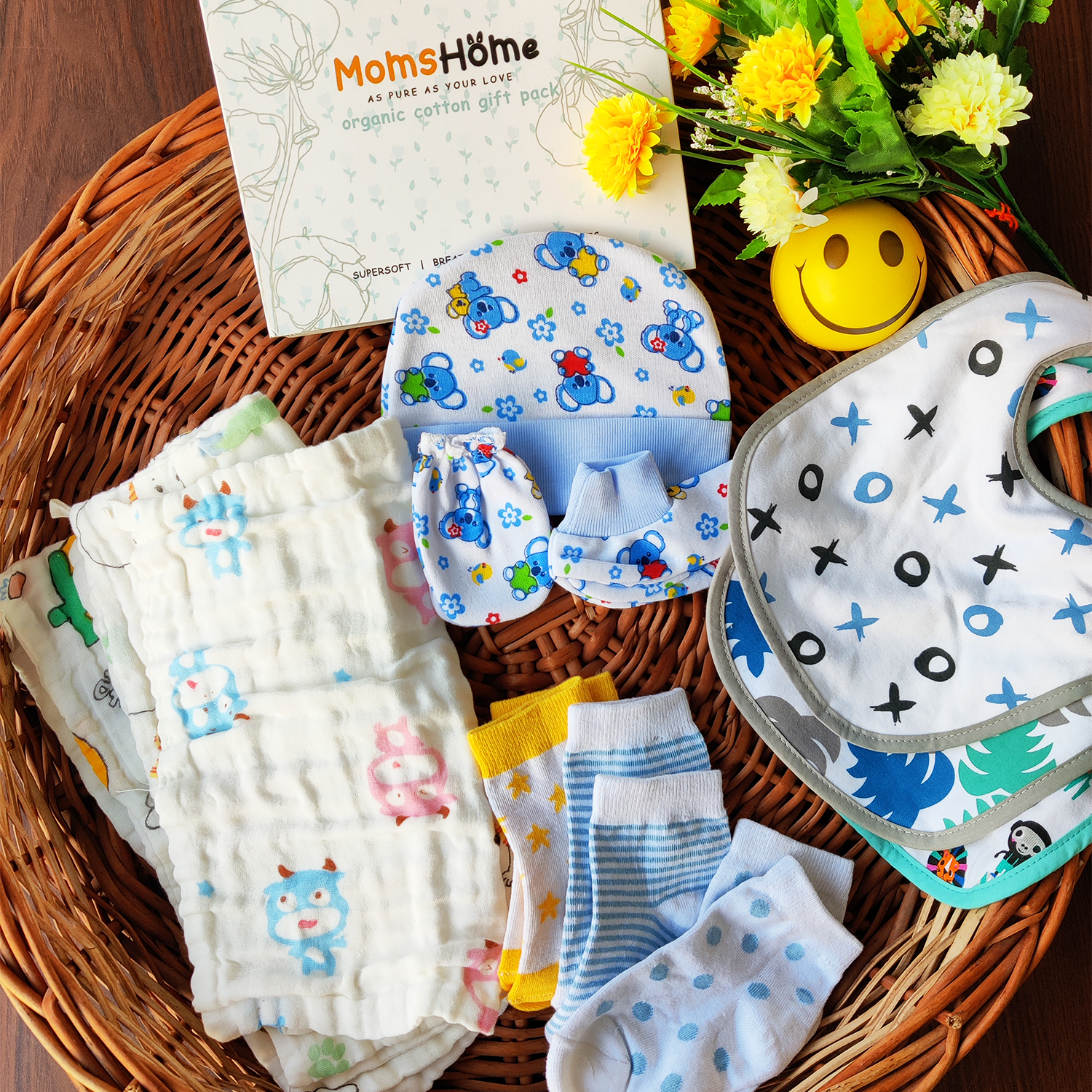
Moms Home positions itself as India’s first and largest sustainable baby brand, specializing in high-quality organic cotton products for babies and toddlers aged 0 to 5 years. The brand addresses the common pain point of parents who struggle to find a complete range of certified organic essentials under one roof. While most competitors focus on specific niches like diapers or fashion, Moms Home offers a holistic catalog of over 50 baby products, including blankets, swaddles, clothing, and complete hospital bags.
By leveraging their deep expertise in textile manufacturing, the founders have managed to build a vertically integrated supply chain. This allows them to offer premium GOTS-certified organic products at prices significantly lower than other sustainable brands. Their goal is to make eco-friendly parenting accessible to the masses across India, moving beyond just the luxury segment.
Product Details
The product line is anchored by 100% organic cotton and bamboo fibers, ensuring that everything touching a baby’s sensitive skin is free from harmful chemicals. Key offerings include their top-selling swaddles, blankets, and newborn hospital kits. The hospital kits are particularly unique, providing mothers with a bundle of 40 essential items at nearly half the cost of buying them individually from competitors. Their products carry the Global Organic Textile Standard (GOTS) certification, providing a layer of trust and verification for safety-conscious parents.
Market Position
Moms Home occupies a unique space between mass-market cotton brands like LuvLap and premium sustainable brands that often charge exorbitant prices. Their USP lies in their sourcing advantage. By manufacturing in-house in Jaipur, they can sell a set of three sustainable swaddles for ₹799, whereas competitors might charge up to ₹2,000 for similar quality. This “affordability meets sustainability” strategy has helped them serve more than 10 Lakh mothers to date.
| Business Detail | Information |
|---|---|
| Company Name | Moms Home |
| Founders | Kumar Vaibhav & Bhupendra Agarwal |
| Product Type | Sustainable Baby Essentials |
| Price Range | ₹599 to ₹10,000 |
| Primary Channel | D2C & E-commerce Marketplaces |
| Headquarters | Jaipur, Rajasthan |
About Founder’s
The founders of Moms Home bring a powerhouse of textile and business experience to the table. Kumar Vaibhav holds an MBA from Indore and previously served as the business head at Morarka Organic Food, where he gained insights into sustainable fibers. His co-founder, Bhupendra Agarwal, is a textile graduate from Jodhpur with an MBA and over a decade of experience in quality management and business operations. According to Inc42, their combined expertise allowed them to transition from a B2B bulk supply model to a successful D2C brand.
- Kumar Vaibhav: MBA Indore, former Business Head at Morarka Organic.
- Bhupendra Agarwal: Textile graduate from Jodhpur with 10 years of industry experience.
- The duo spent two years in the ideation phase (2016-2018) before formally launching the brand.
- They successfully pivoted the business from 100% B2B to 90% B2C/D2C.
Shark’s and Founder’s QnA
Aman Gupta: Why did you start this and how did you reach here?
I did my MBA from Indore and then joined Morarka Organic Food as a business head. We had a textile division there where Bhupendra ji used to head the section. During the e-commerce boom, we realized the potential of sustainable fibers like bamboo and organic cotton, so we decided to start Moms Home in 2016.
Vineeta Singh: You’ve written organic cotton, is there any certification for it?
Yes, all our products are 100% organic cotton. We have the GOTS certificate, which is provided by the Global Organic Textile Standard. It is a very rigorous certification process that ensures the quality and sustainability of the fabric.
Anupam Mittal: Let’s talk about the bottom line. You said you are breaking even, but where did the funds go?
Last year we had a burn of ₹60 Lakhs due to rebranding and scaling. Out of the ₹4 Crores we raised earlier, we have ₹30 Lakhs left in the bank, but much of it is tied up in ₹1.8 Crores worth of inventory and ₹1 Crore in receivables. We have reached monthly breakeven now as our sales hit ₹1.8 Crores per month.
Aman Gupta: What is your competitive advantage over brands like SuperBottoms or LuvLap?
Our advantage is our sourcing cost. Because of our backgrounds in textiles, we can provide the same quality of organic cotton at a much lower price. For example, a hospital kit that would cost ₹25,000 elsewhere, we sell for ₹10,000. We are focusing strictly on the 0-5 age bracket where others quickly jump into fashion.
Ritesh Agarwal: Pricing advantage is good, but is it a long-term play?
I feel that your combined strength and the momentum in this industry are great. However, price sensitivity can work against you if someone else undercuts you. You need to focus on building the brand. I am offering ₹75 Lakhs for 4% ownership to help you build that scale.
Vineeta Singh: What is your expansion plan beyond e-commerce?
We are currently doing ₹35 to ₹40 Lakhs a month on our website. We are now entering retail distribution and plan to open five company-owned stores before December, after which we will roll out the franchise model for faster offline expansion.
Key Stats & Financials
At the time of the pitch, Moms Home demonstrated a significant scaling trajectory. They jumped from ₹9.5 Crores in FY23 to ₹12.5 Crores in FY24. By the time they reached the tank in late 2024, they were already clocking monthly sales of ₹1.8 Crores, putting them on a run rate to nearly double their previous year’s performance. While they were profitable in earlier years, a strategic decision to raise ₹4 Crores and push for growth led to a temporary burn of ₹60 Lakhs in FY24.
Revenue and Profitability
- Yearly Revenue (FY24): ₹12.5 Crores
- Monthly Sales: ₹1.8 Crores
- Profitability: Reached monthly breakeven in late 2024
- Inventory: ₹1.8 Crores
- Equity Valuation: Founders requested a ₹75 Crore valuation
Financial Breakdown
| Metric | Amount / Value |
|---|---|
| FY22 Profit | ₹95 Lakhs |
| FY23 Revenue | ₹9.5 Crores |
| FY24 Revenue | ₹12.5 Crores |
| Cash in Bank | ₹30 Lakhs | ₹60 Lakhs (Annual) |
| Website AOV | ₹1,700 |
Business Potential and TAM
The business potential for Moms Home Shark Tank India is immense, given that the Indian baby care market is projected to grow at a CAGR of 15% through 2030. With over 25 Million babies born annually in India, the demand for safe, chemical-free clothing and bedding is skyrocketing as parents become more aware of environmental and health impacts. The global organic baby clothing market alone is worth billions, and the Indian segment is ripe for disruption by affordable sustainable brands.
Market Size Analysis
The Indian baby care market is estimated to be over $1.4 Billion. Within this, the baby textile and apparel segment is a major contributor. As the middle class grows and disposable income increases, parents are willing to pay a slight premium for organic products that ensure baby safety. Moms Home targets the massive gap between high-end organic boutiques and mass-market synthetic fabrics, representing a multi-hundred crore opportunity in the next five years.
Growth Opportunities
- Expansion into Quick Commerce to capture the urgent demand for baby essentials like diapers and wipes.
- Launch of a franchise-led offline retail model across Tier 2 and Tier 3 cities.
- Export potential to international markets where GOTS-certified products command high premiums.
- Expansion into baby-safe personal care and laundry detergents for a complete ecosystem.
Moms Home: Ideal Target Audience & Demographics
| Demographic | Details |
|---|---|
| Primary Age Group | 24 to 38 years |
| Target Audience | New parents and expecting mothers |
| Interests | Sustainability, Organic living, Child safety |
| Platform Preference | Instagram, Amazon, FirstCry |
| Geography | Tier 1 and Tier 2 Urban centers |
| Buying Behavior | Value-conscious but quality-driven |
Marketing and Distribution Strategy
Moms Home follows an omnichannel distribution strategy that balances high-margin D2C sales with high-volume marketplace presence. Their recent push into Quick Commerce has been a significant driver for growth, catering to the on-demand needs of parents who need baby essentials within minutes. By maintaining a 35% annual repeat rate, they have proven that their product quality fosters long-term customer loyalty.
Customer Acquisition
The brand’s Customer Acquisition Cost (CAC) on their website is approximately ₹550, which is manageable given their ₹1,700 AOV. They rely heavily on Instagram marketing and influencer collaborations with “mom-bloggers” to build trust. According to industry reports, they have served over 35 Lakh parents, indicating a highly effective top-of-funnel strategy.
Distribution Channels
- E-commerce Marketplaces (40%): Dominant presence on Amazon, Flipkart, and FirstCry.
- D2C & Quick Commerce (40%): Rapidly growing segment via momshome.in and platforms like Blinkit.
- Offline Retail & B2B (20%): Bulk supply and upcoming exclusive brand outlets.
- Tier 2/3 Focus: Approximately 50% of D2C orders originate from smaller cities.
Social Media and Content Strategy
The brand focuses on educational content, highlighting the benefits of organic cotton over synthetic materials. They use video content to showcase the softness and durability of their swaddles and blankets, which are critical buying factors for parents. Their strategy revolves around “softness you can see,” which resonated well with Vineeta Singh during the pitch.
Moms Home Shark Tank Deal Outcome
The negotiation was intense, focusing primarily on the company’s valuation and the “breakeven” status of the business. Anupam Mittal expressed concern over the founders’ lack of clarity regarding their cash flow and burn rates. However, Vineeta Singh was impressed by the product quality and the manufacturing expertise, eventually offering a deal that included a royalty component to mitigate risk.
| Shark | Offer Detail |
|---|---|
| Vineeta Singh | ₹75 Lakhs for 2% Equity + 1% Royalty until ₹93.75 Lakhs is recouped. |
| Ritesh Agarwal | ₹75 Lakhs for 4% Equity (Initial offer). |
| Anupam Mittal | Out due to lack of financial clarity and trust on breakeven claims. |
| Aman Gupta | Out; felt the pricing moat was not sustainable in the long term. |
| Final Decision | Accepted Vineeta Singh’s Offer (₹75 Lakhs for 2% Equity + Royalty). |
Moms Home Post-Show Update
Following their appearance on Shark Tank India Season 4, the brand witnessed a massive surge in demand. According to Inc42, the company reported a 63.7% YoY revenue jump, reaching ₹17.65 Crores in FY25. They have successfully entered the Quick Commerce space to capture on-demand parents and have pushed their monthly revenue run rate to ₹4.5 Crores. The brand is now on track to close FY26 with a projected revenue of ₹38 to ₹40 Crores, significantly outpacing their initial projections in the tank.
Business Analysis & Lessons
The Moms Home pitch is a classic example of a “manufacturing-first” business trying to become a “brand-first” entity. The founders’ deep knowledge of textiles is their greatest asset, allowing them to maintain margins while undercutting competitors. However, the pitch also highlighted the dangers of being unclear with financial metrics. The debate over whether the company was truly “breaking even” nearly cost them the deal, as Sharks prioritize financial transparency and trust above all else.
Entrepreneurs can learn that a pricing moat is powerful but dangerous. As Aman Gupta pointed out, if price is your only advantage, a competitor with deeper pockets can easily replicate it. To survive long-term, Moms Home must transition their value proposition from “cheaper organic cotton” to “the most trusted brand for newborns,” which requires significant investment in community building and customer experience.
Key Takeaways
- Transparency is Critical: Confusion over “last month breakeven” vs “this year breakeven” can damage founder credibility.
- Manufacturing Advantage: Vertical integration allows for aggressive pricing that can disrupt premium niches.
- Omnichannel is Mandatory: Reaching ₹4.5 Crores monthly revenue was only possible by embracing Quick Commerce post-show.
- Category Focus: Staying within the 0-5 age bracket prevents the brand dilution often seen in general kids’ fashion.
Pitch Conclusion
Moms Home stands as a testament to the power of sustainable manufacturing in the Indian startup ecosystem. By securing a deal with Vineeta Singh, they gained not just capital but the strategic guidance needed to navigate the complex world of retail and brand building. Their post-show growth to ₹17.65 Crores proves that there is a massive appetite for high-quality, affordable organic baby products in India. If you enjoyed this breakdown, check out Raising Superstars, Vobble, and Menstrupedia.
[faq_accordian]